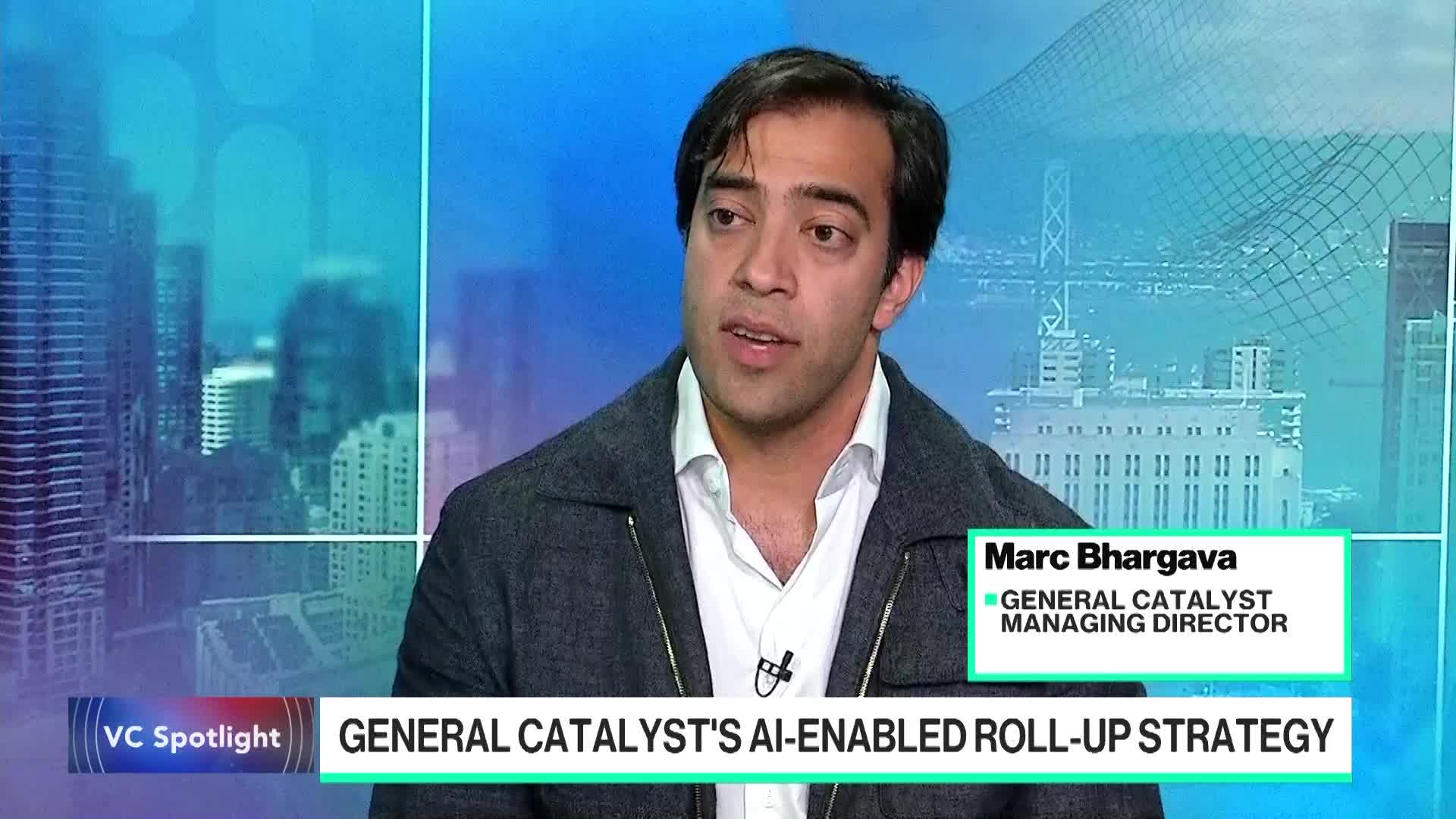
General Catalyst Managing Director Marc Bhargava detailed the firm's AI-enabled rollup strategy on Bloomberg Tech, outlining their ambition to build the next generation of public compounders. This approach signifies a notable venture capital trend towards leveraging artificial intelligence for market consolidation, aiming to create significant, long-term public market entities.
General Catalyst is actively pursuing an 'AI-enabled rollup' strategy, a notable evolution in the venture capital model designed to build a new cohort of 'public compounders.' According to Managing Director Marc Bhargava, the firm is leveraging artificial intelligence to systematically consolidate fragmented markets, indicating a shift from traditional single-company venture investments towards architecting larger, integrated enterprises from the private stage. This approach aims to create more mature, fundamentally sound companies ready for the public markets, potentially offering a more predictable and de-risked pathway to IPO. The optimistic sentiment surrounding this announcement suggests confidence in this tech-driven strategy as a new paradigm for value creation within the private equity and venture landscape, focusing on long-term, sustainable growth rather than rapid, high-risk exits.
AI-powered research, real-time alerts, and portfolio analytics for institutional investors.
Request DemoOverall Sentiment
strongly positive
Sentiment Score
0.60
