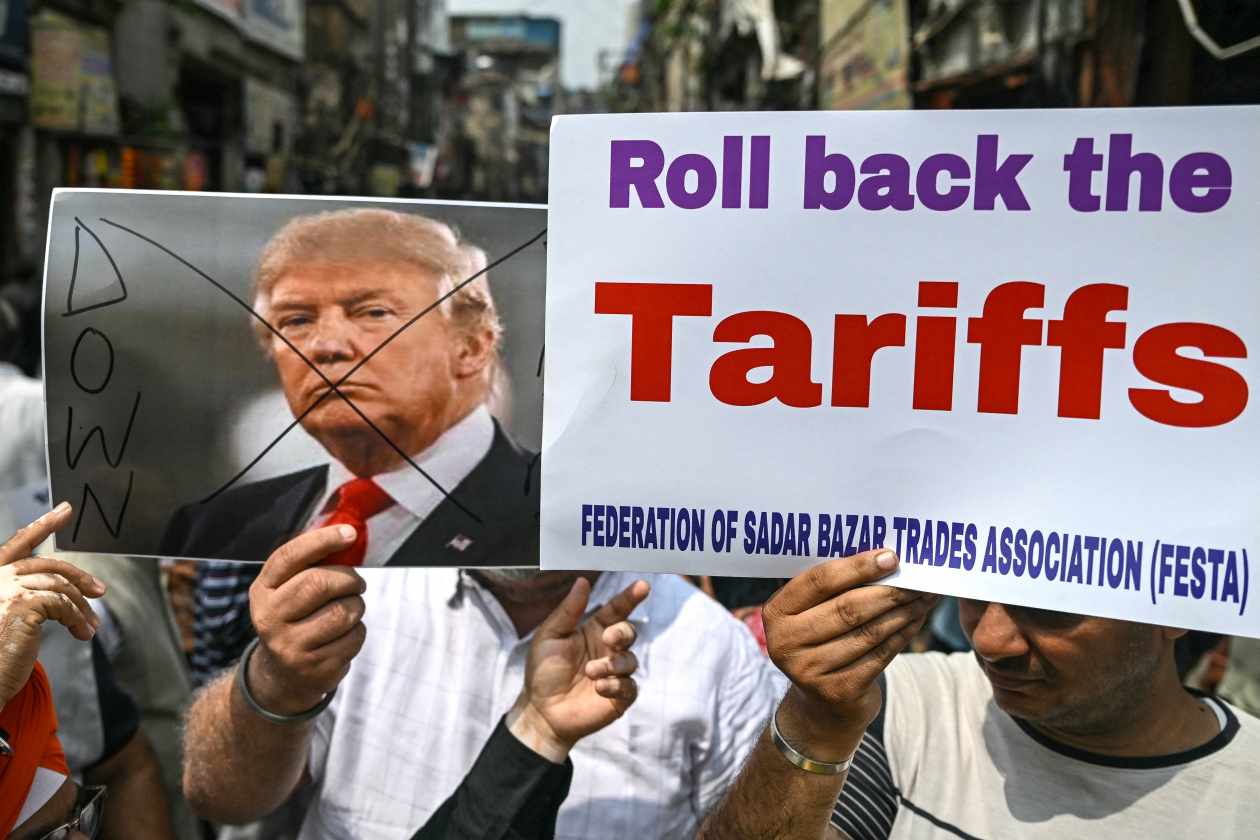
A U.S. appeals court has ruled that President Trump exceeded his authority in imposing country-specific tariffs under the IEEPA, though these tariffs will remain in place pending a Supreme Court review expected by mid-2025. Despite this legal setback, analysts anticipate the administration could largely maintain its tariff policy by utilizing alternative authorities like Sections 122 or 301, potentially with rapid implementation, while existing sector-based tariffs remain unaffected. A potential Supreme Court decision against the IEEPA tariffs could also trigger significant duty refunds, with implications for Treasury issuance and yields.
A U.S. appeals court ruling has found that the Trump administration exceeded its authority by using the International Emergency Economic Powers Act (IEEPA) for country-specific tariffs, creating a legal challenge to a cornerstone of its trade policy. However, the immediate market impact is muted as the tariffs will remain in effect through at least October 14, pending a Supreme Court review with a decision not expected until mid-2025. Analyst consensus, including insights from Raymond James and Beacon Policy Advisors, suggests that while the administration faces an 'uphill battle' in court due to the 'major questions' doctrine, the overall tariff policy is likely to persist. The administration has multiple alternative legal authorities, such as Section 122 (up to 15% tariff for 150 days) and Section 338 (up to 50%), which could be deployed almost immediately without requiring new investigations. Importantly, existing sectoral tariffs on automobiles, steel, and aluminum are unaffected by this ruling, and new tariffs on sectors like furniture, electronics, and pharmaceuticals are still planned. A significant secondary risk arises if the Supreme Court invalidates the IEEPA tariffs, which could trigger a historic duty-refund program, potentially causing a surge in Treasury issuance and upward pressure on yields.
AI-powered research, real-time alerts, and portfolio analytics for institutional investors.
Overall Sentiment
mixed
Sentiment Score
0.00
Ticker Sentiment
