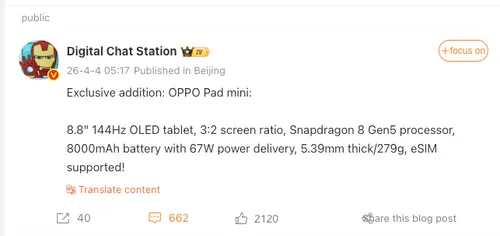
8.8-inch LTPO OLED (2880×1920, 144Hz scaling to 1Hz, 1800 nits) paired with Snapdragon 8 Gen 5, 8,000mAh battery with 67W SUPERVOOC, 279g weight and up to 16GB/512GB storage—April reveal expected. If confirmed, these flagship-level specs in a sub-300g compact tablet could shift competitive dynamics in the Android tablet segment and pressure mid-range rivals by bringing sustained performance and strong battery life to the small-form-factor market.
OPPO’s push upmarket in the compact-tablet category recalibrates product positioning rather than creating a new market: incumbents who treated small tablets as low-margin, mid-range SKUs will face pressure to either upgrade specs or cede pocket-tablet buyers to more premium Android players. That dynamic favors upstream suppliers able to scale premium components (high‑end SoCs, LTPO OLED panels, advanced thin batteries) quickly and at healthy ASPs — margin pools will shift away from commodity parts to differentiated subsystems.
Second-order winners include accessory and services ecosystems that monetize higher engagement per device (game publishers, stylus/keyboard makers, subscription apps) because longer single‑hand usage increases session length and willingness to pay. Conversely, large‑tablet and low‑end OEMs risk hardware cannibalization and inventory destocking if retailers reallocate shelf space to compact premium SKUs, compressing revenue for commodity component vendors over the next 2–4 quarters.
Key risks: manufacturing yield and thermal/firmware optimization can turn a spec story into a reviews‑driven flop, and distribution outside China is the gating factor for global share gains — either can erase the premium pricing power within a single earnings cycle. Catalysts to monitor are initial professional reviews, channel inventory moves, and component order flows (PMs at display/SoC suppliers) over the next 3–9 months; a negative surprise on any of these would rapidly re‑rate OEM suppliers.
AI-powered research, real-time alerts, and portfolio analytics for institutional investors.
Overall Sentiment
moderately positive
Sentiment Score
0.35
Ticker Sentiment
