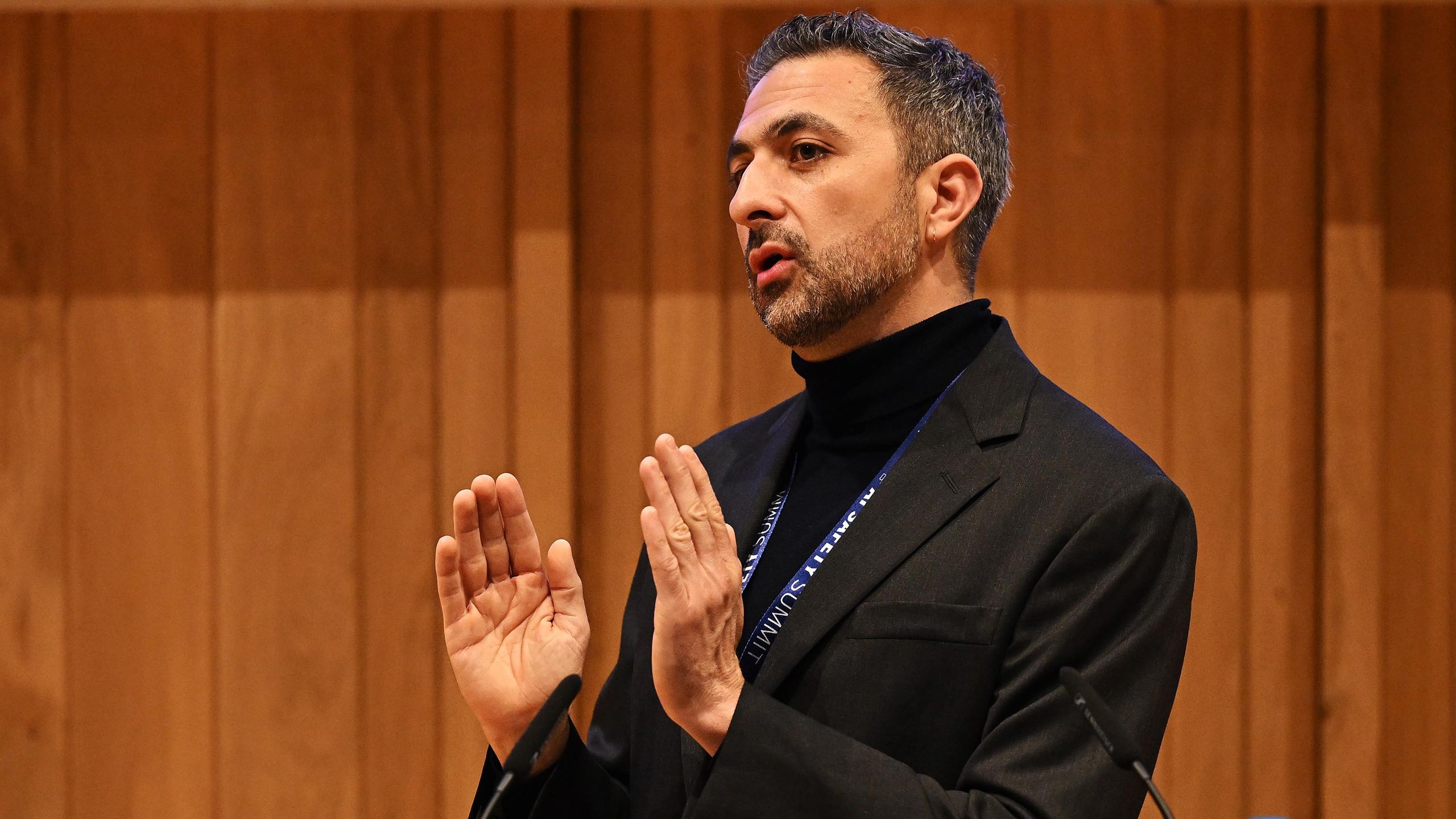
Microsoft AI chief Mustafa Suleyman warned that the odds of existential doom from advanced AI are “nearly absolute” and said Microsoft is prepared to pause or abandon development if risks escalate, signaling a safety-first stance; he has also pushed for Microsoft to be self-sufficient by training frontier models with its own data and compute. The comments come after a new definitive agreement with OpenAI that lets Microsoft pursue AGI independently and prevents OpenAI from declaring AGI without verification by an independent panel, formalizing greater strategic freedom following Microsoft’s original $1 billion tie-up in 2019. For investors and competitors, the stance both reduces the likelihood of an unchecked sprint to superintelligence and raises questions about the pace of product rollout and commercial returns amid recent reports of weak Azure AI traction and broader profitability concerns.
Microsoft AI chief Mustafa Suleyman publicly warned that the odds of existential doom from advanced AI are "nearly absolute" and said Microsoft would halt development if risks escalate, signaling a pronounced safety-first posture that could constrain aggressive product timelines. The comments follow a new definitive agreement with OpenAI that allows Microsoft to pursue AGI independently and prevents OpenAI from declaring AGI without independent expert verification; Microsoft originally tied itself to OpenAI after a $1 billion 2019 investment and is now seeking strategic freedom.
Recent reporting cited in the article indicates Microsoft has cut sales goals for Azure AI and that "virtually nobody is using" its AI products, creating tangible commercial execution risk; the supplied sentiment_score is -0.45 (moderately negative) while the market_impact_score is 0.35, implying reputational and adoption concerns but limited systemic market disruption. Suleyman’s push for Microsoft to train frontier models with its own data and compute implies a capital- and time-intensive pivot that could compress near-term profitability.
For investors the net effect is mixed: the safety stance reduces tail-risk of an uncontrolled AGI sprint but increases the probability of slower product rollouts and uncertain monetization. Key near-term catalysts to monitor are Azure AI adoption metrics, capital commitments to in-house model training, and timing/details of the independent-panel AGI verification framework.
AI-powered research, real-time alerts, and portfolio analytics for institutional investors.
Request DemoOverall Sentiment
moderately negative
Sentiment Score
-0.45
Ticker Sentiment
