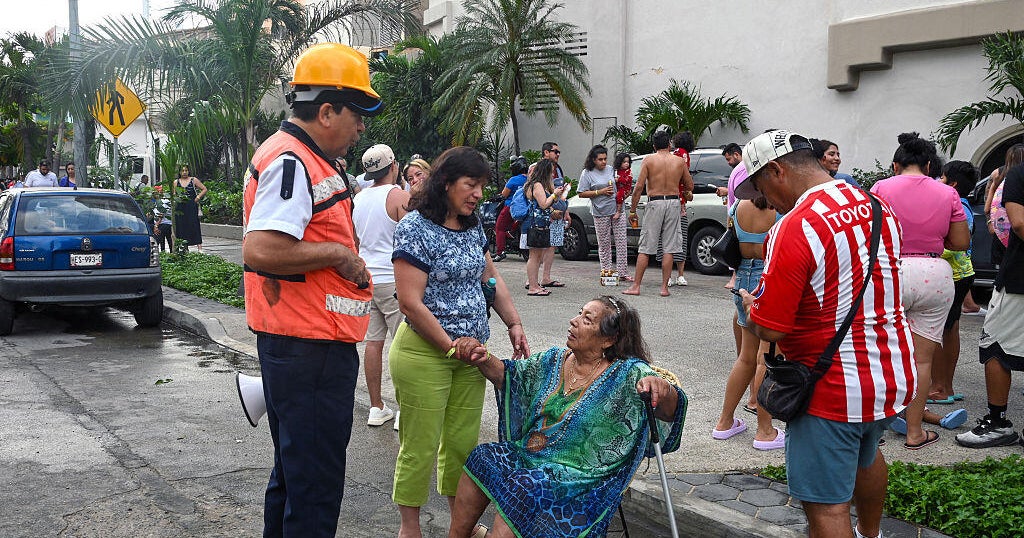
A 6.5 magnitude earthquake struck near San Marcos in Guerrero (close to Acapulco) at a depth of 21.7 miles, was felt about 250 miles away in Mexico City, and prompted evacuations; officials reported at least one death, roughly 12 injuries and multiple landslides but said there was no widespread major damage. Local communications and highways around Acapulco and the Costa Chica were disrupted, and authorities are monitoring aftershocks; the most likely near-term implications are localized hits to tourism, transport and infrastructure and incremental insurance losses rather than a material national-market shock unless damage assessments worsen.
Market structure: A 6.5 quake centered near Guerrero is a localized shock that temporarily depresses coastal tourism, regional transport and short‑term RevPAR (expect a 5–15% hit in Acapulco over 2–8 weeks). Winners are reconstruction-exposed goods/services (cement, heavy equipment), airport operators that control diverted traffic, reinsurers and safe-haven assets; expect USD/MXN to appreciate 1–3% and Mexican 10y yields to widen ~10–30 bps if losses/uncertainty rise.
Risk assessment: Tail risk is a larger aftershock (≥7.5) or clustered events that produce insured losses >$1bn, triggering sovereign funding stress and larger FX moves; probability low but high impact over 0–3 months. Immediate (days) effects are travel cancellations and communications disruptions; short-term (weeks–months) is reconstruction capex and insurance repricing; long-term (quarters–years) is higher resilience spending that benefits construction/materials suppliers and airport/port operators.
Trade implications: Tactical trades should be event-driven and conditional: buy reconstruction/cement exposure on selloffs, selectively long Mexican airport operators on dips, hedge FX/sovereign exposure with USD/MXN calls or short MXN forward exposure, and use short-dated gold calls as a low-cost tail hedge if volatility spikes. Option strategies (1–3 month) capture transient volatility; avoid large directional leisure longs until post-loss assessments.
Contrarian angles: Consensus will likely overestimate persistent tourism damage; historical quakes (2017) show 3–6 month rebounds and outsized gains for infrastructure/construction names during reconstruction. Mispricing risk: temporary selloffs in ASR/CX-type names can create 10–20% mean-reversion opportunities; unintended consequence is fiscal stimulus raising materials demand and margins over 6–12 months.
AI-powered research, real-time alerts, and portfolio analytics for institutional investors.
Request DemoOverall Sentiment
mildly negative
Sentiment Score
-0.25
