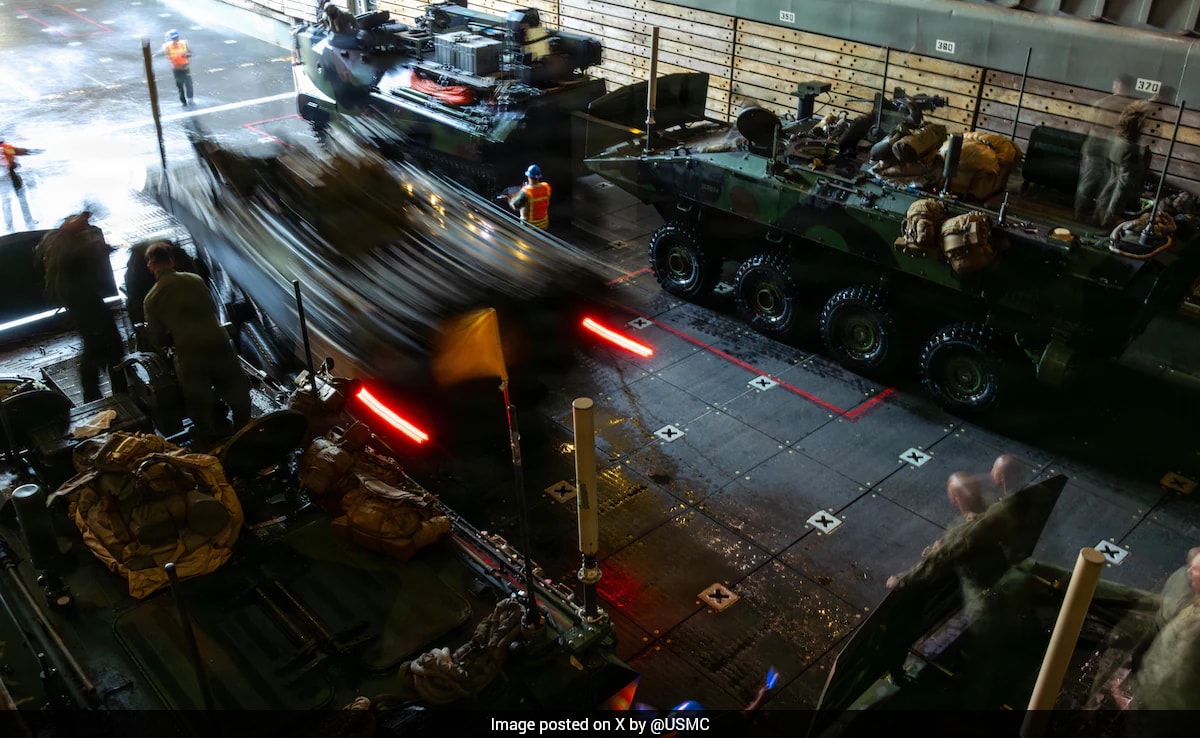
57,000+ US troops are now in West Asia — the largest US military buildup since 2003 — with reports of another ~10,000 ground troops planned; recent arrivals include USS Tripoli (3,500+ sailors/Marines) and 2,000 82nd Airborne paratroopers. The deployment is reportedly focused on Kharg Island, securing a reported ~400 kg of enriched uranium and/or re-opening the Strait of Hormuz, which handles ~20% of global crude, creating acute upside risk to oil prices and shipping disruptions. The Gerald R. Ford carrier is sidelined (~4,500 sailors) and the George H.W. Bush strike group has deployed, increasing operational strain and tail risk to force posture and logistics. Expect risk-off positioning, energy-price volatility and wider geopolitical risk premia that could pressure EM assets and commodity-linked equities.
Concentration of maneuver forces and a higher-probability kinetic phase materially raises the insurance and rerouting premium for tanker and container trades. Even a short, targeted disruption of Hormuz-style chokepoints tends to reprice voyage economics within days (higher voyage days, deadweight utilisation, and war-risk surcharges) and sustain a multi-week uplift in charter rates and refined product differentials as refining cracks reallocate feedstock flows.
Defense primes with exposure to naval aviation, air defense, counter-UAS, and shipboard sustainment are positioned to see step-function demand for long-lead hardware and spares; spare-part and MRO revenue recognition shifts into nearer-term quarters because afloat/expeditionary deployments accelerate consumable replacement cycles. Secondary beneficiaries include private logistics/MILCON contractors and specialist insurers/reinsurers writing war-risk cover — they will tighten terms and lift premiums, compressing supply for risk-takers and widening margins for capacity owners.
Tail risks are asymmetric: a mined Gulf or systematic interdiction of tanker lanes can spike oil and shipping rates in days and propagate inflationary pressures to refined products within 2–8 weeks; conversely, a credible diplomatic rollback (third-party mediated ceasefire or targeted decapacitation of escalation vectors) can depress premiums just as fast. Watch three catalysts: visible mine-clearance activity (days), major energy-export outages (weeks), and formal ceasefire/negotiation signals (30–90 days) — each should define clear trade exit or reduce exposures.
The consensus is focused on headline force size; it is underweight the micro-revenue acceleration for spares/MRO and the structural re-rating of war-risk insurers and tanker owners. Position sizing should therefore bias convex, capital-light exposure to shipping insurance/charter upside and option-driven exposure to defense primes while layering macro hedges to limit black-swan losses.
AI-powered research, real-time alerts, and portfolio analytics for institutional investors.
Request DemoOverall Sentiment
strongly negative
Sentiment Score
-0.80
Ticker Sentiment
