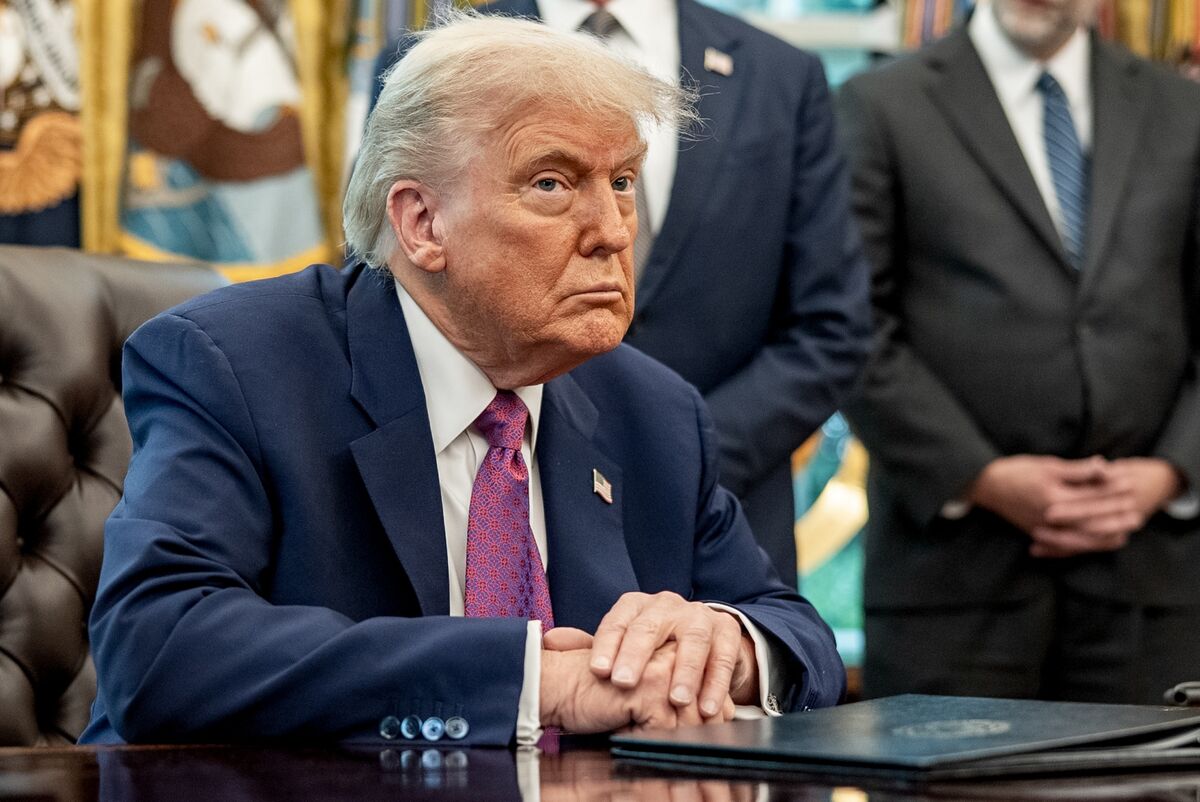
President Trump is characterizing the latest trade deal with China as a significant advancement; however, the agreement primarily reverts the U.S. to previously established terms, suggesting limited progress beyond resetting the trade relationship to its earlier state.
The recent trade agreement between the US and China, touted by President Donald Trump as a significant breakthrough, is largely perceived as a reversion to previously established terms, effectively resetting the trade relationship to its earlier state rather than achieving new substantive progress. This interpretation, highlighted by White House correspondent Catherine Lucey, aligns with the 'moderately negative' sentiment (sentiment_score: -0.35) and 'uncertain' tone identified in the signals. The situation suggests that underlying issues concerning 'Trade Policy & Supply Chain,' 'Tax & Tariffs,' and broader 'Geopolitics' remain largely unresolved. While the immediate market impact score is moderate (0.45), the lack of a fundamental shift implies that the uncertainty and potential for trade-related volatility that characterized the previous status quo may persist, impacting sectors sensitive to US-China trade dynamics.
AI-powered research, real-time alerts, and portfolio analytics for institutional investors.
Request DemoOverall Sentiment
moderately negative
Sentiment Score
-0.35
