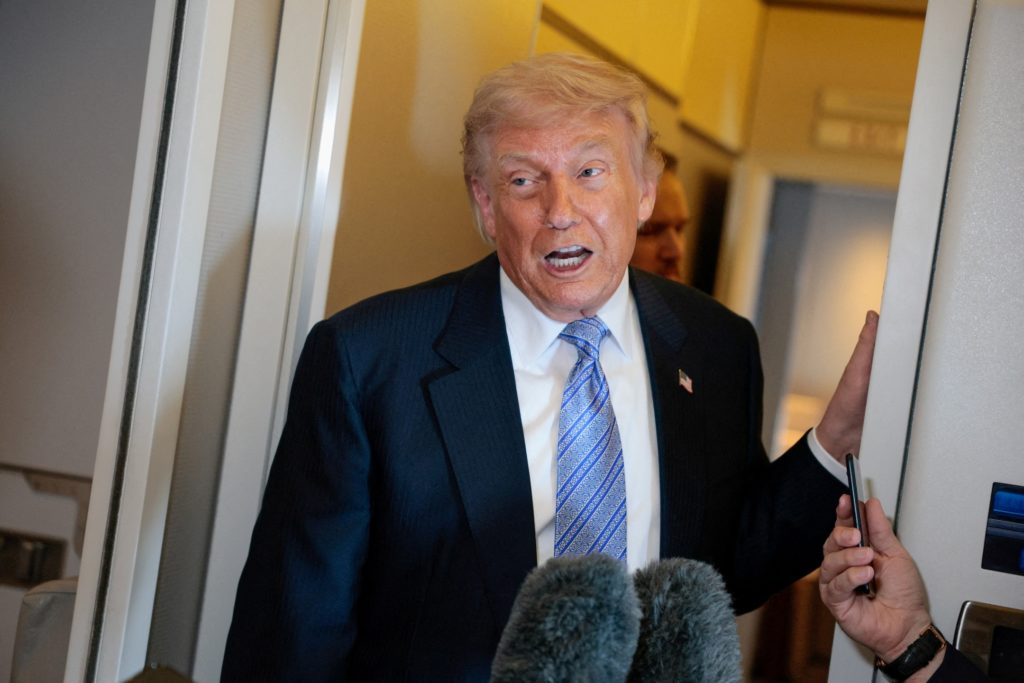
President Trump said he called off a planned strike on Iran, while Treasury Secretary Bessent signaled continued pressure through sanctions as Iran-related tensions remain elevated. Separately, more than 3,000 people have died in recent Israel-Hezbollah fighting, a fast-moving brush fire near Los Angeles has forced tens of thousands to evacuate, and a Long Island Rail Road strike has stranded hundreds of thousands of commuters. U.S. stocks finished mixed, with the Dow up more than 150 points and the Nasdaq down more than 130 points amid geopolitical uncertainty.
The market is pricing a classic escalation-deferral regime, not a true de-escalation. That matters because energy volatility, defense spending expectations, and sanction-enforcement intensity can all rise even if the immediate strike risk is pulled back; the second-order effect is wider risk premia across equities and credit, with the most fragile names being those reliant on cheap funding and stable logistics. In that setup, the biggest near-term loser is not an obvious defense prime but market-structure and growth-sensitive exposure: lower-volume, higher-beta names can gap on headline shocks as dealers hedge gamma and systematic funds de-risk. The more investable signal is in sanctions and enforcement. If the U.S. shifts from kinetic action to financial pressure, the winners are firms with hard-to-replicate compliance and intelligence utility, while the losers are cross-border payment, shipping, and industrials with exposure to Middle East routing and insurance costs. Even a brief spike in Gulf risk can reprice tanker rates, marine insurance, and regional freight spreads within days, but the earnings impact for transports and airlines is usually a quarter-lag story unless the conflict broadens materially. NDAQ is only modestly exposed directly, but the broader tape implication is that elevated geopolitical uncertainty tends to suppress IPO windows, secondary issuance, and retail participation. That creates a subtle negative for exchange and market-data revenues if volatility becomes disorderly: volumes can rise, but mix often shifts toward hedging and defensive flows rather than durable cash equity issuance. The contrarian view is that the current move may be underpriced if the market is assuming diplomatic optics imply lower tail risk; historically, when both sides publicly signal talks while sanctions tighten, headlines can stay benign for weeks before an abrupt repricing occurs. On the other hand, if negotiations genuinely hold, the unwind could be fast and violent in crowded hedges, especially in defense and energy. The key catalyst set over the next 1-3 weeks is not diplomacy alone but whether sanctions are broadened, whether Gulf shipping insurance tightens, and whether the U.S. Treasury meaningfully escalates enforcement against intermediaries. If those do not materialize, the current fear premium should compress, but until then the distribution of outcomes is still fat-tailed.
AI-powered research, real-time alerts, and portfolio analytics for institutional investors.
Request DemoOverall Sentiment
mildly negative
Sentiment Score
-0.15
Ticker Sentiment
