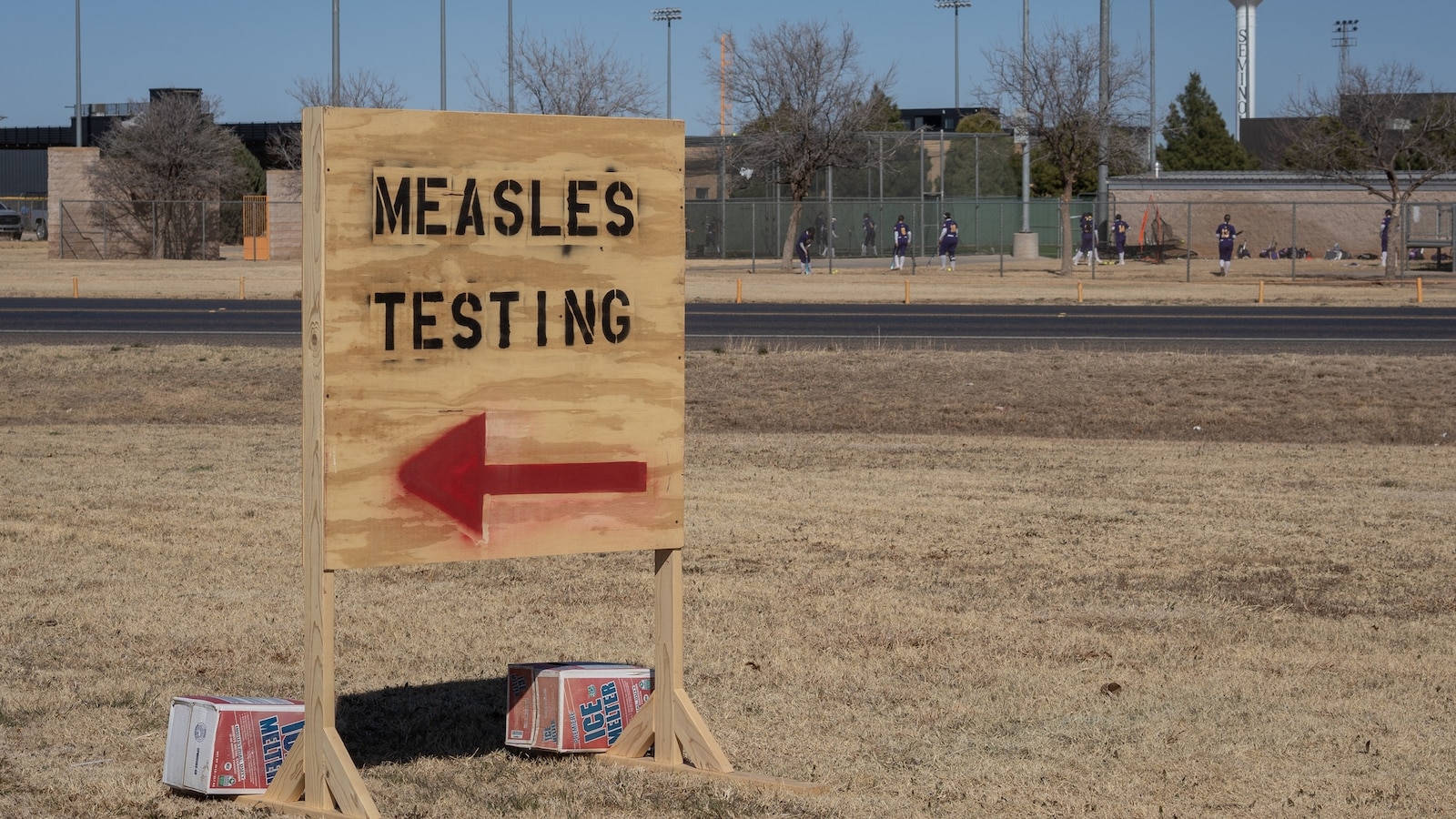
At least 588 measles cases have been confirmed in the U.S. so far in January across 17 states, driven chiefly by a South Carolina outbreak that totals 847 cases since October and has placed more than 400 people in quarantine. Almost all cases are concentrated in undervaccinated communities; only three cases involve international travel. CDC guidance notes two-dose MMR efficacy at 97%, while kindergarten MMR coverage fell to 92.5% in 2024-25 from 95.2% in 2019-20. The surge raises public-health strain and the potential to exceed last year’s record 2,257 cases, with localized economic and healthcare-system implications but limited immediate marketwide impact.
Market structure: Outbreaks chiefly create winners among vaccine producers (Merck MRK), consumables suppliers (Becton Dickinson BDX) and lab-reagent/logistics vendors (Thermo Fisher TMO, Abbott ABT). Because Merck effectively controls the U.S. MMR supply, a short-term order bump (regional demand spikes of 5–15% in affected states over 1–3 months) can translate to measurable revenue upside; pricing power is limited but procurement-driven volume and accelerated deliveries matter. Public-payors and underfunded school districts are losers: cash strain and potential one-off fiscal transfers to public health will reallocate budgets.
Risk assessment: Tail risks include a larger national wave forcing school closures (+/- weeks) or federal emergency declarations that trigger large-scale procurement and rapid scale-up constraints (manufacturing lead times of 3–9 months). Immediate effects (days) are quarantines and localized clinic demand; short-term (weeks–months) is catch-up vaccination campaigns; long-term (quarters–years) is potential policy change raising baseline vaccination rates by 1–3 percentage points. Hidden dependencies: state procurement rules, cold-chain capacity, and litigation/mandate political backlash could reverse demand quickly.
Trade implications: Favor small, active allocation to MRK (2–3% of risk budget) and BDX (1–2%) for 3–9 month plays; use call spreads to cap cost and target 3–8% absolute returns if catch-up campaigns materialize. Pair idea: long MRK vs short travel-heavy ETF (JETS) sized 1:0.5 to exploit relative resilience if local caution dampens near-term travel. Monitor CDC case count trajectory—if U.S. cases >3,000 by end of Q1, scale MRK/BDX exposure +50%.
Contrarian angles: The market may underprice concentrated procurement orders because headline case counts feel small versus global pandemics—yet a federal catch-up program (one-time funding >$100M) can boost quarterly revenues materially for a handful of suppliers. Historical parallels (2019 localized measles surges) show durable local increases in vaccine uptake post-outbreak; downside is that persistent hesitancy caps long-term upside, so positions should be tactical and event-driven rather than permanent holdings.
AI-powered research, real-time alerts, and portfolio analytics for institutional investors.
Request DemoOverall Sentiment
moderately negative
Sentiment Score
-0.30
