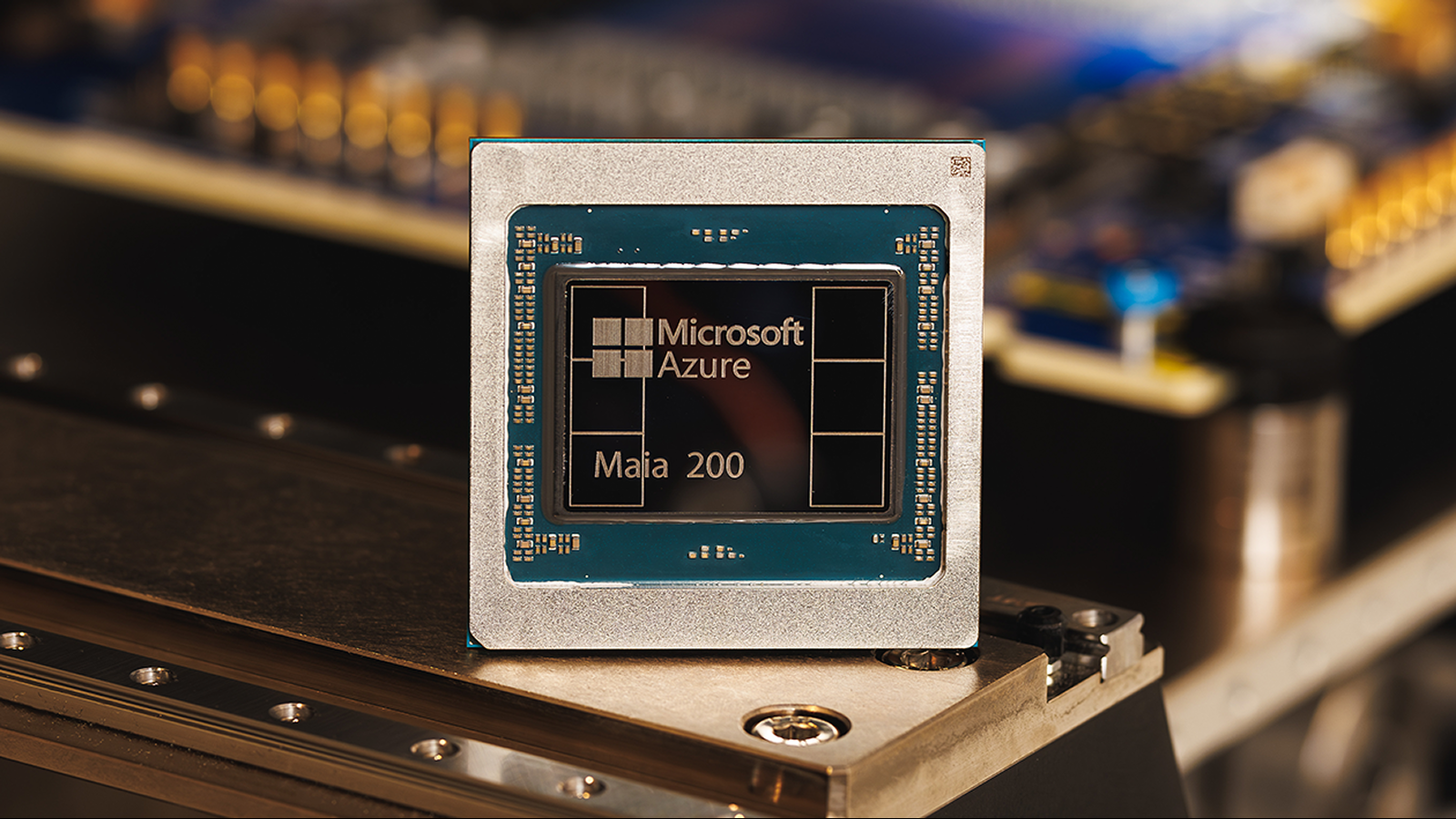
Microsoft unveiled the Maia 200 inference accelerator, claiming >10 PFLOPS in 4-bit precision (FP4) and 5 PFLOPS in 8-bit precision (FP8), built on TSMC’s 3nm process with ~100 billion transistors. The company says Maia 200 delivers three times the FP4 performance of Amazon’s third-gen Trainium and FP8 performance above Google’s seventh-gen TPU, offers ~30% better performance per dollar, and is already deployed in Azure US Central to power Copilot, Foundry and Azure OpenAI inference workloads. The chip is positioned to improve Azure’s cost-efficiency and throughput for large-scale inference, bolstering Microsoft’s competitive cloud AI positioning with potential medium-term implications for cloud margins and enterprise AI services adoption.
Market structure: Microsoft (MSFT) is the clear near-term winner — Maia 200 gives Azure a cost/perf edge (Scott Guthrie's 30% better $/perf claim) for inference-heavy workloads, pressuring demand for Google TPU and Amazon Trainium in cloud inference RUs over the next 6–18 months. TSMC (TSM) benefits from 3nm capacity pricing power and higher ASPs; incremental server spend lifts semi capital intensity. Google (GOOG) and Amazon (AMZN) face demand deflation for their in-house accelerators and potential margin pressure on cloud IaaS pricing if Azure uses Maia to undercut inference pricing.
Risk assessment: Tail risks include regulatory scrutiny on Microsoft bundling AI chips with software (antitrust) and TSMC 3nm yield shortfalls; both could materialize within 12 months and wipe 20–40% off forward excess returns. Hidden dependency: Maia’s business case hinges on customer migration to Azure and software stack optimizations (FP4 quantization adoption); slow enterprise migration would delay ROI by 2–4 quarters. Near-term catalysts: Azure AI revenue beats, TSMC 3nm utilization >80%, or competitor hardware announcements.
Trade implications: Favor concentrated long MSFT and TSM exposure with explicit hedges; consider relative shorts in AMZN and GOOG for expected share loss in inference. Options: use 3–9 month call spreads on MSFT to lever upside while capping premium; buy protective puts on TSM for geopolitical risk. Time entries in the next 30–90 days, take profits on 20–30% moves, cut losses at 8–12%.
AI-powered research, real-time alerts, and portfolio analytics for institutional investors.
Request DemoOverall Sentiment
moderately positive
Sentiment Score
0.35
Ticker Sentiment
