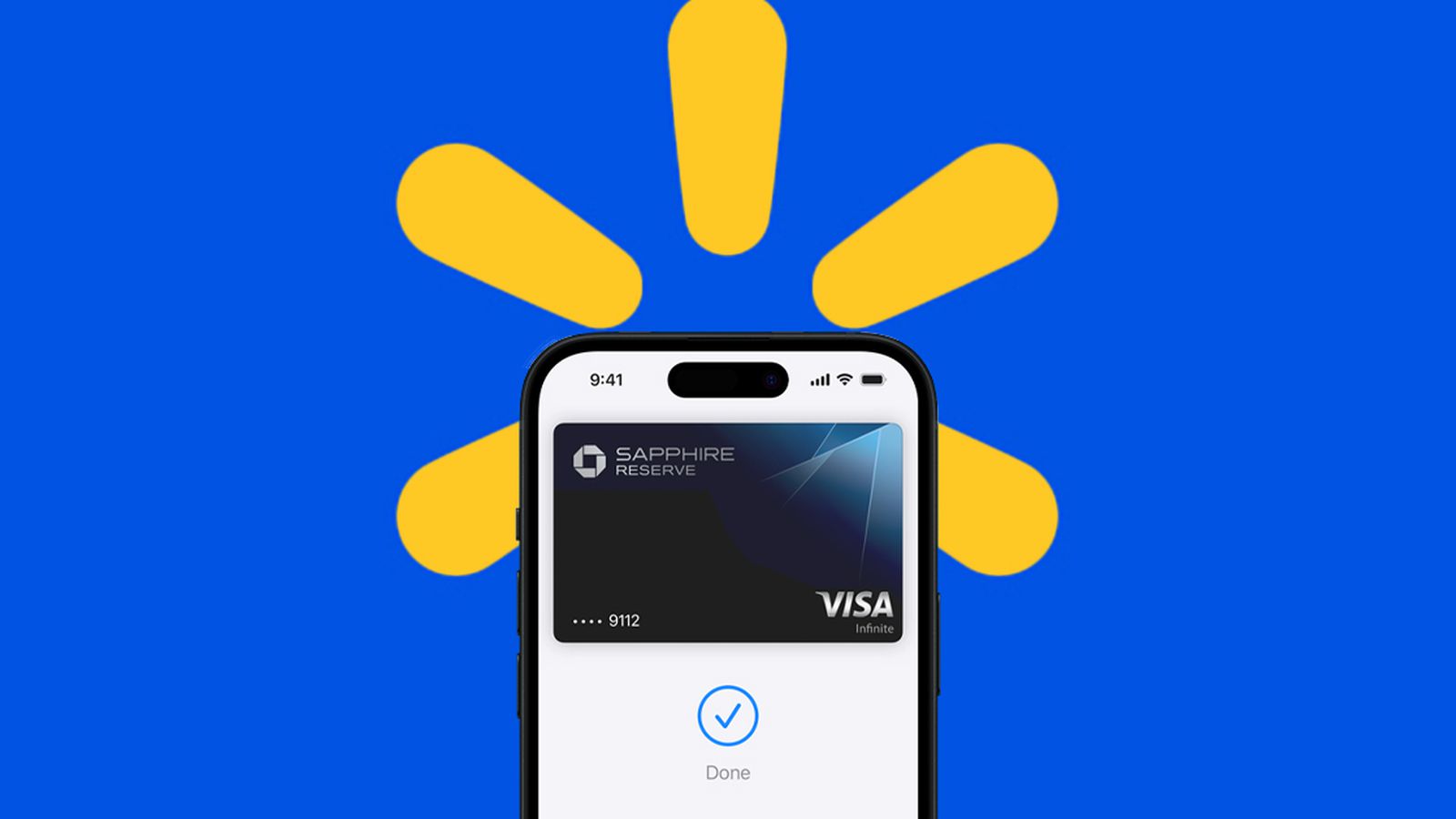
Walmart continues to disable NFC contactless payments at its more than 4,500 U.S. stores, refusing Apple Pay, Google Pay and Samsung Pay while pushing its own Walmart Pay and Scan & Go systems. The company’s preference for in‑app payments appears driven by the ability to track customer purchase history and behavior, leaving Walmart as a major U.S. outlier despite Apple Pay being accepted by roughly 90% of U.S. retailers as of 2022; Walmart has accepted Apple Pay in Canada since 2020.
Market structure: Walmart's NFC blockade is a deliberate data/fee-preservation move that advantages WMT's own payment stack and consumer data capture while marginally disadvantaging Apple Pay (AAPL) and card networks on behavioral data access. Winners: WMT (data monetization, Walmart+), potentially HD and KR as consumer friction pushes convenience-seeking shoppers; Losers: AAPL and acquirers if merchant acceptance stalls. The effect on supply/demand for payment services is structural (demand shift toward retailer-controlled rails), not a liquidity shock; fixed-income and FX impact is immaterial unless regulatory fines emerge, while option vol for WMT/AAPL may tick up around earnings and holiday season (3–6 months).
Risk assessment: Tail risks include regulatory action (merchant steering/antitrust) or a data-breach within 6–24 months that forces NFC adoption or fines >$500M, and litigation with Apple that could force interoperability. Immediate (days) risk: PR-driven foot traffic volatility; short-term (weeks–months): membership adoption metrics and same-store sales; long-term (years): durability of interchange economics and data monetization. Hidden dependencies: Walmart's economics hinge on Walmart+ take-rate and increased margin per transaction; catalysts include state-level mandates, Apple/Walmart settlement, or competitors' NFC reversals.
Trade implications: Tactical pair trade: overweight HD/KR vs underweight WMT — expect 6–12 month relative outperformance of 5–12% if convenience-driven share shifts persist. Options: buy a 3–6 month WMT put spread (2–5% OTM) sized to <1% portfolio to cap downside while selling OTM call premium on AAPL to fund exposure if you prefer neutral to positive view on Apple hardware. Rotate 1–3% into payments/fintech names (V, MA) only if regulatory odds remain low; otherwise favor retailers with quick NFC acceptance. Enter ahead of Q2–Q3 retail results; trim within 3–6 months if membership metrics disappoint.
Contrarian angles: Consensus treats WMT's stance as purely anti-consumer; markets underappreciate potential revenue lift from richer first‑party data (LTV uplift of 1–3%/yr if Walmart+ conversions increase). Shorting WMT is high-risk: historical parallels (Home Depot/Kroger delayed acceptance then regained share) show merchant strategy can be reversed under pressure; unintended consequence—forcing customers online or to competitors—could materialize only slowly, giving WMT time to monetize. Watch for a binary catalyst (Apple settlement or regulatory order) that would rapidly re-rate AAPL/MA/V upwards and compress WMT's premium.
AI-powered research, real-time alerts, and portfolio analytics for institutional investors.
Request DemoOverall Sentiment
mildly negative
Sentiment Score
-0.30
Ticker Sentiment
