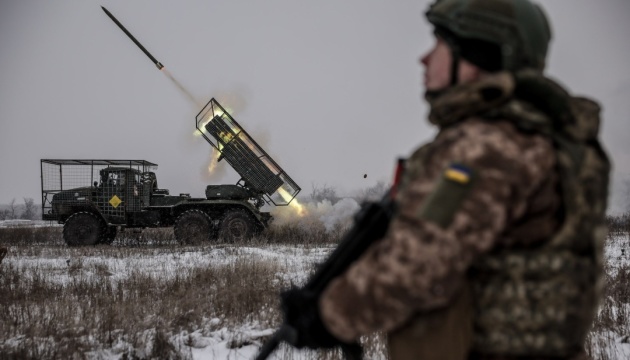
Frontline combat in February 2026 remains high-intensity but signals operational culmination rather than a Russian breakthrough: frontline engagements topped 237 on Feb. 20, Russian weekly territorial gains have decelerated from ~130–150 sq km in June–July 2025 to ~33 sq km in mid-February, and monthly Russian personnel losses are estimated at 30,000–32,000. Ukrainian forces have stabilized key sectors (Kostiantynivka, Lyman) while regaining initiative in Huliaipole—recovering four settlements and advancing up to 10 km in places—suggesting continued attritional fighting, constrained Russian maneuverability, and rising strain on Russia’s manpower and economic sustainability through 2026.
Market structure is shifting toward sustained demand for munitions, ISR (drones), and logistics over the next 3–12 months as attrition (30k–32k reported Russian losses/month) forces continuous replenishment; prime beneficiaries are large-cap defense contractors and specialized European munitions manufacturers, while Russian exporters and sanction-exposed EM names are the direct losers. Competitive dynamics favor firms with scalable ammunition lines and vertical integration (engine, propellant, fuse), giving them pricing power and 6–18 month order visibility; firms lacking capacity will face margin pressure and multi-month lead-times. Cross-asset implications: elevated tail-risk supports a mild safe‑haven bid (US 10Y down ~10–20bp on spikes) and downside to RUB; Brent has a 15–25% upside tail if supply corridors are disrupted, which favors short-dated call spreads rather than outright futures. Key constraints: Western legislative funding cycles and EU defense industrial approvals are hidden dependencies—if US/EU aid slows in 30–60 days demand can compress quickly; catalysts include March spring operations, US aid votes, and metrics of territorial gains (>100 km2/week) which would force repricing.
AI-powered research, real-time alerts, and portfolio analytics for institutional investors.
Overall Sentiment
mildly negative
Sentiment Score
-0.25
