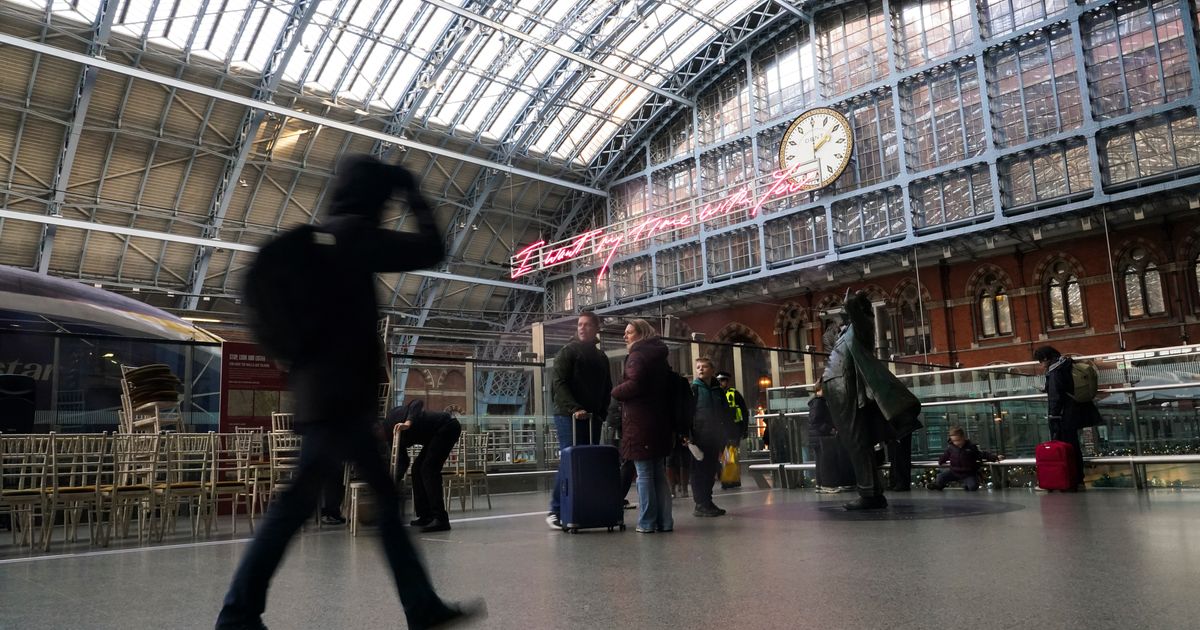
A power supply malfunction in the 50-kilometer Channel Tunnel caused hours-long suspension of cross-Channel train services on Tuesday, disrupting end-of-year travel before Eurotunnel reported the fault was fixed overnight and services resumed in both directions. Eurostar confirmed operations had recommenced but warned of potential knock-on delays and cancellations, prompting many travelers to seek alternative flights and buses; the incident underscores operational and reputational risks for tunnel and rail operators and short-term disruption to cross-Channel passenger flows.
Market structure: A one-day power failure in the 50km Channel Tunnel temporarily redistributes short-haul cross-Channel demand to airlines, ferries and long-haul road hauliers; expect a 1–3 day uplift in seat/tonne demand for carriers and freight haulers and a reputational hit to the tunnel operator (Getlink/GET.PA) that could compress near-term pricing power for premium rail services. Competitive dynamics favor flexible-capacity providers (IAG.L, EZJ.L, RYA.L, DFDS.CO) able to capture spill traffic; rail’s margin profile weakens if this becomes recurring, pressuring long-term yields on concession-like assets. Cross-asset: short-term flight-booking upside could lift airline equities and vols for 1–3 weeks, while GBP sees minor intraday weakness; corporate bonds of rail/infrastructure names could widen by 10–50bp if investigations point to systemic failures.
Risk assessment: Tail risks include recurring power/systemic infrastructure failures leading to multi-week closures, regulatory fines or mandated capex (potentially >€50–200m) and class-action claims from operators or freight customers; these are low probability but would hit Getlink equity and bonds materially. Time horizons: immediate (0–7 days) — booking shifts and elevated vol; short-term (1–12 weeks) — reputational/earnings volatility and potential outage-related costs; long-term (quarters) — capex/refit and renegotiation of contracts. Hidden dependencies: post-Brexit customs frictions magnify switching costs for freight; insurance deductibles and indemnities could shift losses to operator.
Trade implications: Tactical trades should harvest the transient demand reallocation while hedging operational-risk exposures. Short-dated call spreads on airlines to capture upside for 1–3 week horizon, selective longs in ferry/logistics names for 1–3 month reallocation, and targeted hedges (puts or shorts) on Getlink if investigation signals systemic fault. Monitor 48–72 hour company statements and regulator inquiries as actionable catalysts to scale positions.
Contrarian angles: Consensus underestimates probability of regulatory-driven capex and the asymmetric downside for concession-like rail names; markets may underprice a claim-driven liability or multi-day repeat outage. The reaction for airlines is likely overdone in the first 72 hours — booking spikes are finite and pricing normalizes, so options structures (call spreads) outperform outright longs. Historical parallels: single-day transport infra failures often produce short-lived winners and multi-quarter losers if infrastructure fixes require heavy capex (see past tunnel/bridge outages), so size risk accordingly.
AI-powered research, real-time alerts, and portfolio analytics for institutional investors.
Request DemoOverall Sentiment
mildly negative
Sentiment Score
-0.25
