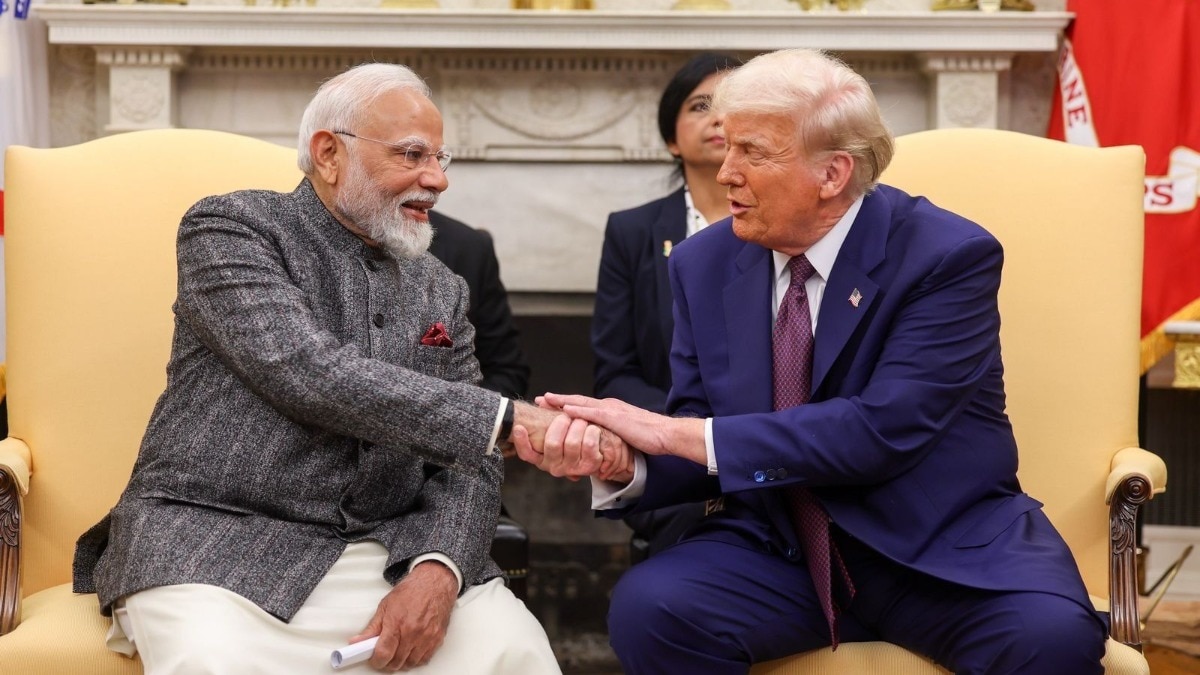
Donald Trump congratulated PM Narendra Modi after the BJP won West Bengal for the first time, ending Mamata Banerjee’s 15-year rule in the state. The result is a major political shift in India, but the article is primarily about domestic electoral politics rather than a direct market event. Global commentary adds symbolic support for Modi, yet near-term financial market impact should be limited.
The market implication is less about one state result and more about the signaling value of a stronger center: it reduces policy slippage risk for the next 12-24 months and improves the odds of faster execution on infrastructure, manufacturing incentives, and land/labor reforms. That is generally supportive for domestic cyclicals and banks because it lowers the probability of coalition drift, especially in a period when capex visibility matters more than headline GDP. The immediate read-through is a modest re-rating of India beta rather than a broad macro impulse; the trade is in second-order beneficiaries of policy continuity, not the index itself. The bigger competitive effect is on the opposition ecosystem and regional incumbents. A decisive victory in a large eastern state raises the bar for local parties to defend economic bottlenecks and welfare-driven vote banks, which can accelerate administrative centralization and make state-level approval processes more uniform over the next several quarters. That tends to favor nationally scaled firms with balance-sheet strength and lobbying reach, while smaller local players that depend on fragmented procurement, permits, or political patronage may face slower execution and weaker pricing power. The contrarian risk is that the result is being read as policy acceleration when it may simply reinforce a status quo that markets already expected. If governance expectations get ahead of actual reform delivery, India cyclicals can de-rate quickly; the reversal catalyst would be any sign that state-level friction persists despite the mandate, or that external geopolitical noise distracts from domestic execution. The timeline to watch is 1-3 months for budgetary and administrative follow-through, then 6-12 months for capex and credit growth confirmation. From a positioning standpoint, the best setup is to buy policy-sensitive domestic beta on dips rather than chase an index move after the headline. Financials and industrials should outperform if the mandate translates into faster project approvals and credit demand, while exporters with India-heavy revenue exposure are less attractive because the benefit is mostly domestic sentiment, not FX or global demand. The trade should be framed as a relative-value expression: long local-growth beneficiaries versus defensive or globally levered names that do not gain from political continuity.
AI-powered research, real-time alerts, and portfolio analytics for institutional investors.
Request DemoOverall Sentiment
neutral
Sentiment Score
0.10
