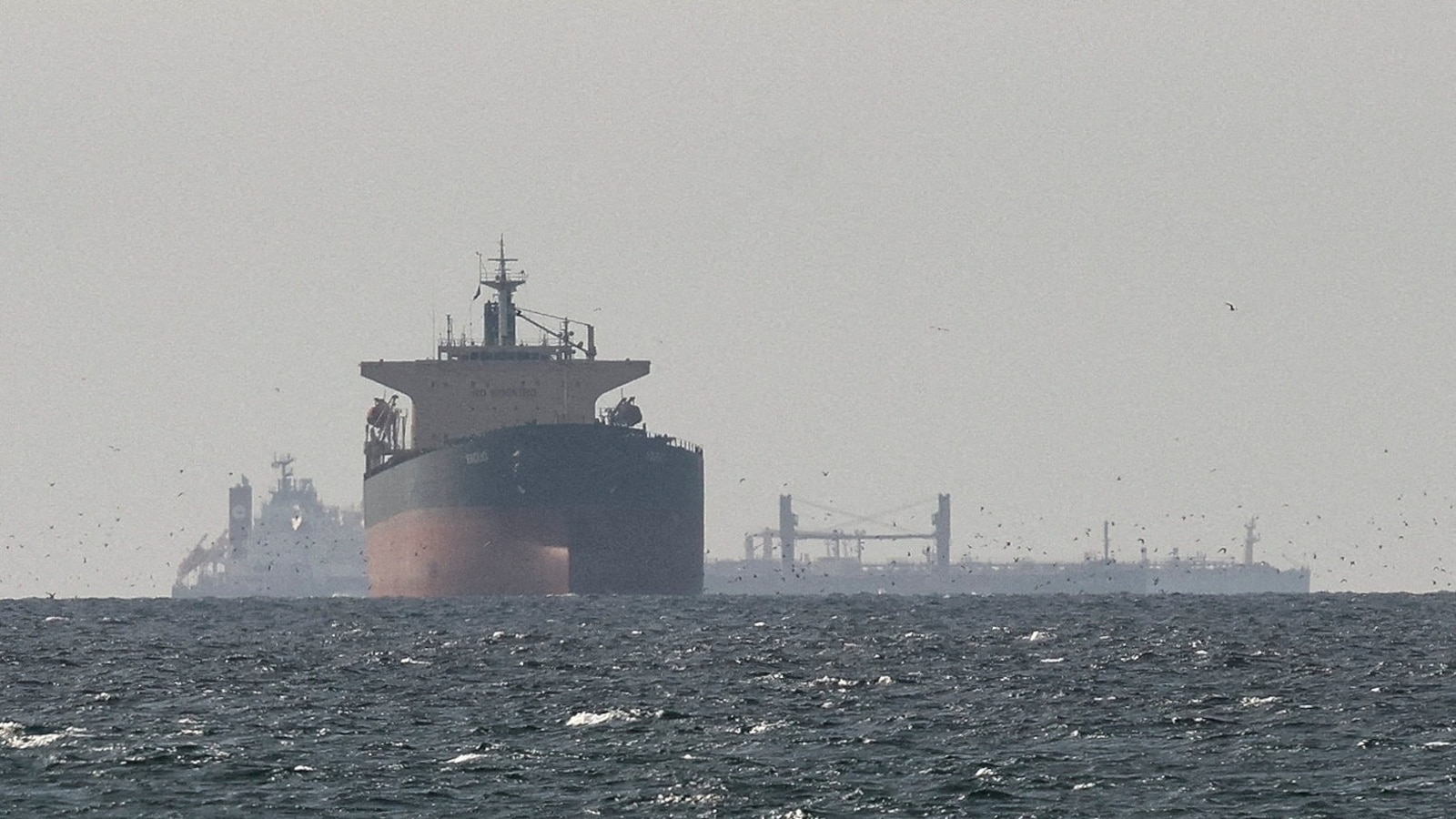
Strait of Hormuz disruptions amid the U.S.–Iran war have pushed global oil toward ~$100/barrel and U.S. gasoline to nearly $4/gal. About one-third of global seaborne fertilizer and helium transit the strait (urea volumes via the strait can be as high as two-thirds and urea prices have surged >40%), raising the risk of fertilizer-driven food price increases and helium-driven semiconductor input shortages. These supply shocks could amplify inflationary pressures and create broad, multi-month downside risks for consumer prices and tech-sector production.
A maritime chokepoint shock propagates through supply chains in predictable but non-linear ways: immediate freight-rate and insurance-cost spikes compress margins for commodity shippers and exporters, while the delivered-cost pass-through to downstream buyers typically arrives with a 6–12 week lag. That lag creates a window where inventory drawdowns at processors and OEMs force either production slowdowns or panic buying, amplifying price moves when restocking occurs.
For advanced manufacturing, small-volume specialty gases and chemical feedstocks act as binary bottlenecks — disruptions don’t just raise input cost, they create sequencing risk on fab and assembly lines, which compounds lead-time risk for finished goods. Memory and other high-capacity wafer lines are most exposed because they run tight just-in-time inventories; consequential delays translate into cascaded order pushouts and volatile margin recognition for chipmakers and their customers over a 3–9 month horizon.
Winners in a short-to-medium shock are assets that collect the freight or control scarce inputs: shipping owners, commodity exporters with flexible freight economics, and specialty-gas suppliers with global logistics footprints. Losers are manufacturers with limited input substitutability and high working-capital turnover — consumer electronics OEMs, certain auto supply chains, and retailers lacking inventory buffers — plus cyclical knock-on effects to food processors if ag inputs are constrained.
Key catalysts that could reverse the trade are diplomatic de‑escalation, emergency rerouting capacity coming online, or strategic stock releases; absent those, the new equilibrium for freight insurance and time-in-transit could persist for quarters, resetting contract terms and capex planning across logistics and industrial players.
AI-powered research, real-time alerts, and portfolio analytics for institutional investors.
Request DemoOverall Sentiment
strongly negative
Sentiment Score
-0.55
Ticker Sentiment
