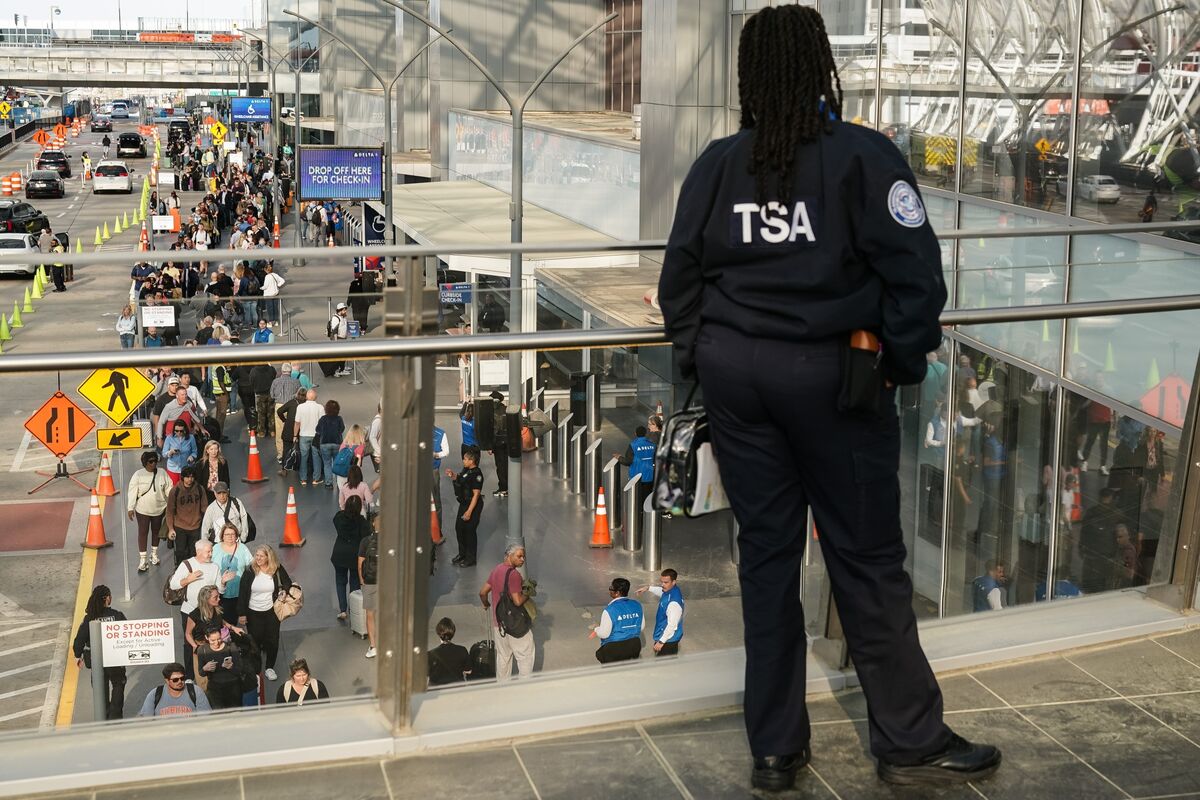
TSA says new transportation security officers require 4–6 months to be fully certified and warned they won’t be ready in time for the 2026 FIFA World Cup amid staffing shortages caused by a prolonged DHS funding shutdown. This creates operational risk for airports and the travel sector ahead of a major demand spike, potentially increasing delays and weighing on travel-related revenues and logistics planning.
Operational choke points at checkpoints will act like a negative supply shock to airport throughput: even modest per-gate delays (5–10 minutes) compound across peak windows and can reduce daily passenger flow by mid-single digits, pressuring same-day connectivity and increasing irregular ops costs for carriers concentrated in hub networks. That dynamic favors airlines and airports with flexible schedules, excess slack, or fewer connecting passengers, while penalizing hub-centric operators and concession-dependent airports that earn a high share of per-passenger ancillary revenue.
The likely policy response — expedited temporary credentialing, surge overtime, or an emergency procurement of automated screening lanes and advanced imaging systems — creates a two-stage opportunity. Near-term (weeks–months) you get higher labor/OPEX and operational disruption; medium-term (6–18 months) you get accelerated CapEx and vendor contract wins for security tech and integration firms. Expect procurement cycles to be politically accelerated once stakeholders quantify the revenue loss risk tied to large events, making this a catalyst-driven procurement story rather than a slow replacement cycle.
Tail risks center on a high-profile operational failure during the event that triggers legislative/regulatory overhaul, potential litigation, and a multi-year shift in how passenger screening is outsourced or automated. Reversals can come quickly if DHS funding is resolved or if temporary policy measures (e.g., provisional certification rules) are enacted, which would blunt both the disruption and the urgency for new tech spending. The window for tactical alpha is therefore narrow and tied to visible policy milestones (shutdown resolution, emergency rulemakings, or awarded contracts).
AI-powered research, real-time alerts, and portfolio analytics for institutional investors.
Overall Sentiment
mildly negative
Sentiment Score
-0.30
