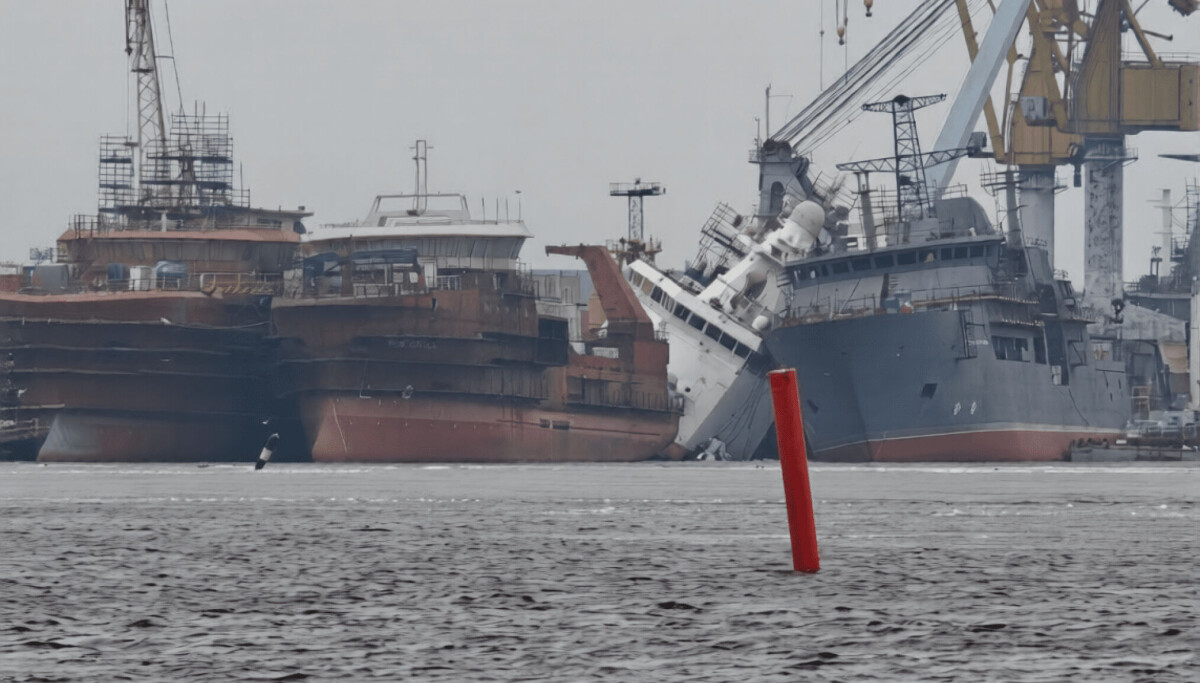
On March 25, Ukrainian drones struck the Vyborg shipyard (≈1,000 km from Ukraine), hitting a Project 23550 icebreaking patrol vessel believed to be the Purga and leaving it listing. The strike follows a March 23 attack that severely damaged the Primorsk oil terminal and halted oil exports; Project 23550 ships are strategic Arctic assets (icebreaking to 1.7m, helipad, UAVs, and containerized Kalibr missile capability). These attacks raise near-term geopolitical and energy-supply risk, likely adding upward pressure to oil prices and increasing operational, defense-sector and insurance exposures.
The strike demonstrates an operational reach that imposes recurring security externalities on peripheral industrial nodes (shipyards, terminals, repair yards). Expect immediate increases in defensive CAPEX and insurance premia for exposed maritime infrastructure; those cost items are discrete, billable, and will show up in vendor backlogs and insurer loss picks within 30–90 days.
Energy and logistics transmission is the clearest second-order channel: cargo re-routing, halted loadings and higher war-risk surcharges will transiently widen differentials and raise spot freight — a realistic near-term impact is a $3–7/bbl effective premium on Russian export crude and a 10–30% lift in tanker dayrates for routes avoiding contested waters over the next 2–8 weeks. That shock favors companies that capture freight spreads or have flexible storage/triage capacity.
Defense and maritime-surveillance vendors are the structural winners: demand shifts from platform production to layered perimeter defenses (small-boat interception, soft-kill EW, persistent ISR and counter-UAV systems). Orders here are smaller per contract but recurring and higher-margin (service, integration) — pricing power could show up in margins and backlog upgrades over the next 3–12 months.
Upside is conditional. The trend can reverse if (a) the attacker exhausts long-range drone stocks or (b) defenders field cost-effective countermeasures within weeks/months; escalation to more strategic targets or NATO involvement is a low-probability, high-impact tail that would re-rate risk premiums dramatically and alter our trade sizing.
AI-powered research, real-time alerts, and portfolio analytics for institutional investors.
Request DemoOverall Sentiment
mildly negative
Sentiment Score
-0.30
