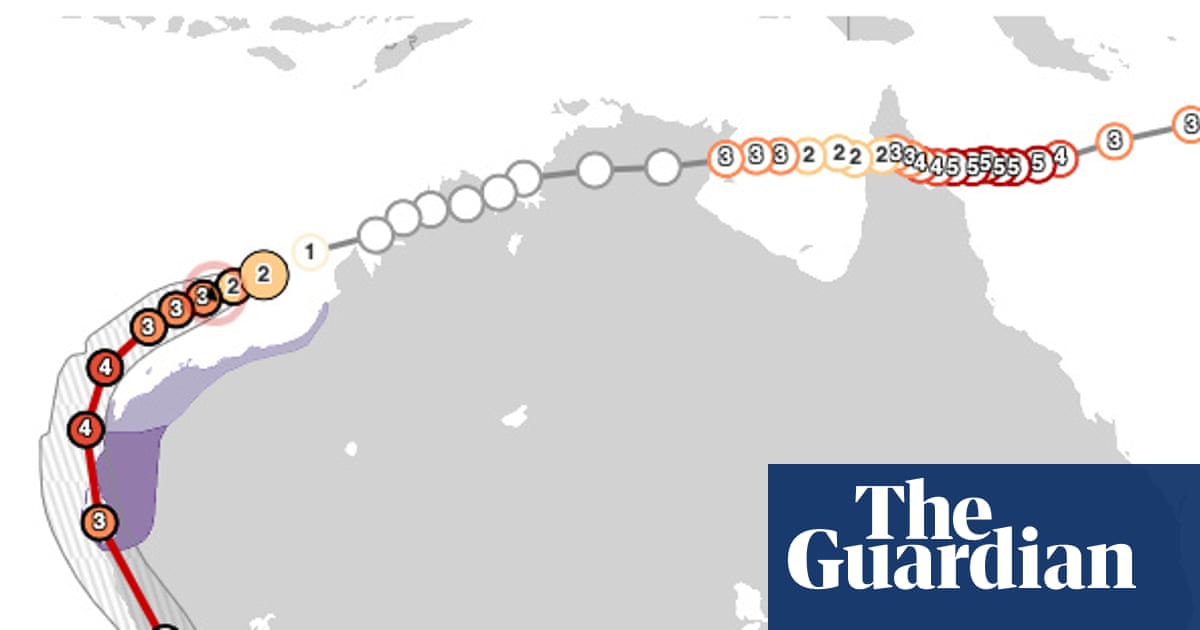
Tropical Cyclone Narelle became the first storm in over 20 years to make landfall in three Australian jurisdictions, after hitting far north Queensland as a high-end category 4, the Northern Territory as a category 3, and crossing the Western Australian coast. The system tracked more than 5,500 km as it moved west toward the Indian Ocean and likely passed east of Perth. Impacts are primarily weather and emergency-response related rather than immediate market-moving economic events.
The most immediate market mechanism is logistical chokepoints — damaged rail, port congestion and local power outages compress supply for days-to-weeks, creating outsized price moves in spot-exposed commodities and freight rates rather than structural supply deficits. Expect measurable impacts on short-dated thermal coal and regional LNG cargo availability within 0-6 weeks; shipping and demurrage costs can spike faster than producers can re-route cargo, amplifying near-term margins for spot sellers and short-covering squeezes.
Insurance and reinsurance are the primary financial second-order effects: realized claims will likely pressure Australian insurer earnings in the next quarter, but the bigger portfolio effect is on next-cycle reinsurance pricing and deductibles over 3-12 months — a regime shift that benefits underwriting-heavy insurers and engineering firms awarded reconstruction contracts. Conversely, capex timing risk rises for resource producers whose onshore services and procurement are delayed; this feeds through to quarterly production profiles and contractor revenue recognition for several quarters.
Catalysts that will reverse or amplify moves are observable and short-dated: port throughput stats, Newcastle coal index, and JKM/Asia spot LNG prints (watch 7–14 day windows). A rapid restoration of rail/port capacity will unwind commodity dislocations within 2–4 weeks; sustained outages or broader weather pattern persistence (seasonal shifts) would push impacts into multi-quarter re-pricing, materially affecting insurance loss ratios and contractor order books.
AI-powered research, real-time alerts, and portfolio analytics for institutional investors.
Request DemoOverall Sentiment
neutral
Sentiment Score
0.00
