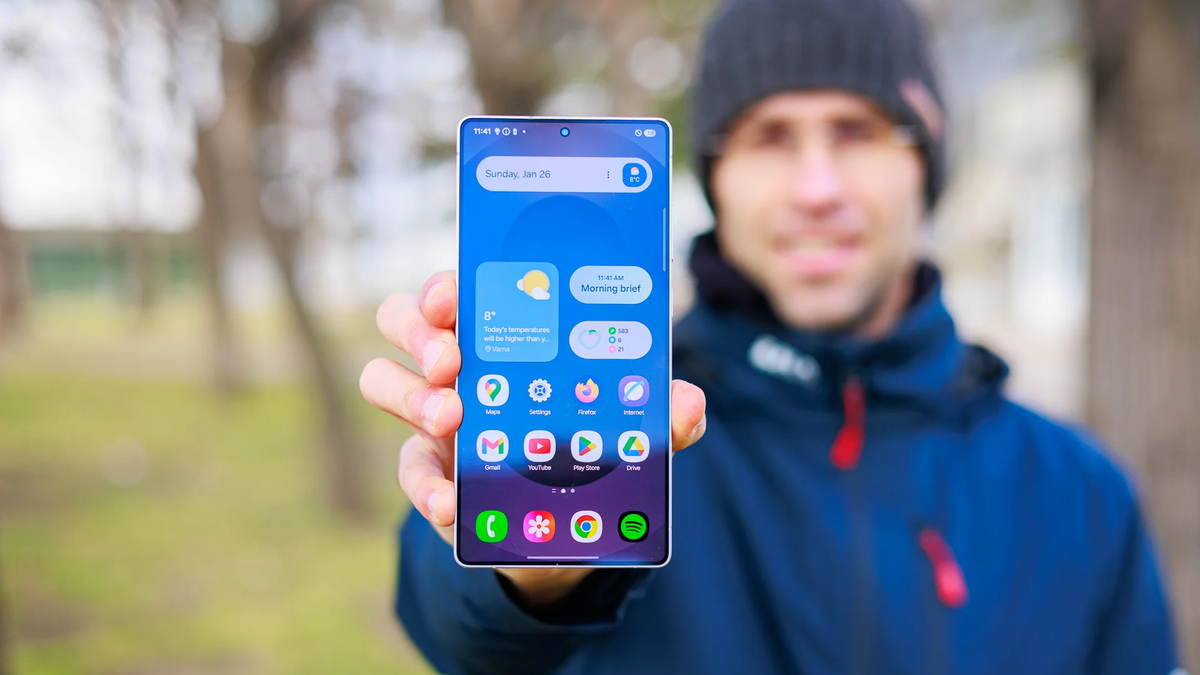
Samsung has begun rolling out One UI 8.5 stable builds on May 11, expanding beyond the Galaxy S25 series to the Galaxy Z Fold 7, Z Flip 7, and reportedly Galaxy S24/S24 FE beta users in Korea. The update brings features previously tied to the S26 lineup, including AirDrop-like file sharing and Call Screening, while some users report minor bugs such as transfer failures until reboot and occasional animation lag. The broader market impact appears limited, but the rollout reinforces Samsung’s ongoing software differentiation strategy ahead of One UI 9 and the Galaxy S26 cycle.
This is less a single product event than a distribution reset: Samsung is broadening the surface area of premium AI-style features across its installed base, which is strategically defensive against Apple and Chinese OEMs. The second-order effect is that feature differentiation at the high end gets compressed faster, so the economic moat shifts from hardware launch exclusivity to software cadence, ecosystem stickiness, and update reliability. That tends to be bullish for Samsung’s retention rate, but it also raises the bar for monetization because consumers will expect flagship-level capability on older devices without paying up for new hardware. The near-term risk is quality control. When software is rolled out faster across multiple generations, any instability disproportionately hurts perception among the most valuable users, and premium Android buyers are unusually sensitive to reliability because they are the least price-inelastic segment. If the update is mostly perceived as a patchwork of beta features rather than a polished upgrade, Samsung could create a short-lived support burden without meaningful handset upgrade pull-through over the next 1–2 quarters. From a competitive standpoint, this is mildly negative for ecosystem lock-in vendors that rely on feature gating, and mildly positive for handset replacement deferral: if older devices get enough of the “new” capabilities, consumers may stretch replacement cycles by 3–6 months. The contrarian angle is that this may actually be a good sign for Samsung’s software competence, which the market often undervalues; if execution holds, the company can reduce churn at the top end without needing a hero hardware cycle. The biggest upside catalyst would be a clean rollout that proves Samsung can monetize software as a retention tool, not just a marketing layer. The main failure mode is that this broad deployment dilutes the incentive to upgrade into the next flagship cohort, especially if the incremental features are incremental rather than must-have. If that happens, investors should expect a modest pressure on premium handset ASP mix over the next upgrade cycle, even if unit demand remains stable.
AI-powered research, real-time alerts, and portfolio analytics for institutional investors.
Request DemoOverall Sentiment
neutral
Sentiment Score
0.15
