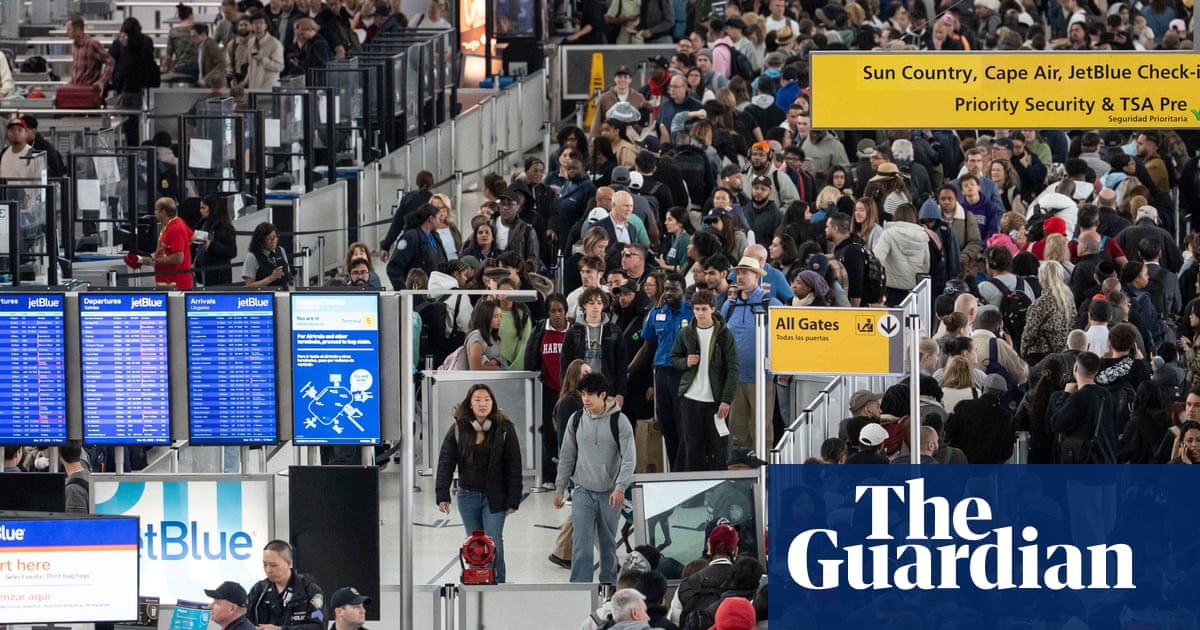
Republican leaders agreed to advance a DHS funding measure that would finance most Department of Homeland Security operations while excluding ICE and parts of Customs and Border Protection. The move could end the longest partial DHS funding lapse, which disrupted TSA operations and caused long airport security lines (pay for TSA workers was ordered by the president, easing wait times). Senate leaders signaled they will use budget reconciliation to fund ICE with Republican-only votes — potentially including funding for the Iran conflict and voter ID elements — but timing is unclear as Congress remains in recess and leaders say they hope to resolve it "in the coming days."
If near-term DHS operational funding is stabilized, the largest immediate macroeconomic benefit is operational risk removal for the air travel ecosystem — expect a near-term drop in irregular operations that can recover ~0.5–1.5% of quarterly revenue for major carriers through fewer cancellations, lower re-accommodation costs, and higher ancillary spend from regained consumer confidence. Airport concession and retail revenues typically lag passenger-count improvements by 1–2 weeks, so a measurable uplift should show in retail footfall and parking revenues within 2–6 weeks of stabilization.
A separate, partisan budgeting path that creates multi-quarter visibility for border and defense-related spending materially changes capital planning for mid-tier government contractors and specialty security vendors. If reconciliation successfully earmarks sustained enforcement/contingency spending, expect 12–24 month contract pipelines to firm up, which in turn supports margin rehabs for names with high government-revenue exposure — the incremental cashflows are lumpy but can lift small-cap suppliers more than the top primes in percent terms.
Key risks are political and legal rather than operational: a short delay or renewed negotiating brinkmanship would reintroduce outsized operational volatility in days-to-weeks, while a successful reconciliation package could carry election-year regulatory backlash that erodes long-term multiples for politically exposed sectors. For investors, asymmetric option structures and small starter positions are the efficient way to express directional bets given a high probability of headline noise in the coming 1–3 months and structural policy shifting over 6–24 months.
AI-powered research, real-time alerts, and portfolio analytics for institutional investors.
Request DemoOverall Sentiment
neutral
Sentiment Score
0.00
