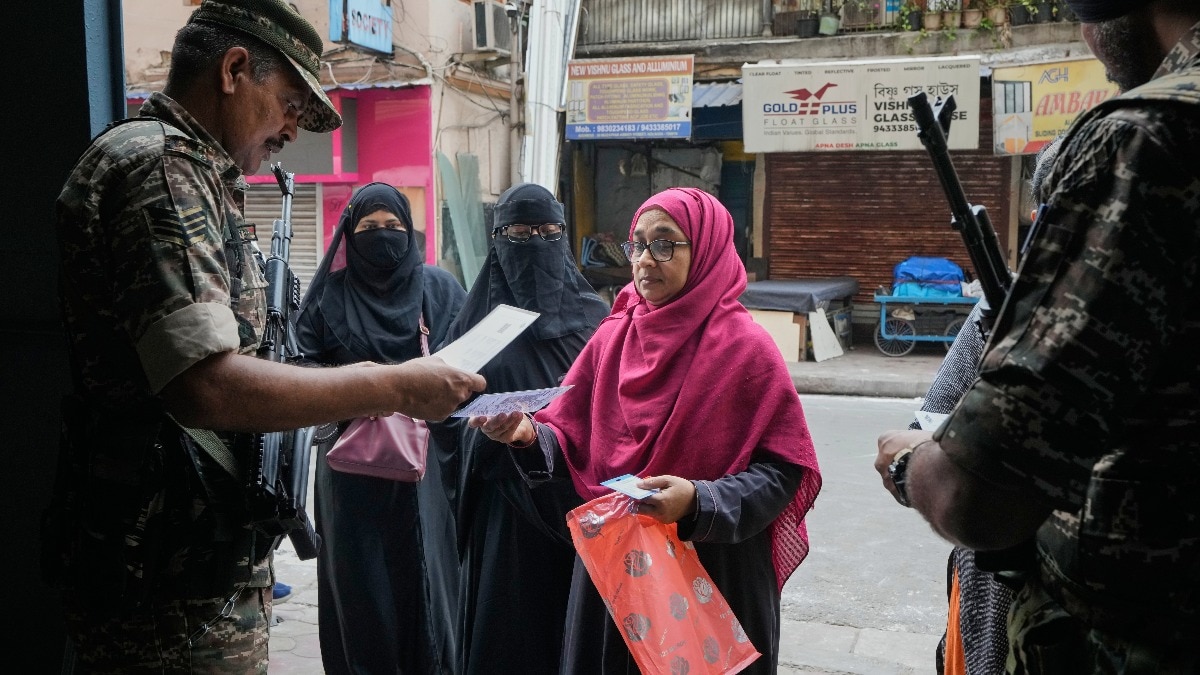
West Bengal's 2026 election was shaped by an unprecedented deployment of about 2.4 lakh central forces, with the Election Commission aiming to create a fear-free voting environment. The article argues that tighter security, CAPF deployment, surveillance, and anti-intimidation measures helped suppress poll violence and may have contributed to the BJP's decisive victory. The direct market impact is limited, but the result could matter for perceptions of political stability and governance in a large emerging-market state.
The market-relevant signal is not the election outcome itself but the state’s willingness to impose a visible coercive umbrella over a historically intimidation-driven voting ecosystem. That changes the expected value of future local power contests: if incumbents can no longer monetize fear as effectively, challenger vote conversion rises, but so does the probability that post-result violence gets compressed into the immediate aftermath rather than the campaign period. In other words, the “security premium” may persist for days-to-weeks, then fade quickly unless institutional enforcement remains unusually tight. For investors, the second-order effect is a relative shift in political risk pricing across Indian domestic-facing sectors with exposure to eastern India. Businesses that depend on local permitting, land acquisition, trucking routes, municipal relationships, or labor control should see lower disruption risk if the new equilibrium is durable; however, firms tied to incumbent patronage networks could face a short-term repricing of access. The larger macro issue is that highly securitized elections reduce tail-risk violence, which is positive for risk assets, but they also signal that political contestability is being managed through centralization rather than trust-building—usually a weak foundation for lasting stability. The contrarian view is that the move may be overread as a clean anti-incumbent or pro-BJP structural shift. Heavy security can temporarily equalize participation, but it can also mask underlying vote elasticity; if the new administration cannot convert a security-led win into service delivery, the same suppressed fear can resurface in local body elections within 6-18 months. The key catalyst to watch is whether there is a meaningful post-election reduction in street-level coercion and contract capture, which would validate a longer-duration regime change rather than a one-cycle protest vote.
AI-powered research, real-time alerts, and portfolio analytics for institutional investors.
Overall Sentiment
neutral
Sentiment Score
0.10
