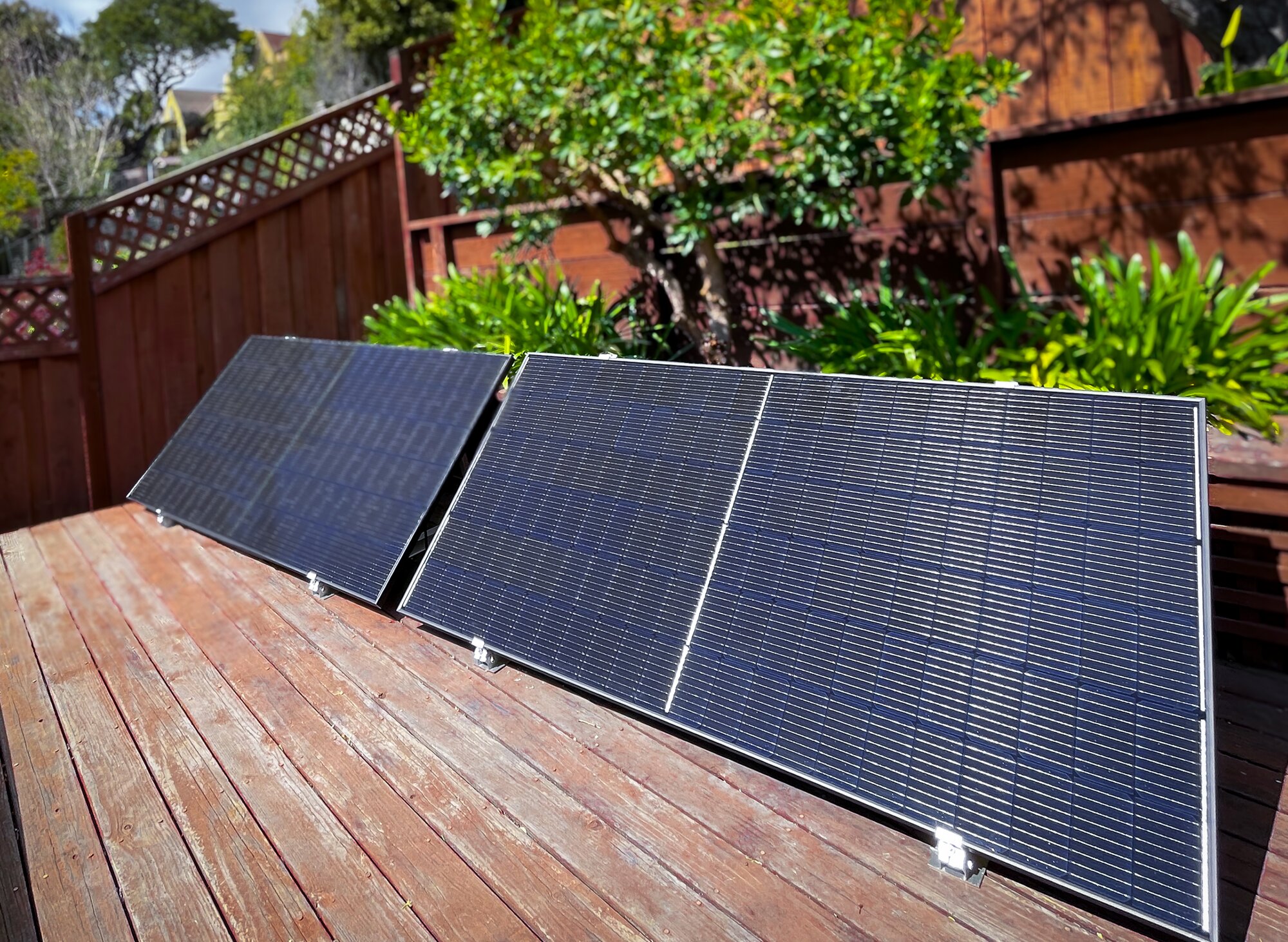
Colorado lawmakers introduced a bill to legalize UL-certified plug-in 'balcony' solar allowing installations without utility approval, aiming to expand access to renters and multifamily residents. Plug-in systems sell for roughly $1,500 versus an average rooftop install cost of ~$19,000 (2021); one user reported a ~40% cut to his electricity bill. The bill has bipartisan and gubernatorial backing, addresses safety concerns by requiring UL certification that auto-shuts during outages, and comes amid regional gas prices rising nearly 35%.
State-level legalization of plug-in balcony solar creates a concentrated, fast-moving regulatory market that will disproportionately reward gatekeepers of safety certification and distribution rather than panel manufacturers. If even a modest adoption curve (1–3M units nationwide over 3 years) materializes, at $1–1.5k per unit the addressable retail market becomes a multi-billion dollar channel for e-commerce and certification services, with magnified margin capture for those selling certification and compliance rather than commodity panels.
Certification creates a natural bottleneck and pricing lever: a small number of accredited certifiers can impose turn-times, testing fees and compliance specs that raise switching costs for new entrants. That dynamic favors established standards houses and professional services with recurring revenue models; it also raises a practical barrier for low-cost imports and will accelerate vertical integration (retailer + certified SKU + installer partnership) among large platform sellers.
Utilities face asymmetric effects over different horizons. Near term (months), distributed microgeneration lowers marginal kilowatt-hour volumes and peak demand uncertainty, pressuring topline growth; over 1–3 years, widespread small-scale adoption can reduce required distribution capex and peak-driven commodity exposure, improving regulated ROE stability. Key downside catalysts that could reverse momentum: a high-profile safety incident, coordinated utility lobbying leading to additional technical barriers, or supply-chain shocks that double retail prices within 6–12 months.
For portfolio construction, prioritize exposure to certification and platform distribution with defined revenue capture, size utility exposure modestly for regulatory insulation, and use structured, capped option trades to harvest the high-probability, limited-upside consumer adoption wave while protecting against policy reversals and safety headlines.
AI-powered research, real-time alerts, and portfolio analytics for institutional investors.
Request DemoOverall Sentiment
mildly positive
Sentiment Score
0.25
Ticker Sentiment
