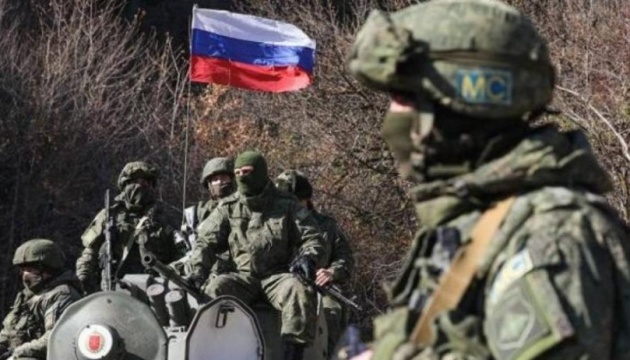
Russian forces have entrenched in the southern part of Hrabovske in Sumy region, with Ukrainian authorities estimating roughly 100 trained soldiers from a Russian motorized rifle brigade present; fighting continues but Kyiv reports the enemy advance has been blocked. The settlement's immediate border location limits operational depth and complicates defense, and Ukrainian forces recorded 126 combat engagements on Dec. 23 — a localized escalation that raises border-security risk and regional tail-risk for investors, though officials see no sign yet of a broader strategic operation.
Market structure: A localized entrenchment in Hrabovske benefits defense-equipment suppliers, ISR (intelligence, surveillance, reconnaissance) vendors and logistics/mobility contractors while compressing Ukrainian local economic activity and regional exporters. Expect short, sharp demand for munitions and tactical ISR with pricing power concentrated in US primes (LMT, NOC, RTX) and specialist sensor firms; downside for regional transport, grain logistics and any Ukraine-exposed SMEs. Cross-asset: anticipate 24–72h safe-haven bids (USD, gold +1–2%), modest RUB weakness (-1–3%) and a knee-jerk 1–3% rise in oil/wheat on shipping or export-risk headlines given 126 engagements/day baseline.
Risk assessment: Tail risks include a larger-scale offensive, targeted energy/infrastructure strikes, or expanded sanctions triggering >10–20% moves in commodities/RUB; probability low but impact high. Near-term (days) = volatility spikes; short-term (weeks–months) = defense procurement re-rates and supply-chain strain; long-term (quarters+) = sustained higher defense budgets (incremental +5–15% capex in NATO-aligned procurement if escalation recurs). Hidden dependencies: political signaling (info ops) can create trading windows without kinetic escalation; weather and holiday logistics are catalysts.
Trade implications: Tactical: establish 1–2% long exposure to RTX (RTX) and LMT (LMT) via 3-month 25-delta calls sized to limit capital at risk; add 0.5–1% GLD as asymmetrical hedge. Defensive short: buy 1-month 10% OTM puts on RSX (Russia ETF) sized 0.5% notional to hedge RUB/EM tail. Reduce 2–3% exposure to Europe cyclical travel carriers (sell IAG.L or equivalent ETF exposure) over next 30 days; re-evaluate after 7–14 days of stability.
Contrarian angles: The market may overprice strategic escalation risk from a tactical informational operation — defense equities often spike then mean-revert 10–20% if no follow-through, creating fade opportunities. Volatility sells (short-dated vega) can be profitable 48–96h after headline if no reinforcement; conversely, a sudden export-disruption headline (Black Sea closure) would invalidate fades and require immediate unwind. Historical parallels (localized border entrenchments in 2022–23) show 1–3 week risk windows followed by normalization unless operational depth increases.
AI-powered research, real-time alerts, and portfolio analytics for institutional investors.
Request DemoOverall Sentiment
moderately negative
Sentiment Score
-0.45
