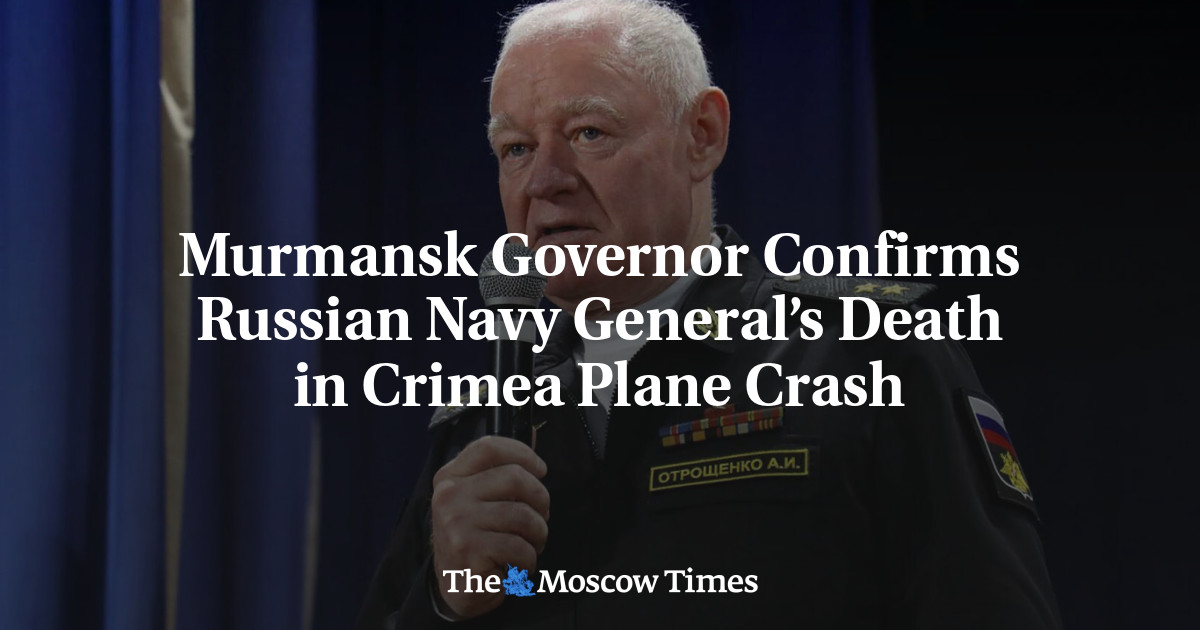
29 people aboard an Antonov An-26 military transport were killed when it crashed into a cliff near Sevastopol on March 31, including Lieutenant General Alexander Otroshchenko. Russia's Defense Ministry called it a routine flight with no sign of hostile fire, while federal investigators have opened a criminal probe into possible safety violations. BBC reports Otroshchenko is at least the 14th Russian general to die since the 2022 invasion, a development that could raise scrutiny of Russian military operations and modestly increase regional geopolitical risk.
This incident is best read as a symptom, not an isolated event: growing attrition among senior officers and aging Soviet-era airframes under sanctions create a compounded maintenance and logistics problem that degrades Russian long-range operational tempo over months. Expect short-term operational pauses/groundings of similar transport types for days–weeks while investigators and commanders review procedures, and a multi-quarter increase in demand for spares, avionics retrofits, and domestic production capacity as Kremlin priorities shift from theater expansion to sustainment.
Second-order effects flow into procurement and allied defense budgets: NATO members can credibly argue for accelerated tactical airlift, ISR, and air-defense spending when partner adversary logistics appear brittle; contract awards and emergency buys typically materialize on a 3–12 month cadence. Conversely, Russian procurement will be forced to substitute toward simpler, lower-tech platforms and increased UAV/autonomy investment to reduce crew exposure, reshaping vendor winner lists over 12–36 months toward firms able to deliver ruggedized logistics and ISR solutions under sanction constraints.
The key risk is political secrecy and noise: Moscow’s opaque investigations could conceal targeted-strike attribution or internal purge dynamics, either of which creates episodic volatility but opposite strategic implications (escalation vs bureaucratic consolidation). Tradeable catalysts to watch are (1) any formal grounding orders or fleet-wide inspections in the next 72 hours, (2) emergency procurement legislation or budget reallocation within 1–3 months, and (3) NATO procurement announcements or supplemental defense appropriations within 3–9 months that would concretely route revenue to Western/Turkish/European suppliers.
AI-powered research, real-time alerts, and portfolio analytics for institutional investors.
Request DemoOverall Sentiment
strongly negative
Sentiment Score
-0.60
