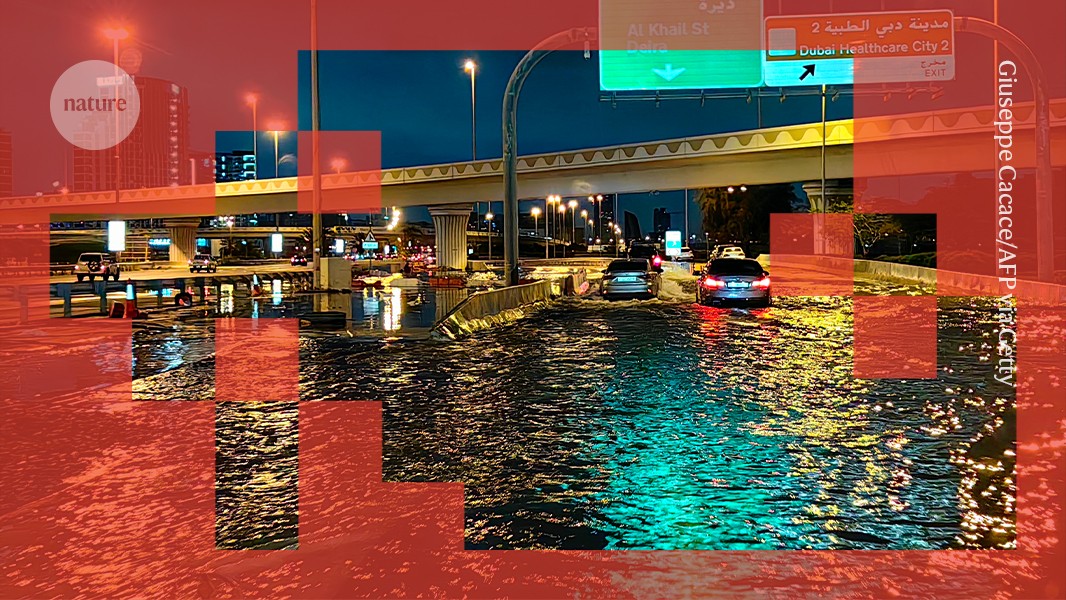
Researchers report that AI weather models—notably Google DeepMind’s GraphCast, NVIDIA’s FourCastNet and Huawei Cloud’s Pangu-Weather—can, especially when combined with physics-based climate models and statistical tools for rare events, markedly improve forecasting of unprecedented extreme weather; GraphCast retrospectively forecast Dubai’s extraordinary April 2024 rains eight days ahead, FourCastNet struggled with unseen tropical cyclones but showed cross-basin transfer learning, and a hybrid Pangu-Weather approach simulated mid-latitude heatwave probabilities as accurately as much slower conventional methods. This hybrid strategy could help overcome AI training-data limits and better characterize the tail risks of climate-driven extremes that are increasing in frequency. While still early-stage research, the advance has clear relevance for risk modeling, insurance, utilities and commodity markets that price and hedge exposure to rare but catastrophic weather events.
Researchers report meaningful progress in AI-driven extreme-weather forecasting: Google DeepMind’s GraphCast retrospectively forecast Dubai’s extraordinary April 2024 rains eight days ahead, NVIDIA’s FourCastNet showed transfer-learning across ocean basins but underperformed on the strongest tropical cyclones, and Huawei Cloud’s Pangu-Weather combined with a physics-based global climate model plus rare-event statistics to simulate mid-latitude heatwave probabilities as accurately as much slower conventional methods. The work, posted in arXiv preprints and set for presentation at major conferences, demonstrates that hybrid AI–physics approaches can produce faster probabilistic tail-risk estimates that are comparable to established models. Researchers highlight a core limitation: AI training datasets often span roughly 40 years and struggle to represent 1-in-1,000-year extremes, which explains FourCastNet’s weakness on unseen cyclones but also motivates transfer-learning and hybrid strategies. For markets, this research has direct relevance to risk modeling, insurance pricing, utilities and commodity hedging because faster, more accurate tail-risk forecasts could change how catastrophic-weather exposure is priced, but the work remains early-stage and requires operational validation and governance before broad commercial adoption.
AI-powered research, real-time alerts, and portfolio analytics for institutional investors.
Request DemoOverall Sentiment
mildly positive
Sentiment Score
0.25
Ticker Sentiment
