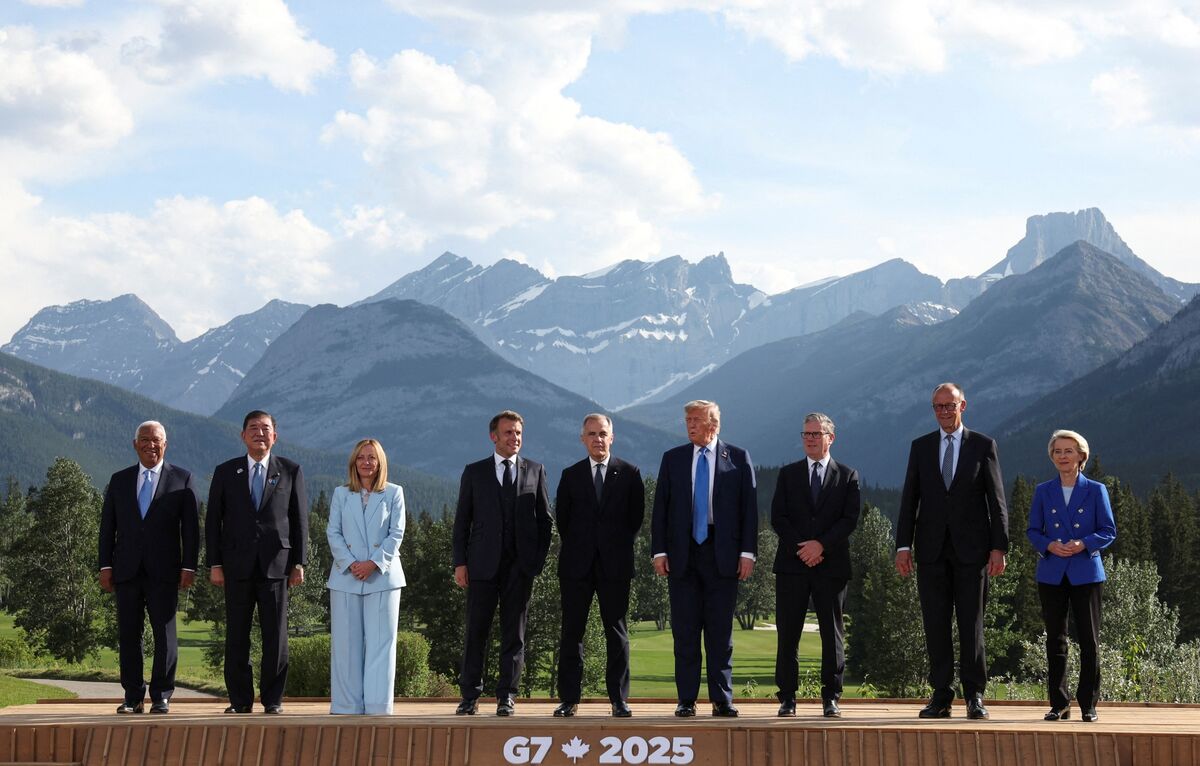
G-7 leaders, including the Prime Ministers of Canada and the UK, the German Chancellor, the Italian Premier, and the French President, held an informal meeting to discuss escalating tensions in the Middle East at the G-7 summit in Kananaskis. The unplanned gathering occurred before the arrival of US President Donald Trump, highlighting a potential shift in G-7 dynamics.
The G-7 summit in Kananaskis is reportedly navigating a "New Reality," potentially marked by diminished unity, as highlighted by an informal gathering of key leaders—Canadian Prime Minister Mark Carney, UK Prime Minister Keir Starmer, German Chancellor Friedrich Merz, Italian Premier Giorgia Meloni, and French President Emmanuel Macron—prior to the arrival of US President Donald Trump. This group engaged in discussions over significant issues, notably "escalating tensions in the Middle East," in what was described as a "relaxed" atmosphere among "friends." This pre-emptive meeting, coupled with the article's framing of potential disunity linked to the US President, contributes to a "moderately negative" sentiment (score -0.35) and an "uncertain" overall tone regarding the summit's outcomes and G-7 cohesion. The focus on geopolitical flashpoints, categorized under the themes of "Geopolitics & War" and "Elections & Domestic Politics," suggests these will be critical areas to watch, even if the immediate market impact is currently assessed as low to moderate (0.3). The absence of specific company involvement directs focus towards macroeconomic and geopolitical ramifications.
AI-powered research, real-time alerts, and portfolio analytics for institutional investors.
Request DemoOverall Sentiment
moderately negative
Sentiment Score
-0.35
