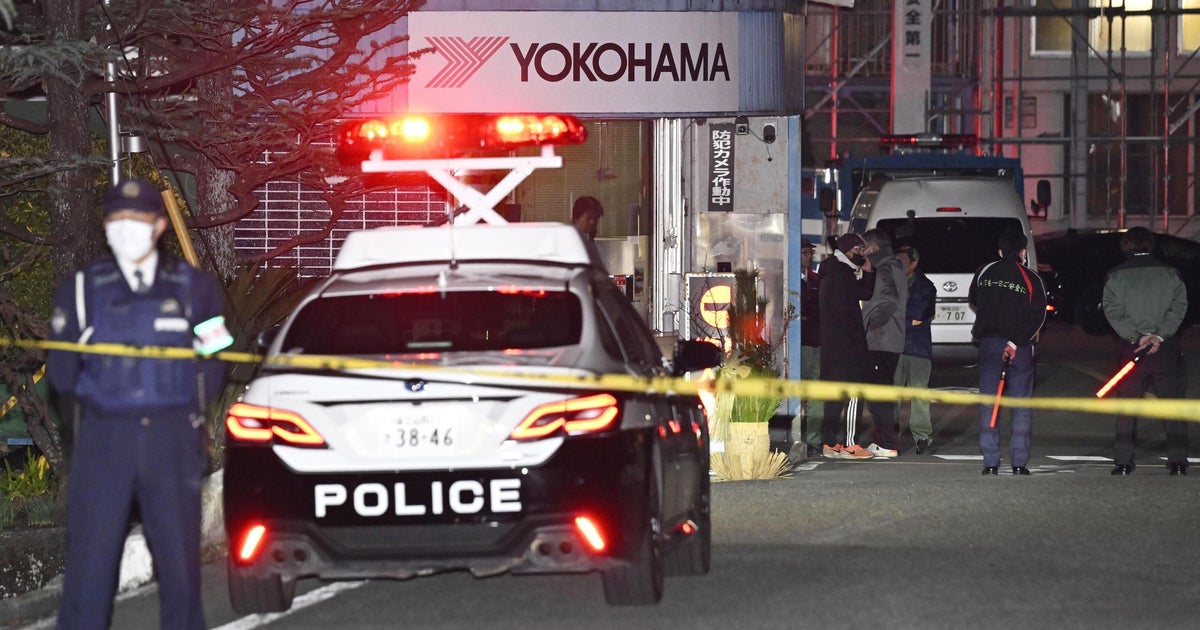
A suspect attacked workers at a Yokohama Rubber Company factory in Mishima, Shizuoka, stabbing eight people (five in serious condition) and injuring seven others with a liquid believed to be bleach, for a total of 15 injured; a 38-year-old man with reported ties to the plant was arrested for alleged attempted murder. The assailant reportedly wore a gas mask and carried a survival knife; authorities have not disclosed a motive. The incident poses potential short-term operational, reputational and workplace-safety risks for the factory and the employer, though immediate broader market impact appears limited.
Market structure: This is a localized operational shock with asymmetric winners — private security and workplace-safety vendors (e.g., Secom 9735.T, ALSOK 2331.T) gain likely incremental contract wins and pricing power of ~3–5% over 3–6 months, while the affected manufacturer (Yokohama Rubber 5101.T) faces immediate reputational and operational risk. Broader tire supply/demand is unchanged unless capacity loss >10% for >4 weeks, which would materially tighten replacement-tire pricing and OEM supply chains.
Risk assessment: Tail risks include copycat attacks or regulatory tightening that raise compliance capex by 1–3% of revenue and litigation exposure of JPY 1–10bn; probability low but impact concentrated on local plants. Time horizons: immediate (days) for newsflow and sentiment, short-term (weeks–months) for plant closures/earnings hits, long-term (quarters) for sustained OPEX increases and contract re-pricing; catalysts: company safety disclosures (72h), police findings (7–14d), quarterly guidance.
Trade implications: Tactical trades favor long security services and short idiosyncratic exposure to the specific factory owner. Use short-dated protective puts on 5101.T if operational suspension >2 weeks; buy 3–6 month call spreads on 9735.T/2331.T to capture re-contracting. Rotate 1–2% portfolio weight from Japan small-cap industrials into security/safety hardware names; entry after initial company guidance (48–72h) and exit on resolution or within 30–90 days.
Contrarian angles: The market will likely underprice second-order winners — large integrators of safety tech and professional security firms benefit from regulatory-driven recurring revenue, not one-offs. Historical parallels (isolated factory attacks in Japan) show limited market amplitude but 1–3 month operational disruption; mispricings will appear in small-cap suppliers and local insurers that sell commercial P&C, offering short-term alpha if identified quickly.
AI-powered research, real-time alerts, and portfolio analytics for institutional investors.
Request DemoOverall Sentiment
moderately negative
Sentiment Score
-0.40
