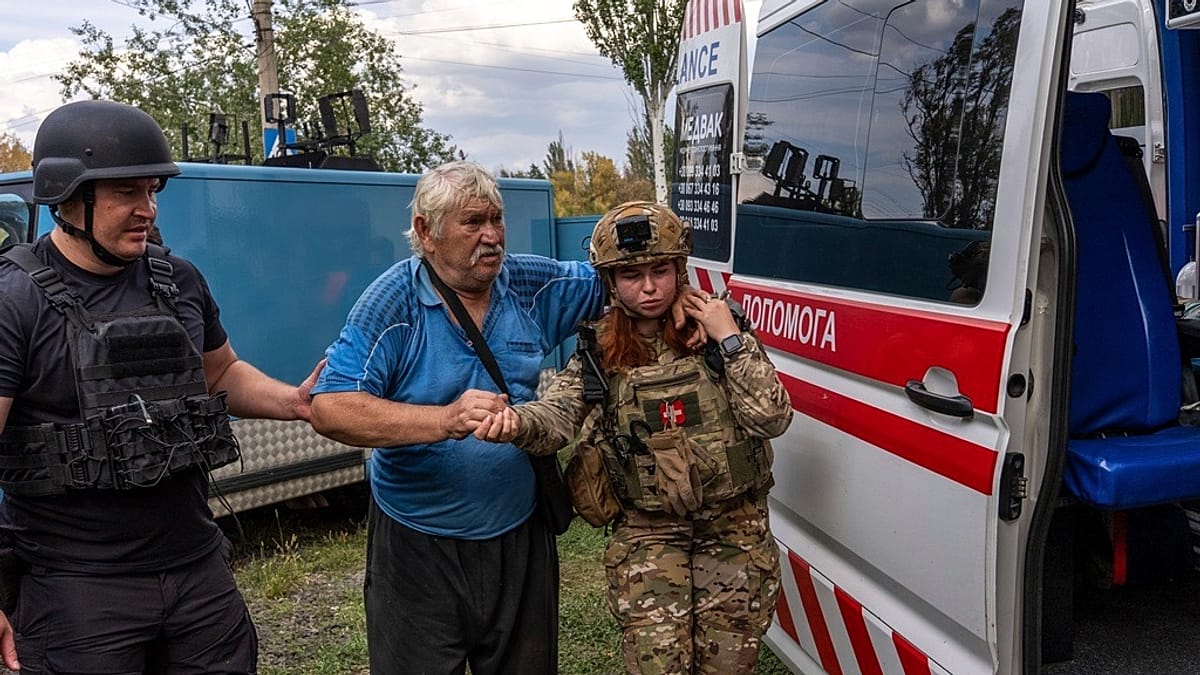
The UN Human Rights Monitoring Mission reported 2,514 civilians killed and 12,142 injured in Ukraine in 2025, a 31% increase from 2024 and 70% from 2023, with 97% of verified casualties in government-controlled areas attributed to Russian attacks. Short-range drone casualties rose 120% and long-range weapons—which caused more than a third of civilian harm, a 65% increase versus 2024—have intensified strikes including repeated assaults on the power grid amid freezing temperatures, raising the prospect of wider energy disruptions, higher demand for defense-related exposure, and a risk-off shift among investors.
Market structure: The immediate winners are aerospace & defense and counter-drone suppliers (e.g., RTX, LMT, GD, AVAV) as governments accelerate ordnance/air-defence procurement; energy-infrastructure and grid-resilience providers (NEE, AEP, Siemens) also gain pricing power for urgent capex. Losers include Ukrainian real economy, European utilities and regional travel/airlines, plus reinsurers (MunichRe, SwissRe) facing higher loss expectations. Cross-asset: expect wider credit spreads in EMEA, USD strength, higher oil/gas and gold, and higher implied equity volatility (VIX) in 1–3 months.
Risk assessment: Tail risks include NATO direct involvement or a major cyberattack on EU grids (low prob, high impact) which could catapult Brent >$120 and spike yields; expanded sanctions on energy could re-route flows and shock markets. Time horizons: days—spikes in oil, FX and safe-havens; weeks–months—defense orders and grid capex crystallize; 6–24 months—procurement cycles and balance-sheet impacts materialize. Hidden deps: munitions supply-chain (semis/metals) and insurer solvency; catalyst list: large infrastructure strike, US/EU military aid votes, or decisive diplomatic breakthroughs.
Trade implications: Direct plays—establish 2–3% long positions in RTX and LMT (buy stock) and 1–2% long in AVAV for counter-drone exposure; hedge with 3–6 month 5–10% OTM call spreads to cap cost. Macro hedges—buy 1% allocation GLD and 1–2% UUP (USD) for 1–3 month shock protection; initiate a 3-month Brent call spread (bull call spread on BZ/USO) sized to portfolio gamma risk. Pair trades—long LMT vs short BA (airline/commercial cyclical risk) to capture defense premium vs commercial aerospace weakness.
Contrarian angles: Consensus may overprice permanent elevated defense margins—historically post-conflict procurement spikes normalize in 12–24 months; defense stocks trade rich on multiples so prefer option-defined exposure rather than large outright longs. Also, if weather-driven demand for energy subsides or peace talks gain traction within 3 months, oil and gold could correct 10–20%—keep exit triggers (e.g., casualty rate falls 30% or EU aid package passage) and size positions with 100–200bp stop-losses.
AI-powered research, real-time alerts, and portfolio analytics for institutional investors.
Request DemoOverall Sentiment
strongly negative
Sentiment Score
-0.55
