China's space agency confirmed a window fracture on the Shenzhou-20 capsule forced it to be abandoned at the Tiangong space station, prompting an unprecedented cross-ship return where Shenzhou-21 — originally slated to remain docked for six months — brought the three Shenzhou-20 astronauts home; as a result Tiangong currently lacks an immediately available escape vehicle for the Shenzhou-21 crew, creating an operational safety and scheduling vulnerability. CMSA said the damaged craft must be repaired or deorbited to free a docking port, and announced Shenzhou-22 will be launched “at a suitable time” (it had been planned for April), signaling a likely acceleration of mission tempo and increased logistical strain on China’s human spaceflight program. Observers note the episode mirrors Russia’s recent Soyuz contingency and underscores technical and reputational risks that could affect China’s station operations and future launch planning.
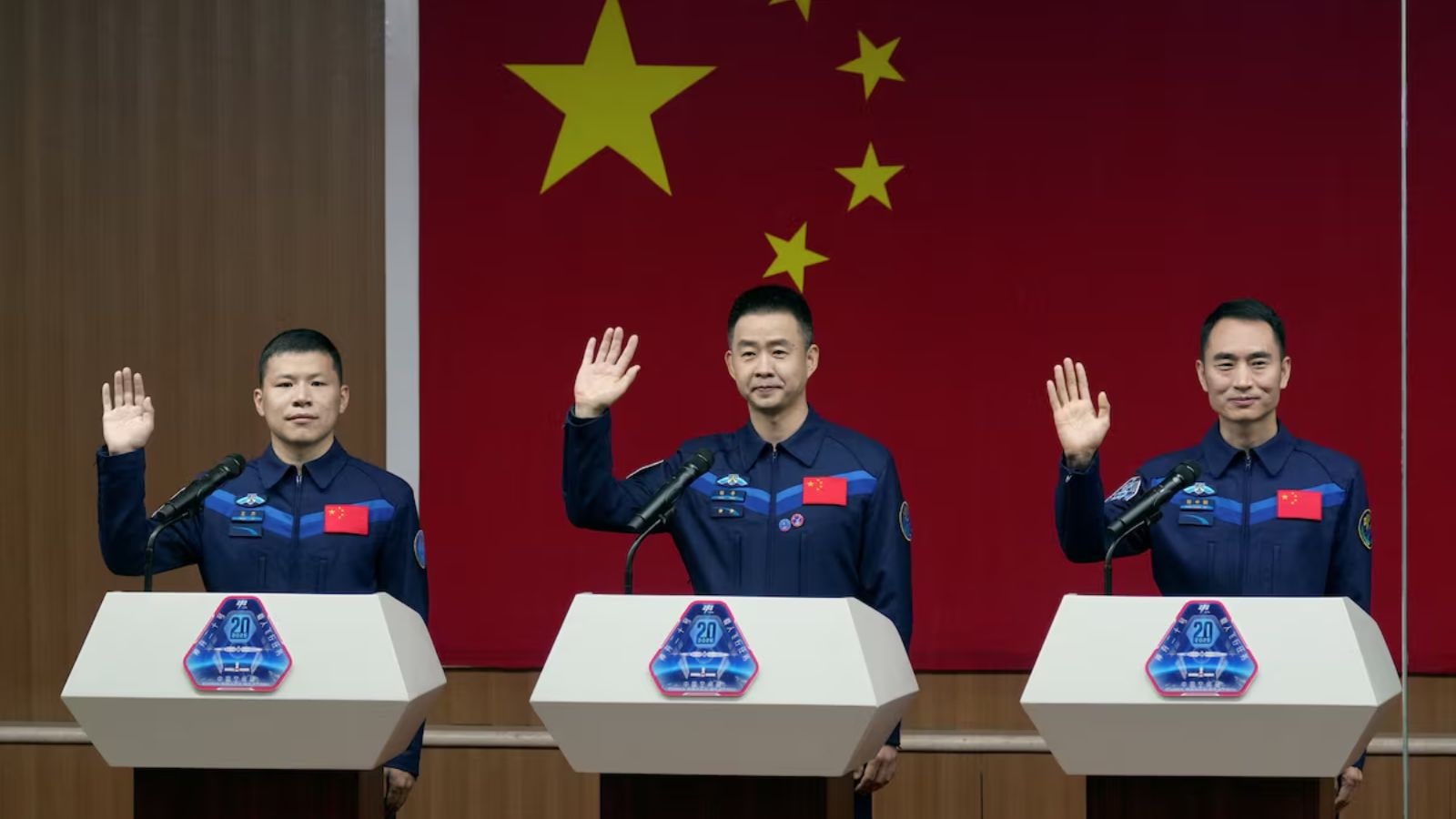
China’s space agency, CMSA, confirmed a window fracture on the Shenzhou-20 capsule that rendered it unsafe and led to the unprecedented abandonment of that ship at the Tiangong station; Shenzhou-21, which had docked two weeks earlier to replace Shenzhou-20’s crew, instead returned the Shenzhou-20 astronauts Chen Dong, Chen Zhongrui and Wang Jie to Earth and set a new record for the longest in-orbit stay by a Chinese team. The damaged Shenzhou-20 must be repaired in orbit or deorbited to free a docking port, and CMSA has announced Shenzhou-22 will be launched “at a suitable period” instead of its initial April timeline, indicating potential schedule disruption.
Tiangong currently lacks an immediately available return vehicle for the Shenzhou-21 crew (which includes 32-year-old Wu Fei), creating an operational safety vulnerability that Chinese authorities have not publicly addressed beyond controlled state media coverage of the safe return. Observers and a Russian specialist cited in the article liken the situation to the Soyuz MS-22 contingency (December 2022) where a replacement spacecraft was flown, implying China may follow a similar contingency path such as deorbiting or deploying a replacement craft.
Strategically, the episode raises technical, logistical and reputational risks for China’s human spaceflight program and could accelerate mission cadence and supplier demand if Shenzhou-22 is brought forward; market signals show moderately negative sentiment (score -0.5) but only modest immediate market impact (0.25). Investors should therefore treat this as a near-term operational risk with limited systemic market effect unless CMSA signals broader schedule changes, procurement shifts, or elevated government support for repairs and accelerated launches.
AI-powered research, real-time alerts, and portfolio analytics for institutional investors.
Request DemoOverall Sentiment
moderately negative
Sentiment Score
-0.50
