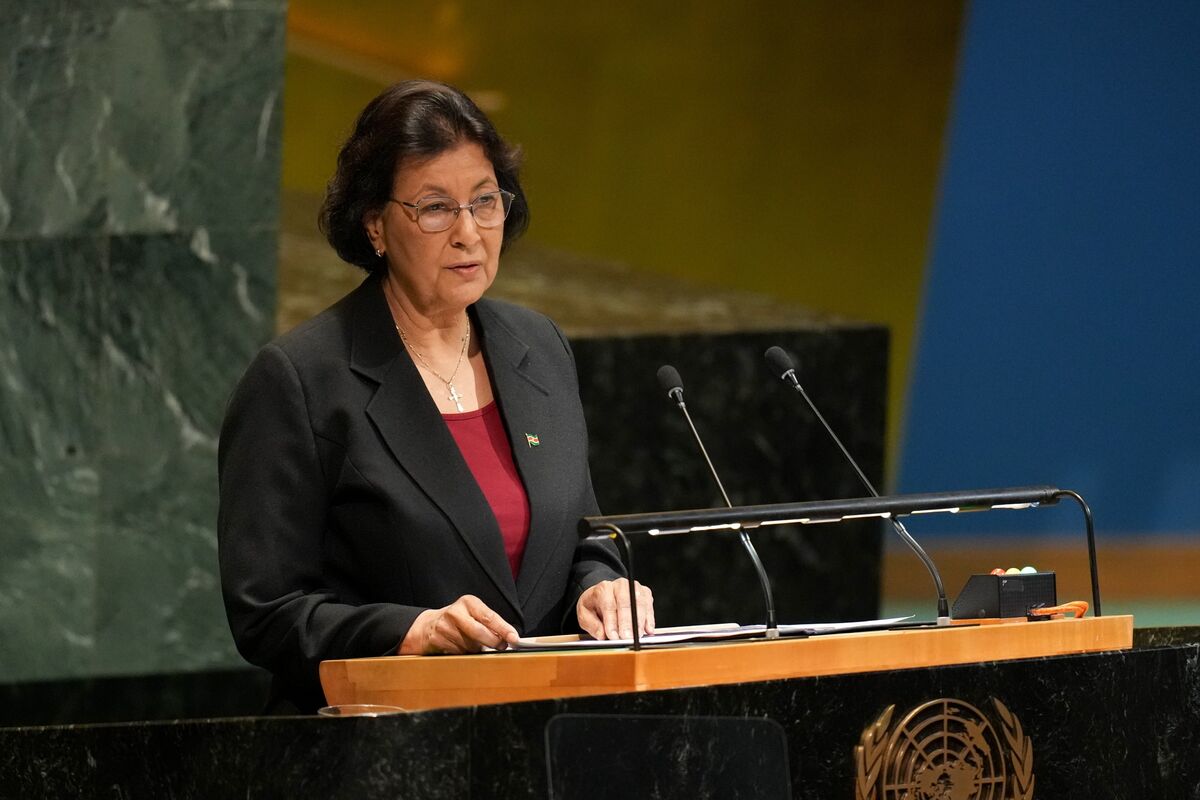
Suriname's new government is negotiating with bondholders and multilateral lenders to refinance its dollar bonds, aiming to defer debt servicing until after anticipated oil revenues begin flowing in 2028. President Jennifer Geerlings-Simons stated this strategy, potentially involving a recall of the 2033 bond, seeks to alleviate the debt burden over the next two years while also exploring an IMF program focused on institutional strengthening rather than austerity.
Suriname's new administration is proactively engaging with creditors, including bondholders and multilateral lenders, to restructure its dollar-denominated debt. The core strategy is to defer debt service payments for the next two years, effectively creating a fiscal bridge until substantial revenues from oil production are anticipated to begin in 2028. This plan may involve calling the existing 2033 bond. Concurrently, the government is considering a new program with the International Monetary Fund, signaling a notable policy shift by seeking to focus on institutional strengthening rather than austerity measures, which President Jennifer Geerlings-Simons stated have previously harmed the economy. This dual approach of debt reprofiling and a non-austerity IMF agreement highlights a strategy aimed at preserving economic stability in the short term while pinning long-term fiscal solvency on future commodity revenues. The success of this initiative is contingent upon both successful negotiations with creditors and the timely, on-budget realization of the projected oil revenue stream.
AI-powered research, real-time alerts, and portfolio analytics for institutional investors.
Request DemoOverall Sentiment
mixed
Sentiment Score
0.15
