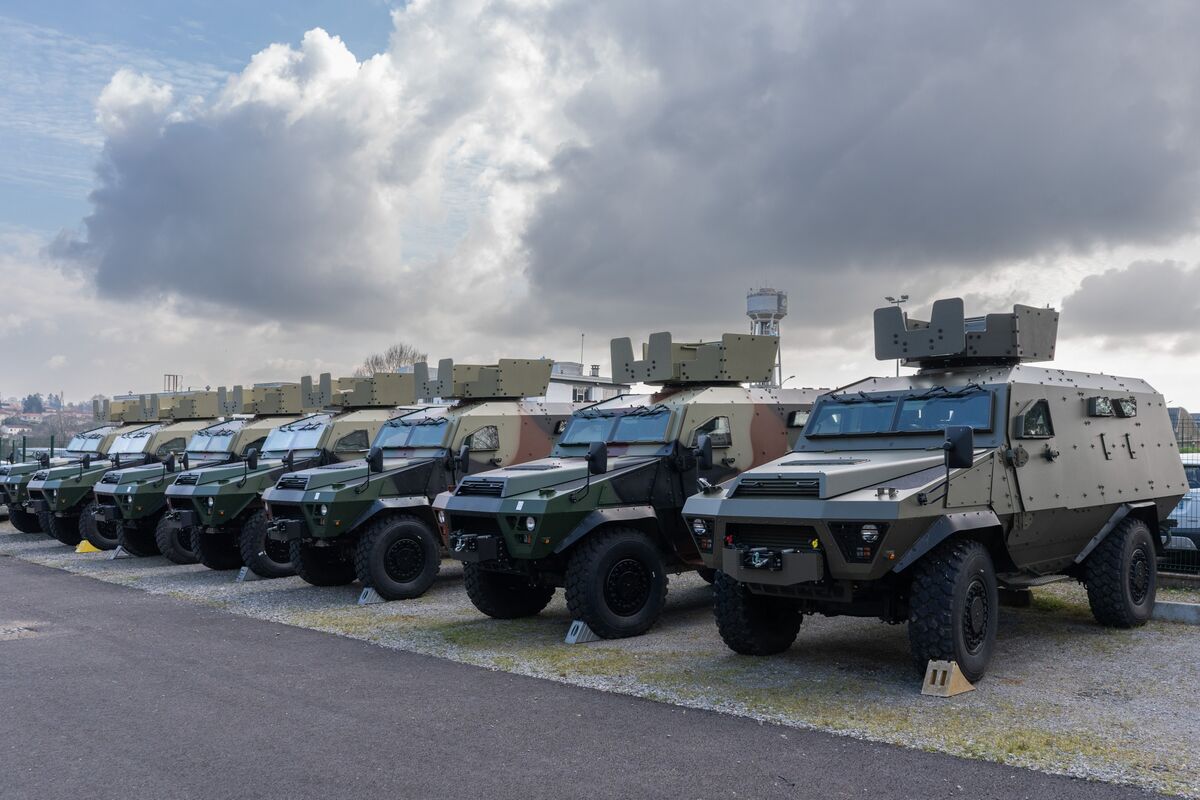
French President Emmanuel Macron is advocating for increased European military spending, a necessity amplified by Russia's invasion of Ukraine and evolving geopolitical dynamics. However, France faces significant domestic fiscal challenges, including persistent deficits and debt, which complicate the funding of this essential rearmament effort and necessitate difficult budgetary decisions.
A significant geopolitical shift, driven by Russia's invasion of Ukraine and the potential return of a disruptive U.S. administration, is compelling French President Emmanuel Macron to advocate for substantial increases in European defense spending. However, the primary obstacle to this strategic pivot is France's own precarious fiscal situation, characterized by persistent deficits and high national debt. The article frames this as a direct conflict between geopolitical necessity and domestic budgetary constraints, suggesting that funding for rearmament will require difficult trade-offs, particularly with entrenched social spending like pensions. This inherent tension, reflected in the cautious tone and mildly negative sentiment signal, places France's sovereign creditworthiness and its ability to execute on its strategic ambitions under intense scrutiny. The challenge is not one of intent but of fiscal capacity, creating uncertainty around the pace and scale of France's contribution to European hard power.
AI-powered research, real-time alerts, and portfolio analytics for institutional investors.
Request DemoOverall Sentiment
mildly negative
Sentiment Score
-0.30
