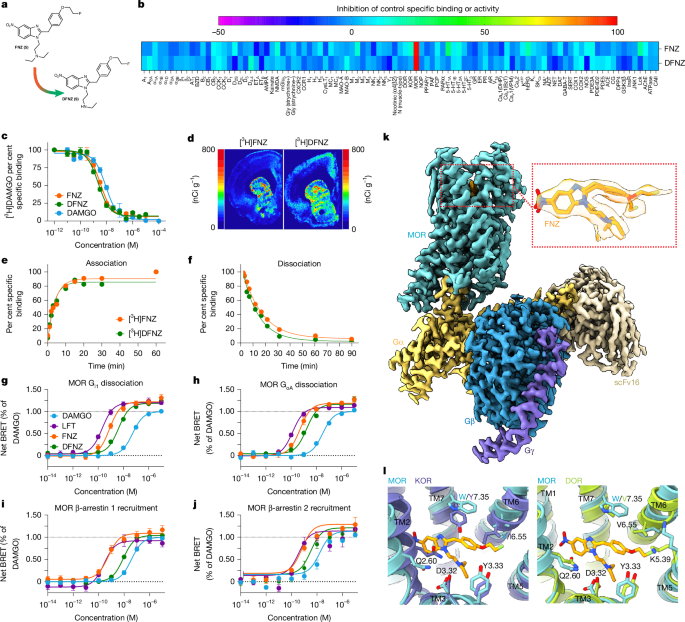
DFNZ (N‑desethyl‑fluornitrazene) is reported as a µ‑opioid receptor superagonist that produced effective analgesia in rodents with markedly reduced adverse effects: rat ED50 ≈0.3 mg/kg (≈60× less potent than parent FNZ at ≈0.005 mg/kg), brain/unbound plasma ratios ~0.9–1.5 (FNZ 2.4–3.2) consistent with impaired brain penetrance via P‑glycoprotein/BCRP efflux, and low MOR brain occupancy at therapeutic doses. Preclinical safety signals include no respiratory depression, no tolerance or MOR downregulation after repeated dosing, ~70% lower naloxone‑precipitated withdrawal versus morphine, weak reinforcing effects (lower IVSA breakpoints, rapid extinction) and limited phasic dopamine activation. Commercial/strategic note: a patent application for fluorinated etonitazene analogues is filed (WO2024196438A1); however these are preclinical results—human safety, regulatory review and clinical efficacy data are needed, so near‑term market impact is likely limited but potentially significant for biotech/pharma players if clinical translation succeeds.
This paper creates a new, actionable axis of differentiation in opioid R&D: signalling/PK engineering (temporal signalling bias + transporter-mediated brain clearance) can be used to preserve analgesia while suppressing classical CNS liabilities. That implies pharma development will bifurcate into (A) molecule-first strategies that chase intrinsic pharmacology and (B) delivery/ADME-first strategies that exploit transporters and formulations to manage exposure — the latter is a faster, less binary regulatory path for established players with formulation capability.
Second-order commercial winners will be the analytical and radiochemistry ecosystem (PET tracer manufacturing, LC–MS quantitative services, cryo-EM/structural biology consumables) because a therapeutic nitazene program requires heavy investment across these services during IND-enabling and human microdosing work. Conversely, small single-asset biotechs that attempt to commercialize nitazene scaffolds without deep CMC/formulation or controlled-release capability face outsized regulatory and liability risk; their valuation is fragile to a single adverse human signal or DEA scrutiny.
Key risk vectors and catalysts: clinical translation is the primary binary (12–36 months), but a more subtle near-term tail risk is drug–drug interaction with P-glycoprotein/BCRP inhibitors or patient genotypes that increase CNS exposure — those would quickly reverse safety claims. Watch for three catalysts: IND filings/licensing deals (months), patent grants or government licensing decisions (6–18 months), and any regulatory guidance or scheduling actions that could accelerate or block commercial pathways.
AI-powered research, real-time alerts, and portfolio analytics for institutional investors.
Request DemoOverall Sentiment
moderately positive
Sentiment Score
0.40
Ticker Sentiment
