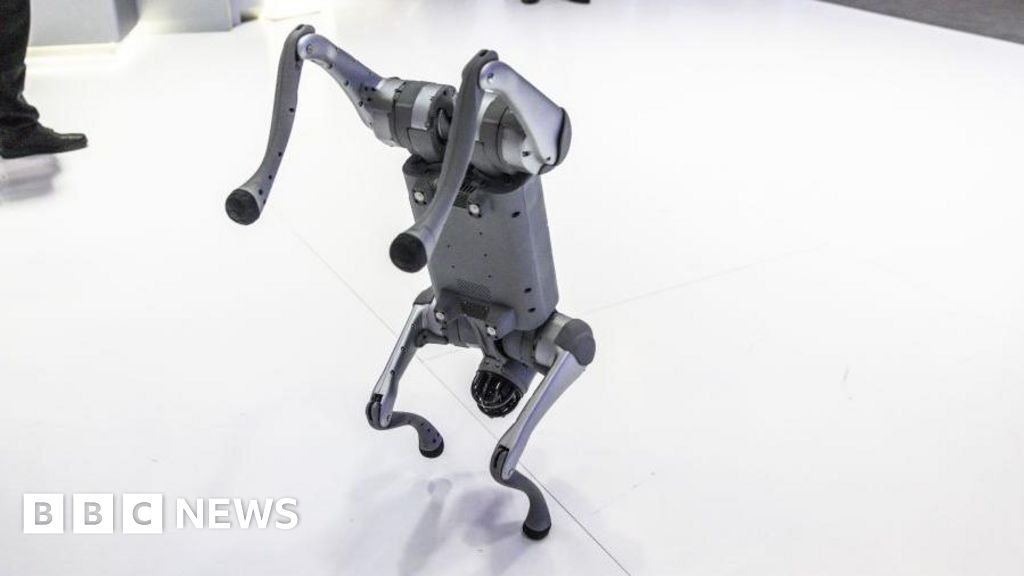
At the India AI Impact Summit in Delhi, a Galgotias University professor was filmed claiming a robotic dog called “Orion” was developed at the university; viewers identified the machine as Unitree Robotics’ commercially sold Go2 model (starting ~200,000 rupees / $2,200), triggering accusations of false attribution. The university denied asserting it built the robot and the stall reportedly had power cut amid the backlash; the episode is a reputational and governance issue for the summit’s organisers but poses limited direct financial or market impact.
Market structure: The incident is a reputational, not technological, shock—winners are established AI platform and hardware vendors (large-cap cloud/AI names like GOOGL and NVDA) who benefit from buyer preference for verified suppliers; losers are small Indian demo-driven startups and university spinouts that rely on summit validation. Expect event-driven flows: small-cap India tech/education names could see a 1–3% headline-driven knee-jerk selloff over 1–7 days, while global AI leaders’ sentiment should be steady-to-positive given continued policy focus.
Competitive dynamics & supply/demand: This does not change fundamental demand for AI compute or robotics hardware, but it raises the bar for provenance and procurement due diligence—buyers will favor branded suppliers and certified vendors, marginally increasing pricing power for Tier-1 vendors (0.5–1% pricing tailwind across contracts over 6–12 months). Cross-asset: expect modest INR weakness (~0.5–1% intraday on headline shock), 2–6bp widening in 10y INR spreads, and small options vol spikes in India tech names.
Risk assessment: Tail risks include regulatory action (e.g., tightened exhibition/foreign procurement rules) that could remove 0.5–2% revenue from foreign robotics suppliers to India over 12–24 months, or political amplification ahead of elections creating broader tech protectionism. Hidden dependencies: social-media amplification and government optics can convert a small PR event into policy change; catalysts to watch are ministry statements and booth bans in next 7–30 days.
Trade & contrarian view: The market is overstating reputational contagion; AI adoption narrative remains intact—large-cap AI exposure is the preferred long, while selectively hedging India/education-exposed small caps is prudent. If any policy levers appear (formal investigation or procurement restrictions), that would be the trigger to widen hedges or short targeted India tech names for 3–12 months.
AI-powered research, real-time alerts, and portfolio analytics for institutional investors.
Request DemoOverall Sentiment
mildly negative
Sentiment Score
-0.25
Ticker Sentiment
