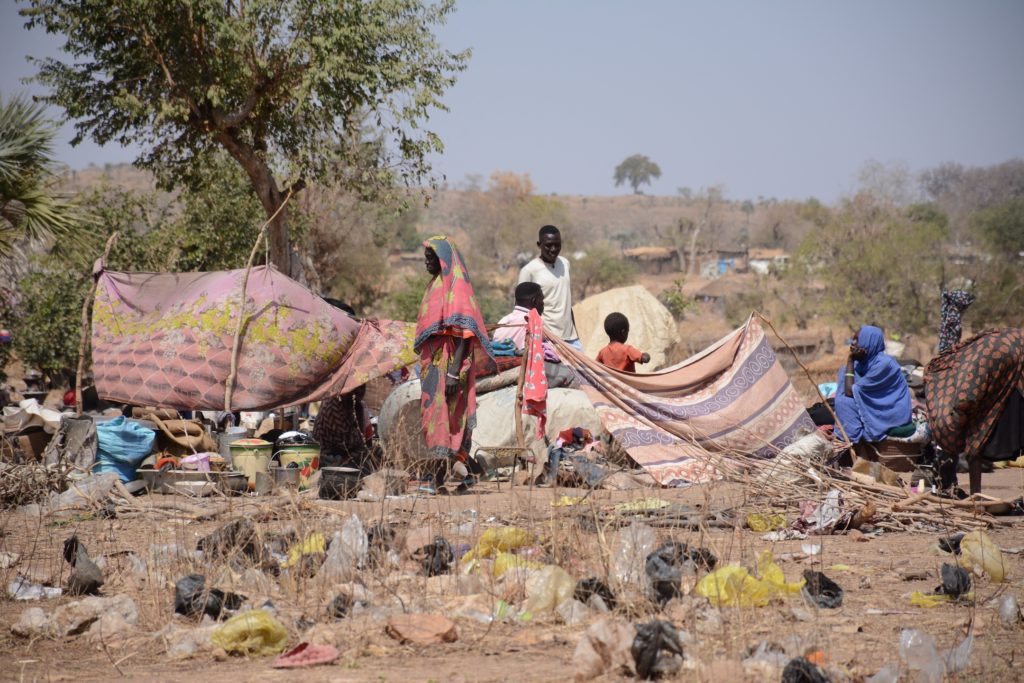
Jan Egeland, secretary-general of the Norwegian Refugee Council, warned that South Kordofan is facing a rapidly escalating hunger catastrophe that could become a 'biblical' famine within three months unless humanitarian access and aid delivery are rapidly increased. Although a U.S. event reportedly secured $1.5 billion in new pledges and Gulf states (including UAE) have signaled $200–500 million commitments, Egeland said money and supplies have not reached besieged areas, NGOs are overstretched, and impending rains will make logistics impossible — raising acute humanitarian risk and potential regional destabilization that requires immediate donor procurement and logistical action.
Market structure: Humanitarian collapse in Sudan straight-lines into winners (air/sea charter & logistics contractors, humanitarian suppliers) and losers (frontier Sudanese assets, regional EM credit). Expect tighter regional grain/sorghum flows lifting nearby agricultural commodity prices by low-double digits if access remains blocked for 6–12 weeks; safe-haven bids should lift gold and USD while EM sovereign spreads widen 100–300bp in the most exposed credits.
Risk assessment: Tail risks include maritime or port interdiction (Port Sudan) or foreign military intervention that would spike freight and oil risk premia; probability low but impact large over 1–3 months. Immediate (days) risks are liquidity and headline-driven FX shocks; short-term (weeks) risk is donor funding lag and logistics bottlenecks; long-term (quarters) is regional refugee flows pressuring neighboring sovereigns and banking systems.
Trade implications: Tactical trades should favor commodity protection (wheat calls, gold) and EM downside hedges while avoiding direct frontier exposure. Competitive dynamics favor small-cap air-cargo/ACMI and specialist humanitarian contractors over broad defense primes; however, defense names can be used as volatility hedges. Watch catalysts: confirmed on-ground disbursement within 30 days, official ceasefire, or a 10%+ move in wheat/Brent.
Contrarian angles: The market underestimates incremental, short-duration revenue to logistics/charter names and private contractors once donor pledges convert to procurement (likely within 2–8 weeks if pressured). Reaction may be underdone for wheat (markets price a 2–4% shock but operational access suggests 8–15% risk); conversely, broad EM selling may be overdone vs. idiosyncratic Sudan exposure — selective hedging outperforms blanket EM cuts.
AI-powered research, real-time alerts, and portfolio analytics for institutional investors.
Request DemoOverall Sentiment
strongly negative
Sentiment Score
-0.60
