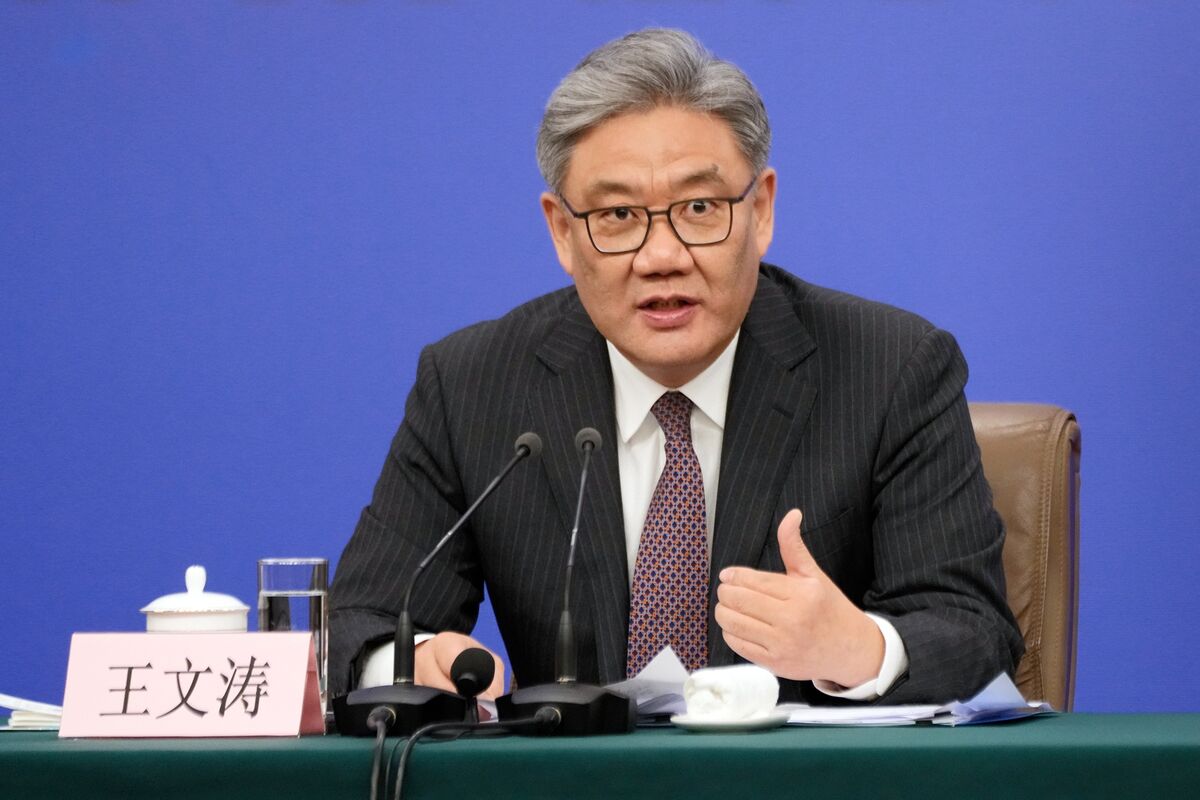
China's Commerce Minister Wang Wentao raised 'serious concerns' with the U.S. over new Section 301 probes into industrial overcapacity and alleged forced-labor products ahead of an expected presidential summit. The investigations form part of President Trump's revived tariff strategy after a Supreme Court ruling voided prior duties, increasing trade and tariff risk for China-exposed manufacturers and supply chains. Implication for portfolios: elevated political and regulatory risk that could pressure exporters, cyclical Chinese equities, and supply-chain-sensitive sectors in the near term.
This escalation increases the probability of targeted tariffs on commodity and intermediate goods where China has visible overcapacity—steel, aluminum, solar polysilicon and certain chemical intermediates—which mechanically raises input costs for downstream OEMs. A 10-15% tariff on those inputs would add roughly 1-4% to COGS for a typical electronics appliance or auto supplier that sources 20-30% of inputs from China, implying 100-300bps EBITDA compression before any price pass-through, with the biggest pain in low-margin, high-volume segments.
The immediate winners are domestic raw-material producers and regional near-shore manufacturers in Mexico and Southeast Asia who can pick up displaced volumes; expect incremental capex plans and order re-routing to show up in procurement data within 3-12 months and in trade flows within 6-18 months. Second-order winners include North American freight/logistics players focused on Mexico routes (spot rates could reprice +5-15% regionally) and contract manufacturers with flexible footprints; second-order losers include Chinese export champions, listed Chinese industrial suppliers, and retailers with lean inventories that cannot easily re-source.
Tail risks: broad retaliatory measures or non-tariff barriers from China could hit US agricultural and tech exporters and would materially change the winner/loser map within 60-180 days. Catalysts to watch that would flip the trade: formal exclusions/exemptions (near-term, 30-90 days), WTO or commercial settlements (months), and a summit-level political deal that narrows probe scope (event risk with likely market reaction within 48 hours). Expect policy uncertainty to persist for 6-18 months; structural supply-chain reconfiguration will be a 1-3 year story.
AI-powered research, real-time alerts, and portfolio analytics for institutional investors.
Request DemoOverall Sentiment
mildly negative
Sentiment Score
-0.15
