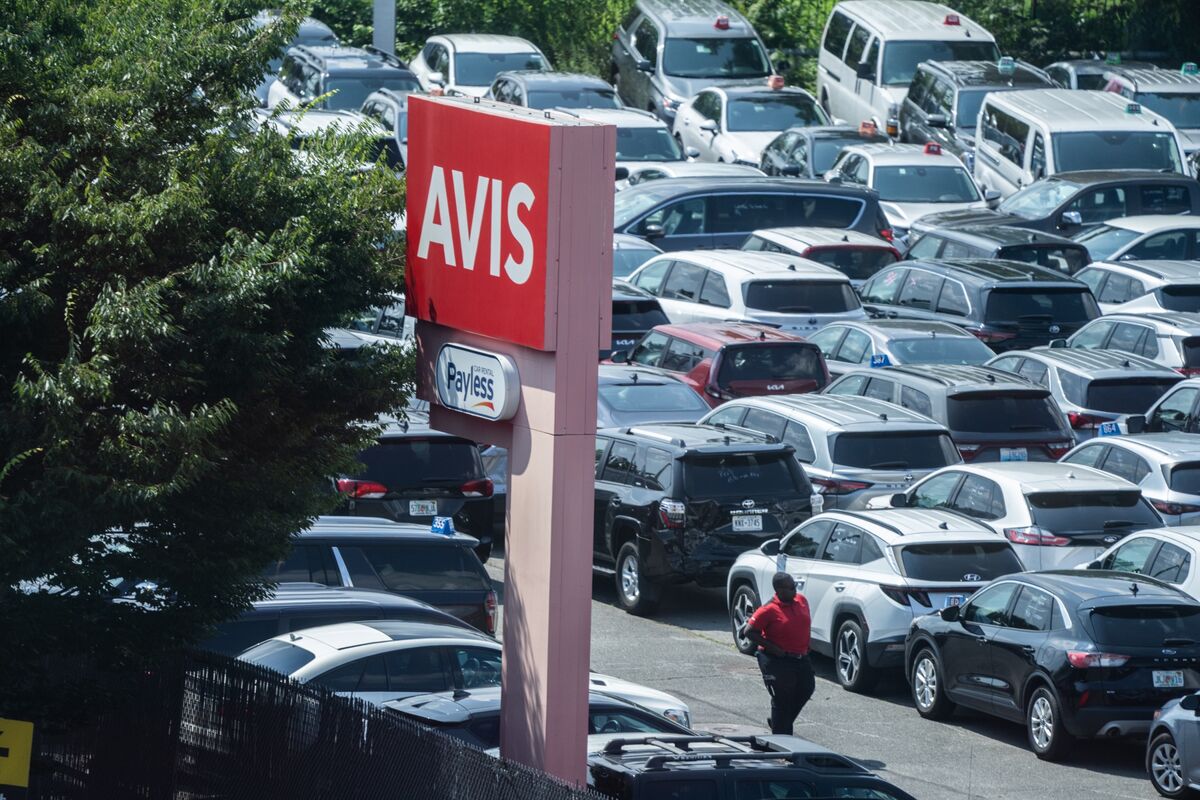
Hertz shares rose about 13% and Avis surged roughly 17% after traffic to Hertz's website jumped ~15% as a partial U.S. government shutdown strained TSA staffing and created airport congestion. Investors are buying car-rental stocks on expectations that disrupted air travel will push more people to drive; Hertz is promoting discounts on last‑minute and one‑way rentals.
The near-term demand shock props up pricing power for national rental platforms with scale (better allocation of one-way inventory, yield management, ancillary revenue). Expect utilization to tick higher for 4–12 weeks, prompting share gains that are more a function of margin expansion than unit growth. Larger firms will absorb incremental demand with lower marginal marketing spend, widening interim EBITDA margins vs smaller independents.
Second-order supply effects matter: to sustain elevated utilization, companies will either pull from the wholesale used-car channel or push incremental capex into new purchases. That supports wholesale/retail used-car prices and OEM dealer order fill for 3–9 months, but also increases fleet financing needs and operating leverage—interest-rate sensitivity rises. If fleets are rebuilt aggressively, used inventory could tighten later this year, keeping residual values elevated and pressuring future depreciation assumptions.
Catalysts and reversal risks are concentrated and short-dated. A rapid policy resolution or operational fixes at screening that restore flight confidence would unwind the outperformance within days; conversely, prolonged airport disruption sustains demand for months and forces fleet investment cycles. Fuel-price spikes, a sudden drop in consumer confidence, or fleet financing hiccups (wider spreads) are plausible downside triggers over a 1–6 month horizon.
The current move looks consensus momentum-driven; the market may be underpricing the capex and working-capital drag that follows a fleet scale-up. That makes options and pairs preferable to naked equity exposure: capture asymmetric upside from short-term demand while limiting exposure to longer-term balance-sheet execution risk.
AI-powered research, real-time alerts, and portfolio analytics for institutional investors.
Overall Sentiment
strongly positive
Sentiment Score
0.60
Ticker Sentiment
