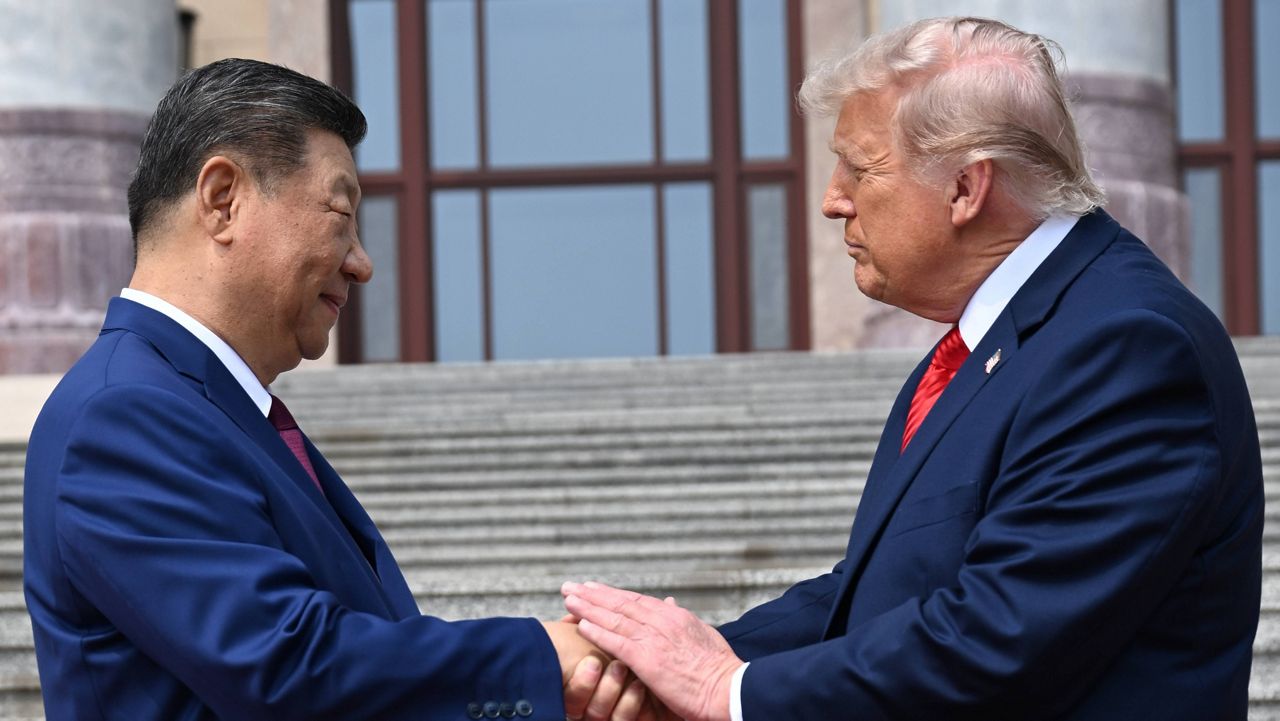
Tensions intensified on multiple fronts: Xi Jinping warned Trump that the U.S. and China could clash over Taiwan, while attacks near the Strait of Hormuz left one ship seized toward Iran and another cargo vessel sunk near Oman. The developments raise geopolitical risk for global shipping and energy markets, especially given the Strait of Hormuz’s role in roughly one-fifth of global oil flows. Separately, the Senate unanimously passed a resolution to withhold lawmakers’ pay during government shutdowns, and the FBI scrutiny of Kash Patel’s Hawaii trip adds to domestic political and governance noise.
The bigger market takeaway is that this is a renewed geopolitical volatility regime, not just an isolated headline. Taiwan risk raises the probability of U.S.-China retaliation channels that hit semis, industrial automation, and shipping insurance first, while Hormuz disruptions immediately reprice the energy complex and raise global freight/fuel pass-through. In practice, the market tends to underprice the correlation spike: crude, defense, and USD strength often move together while cyclicals and transport names get hit in the same window. The ICE print is modestly negative, but the second-order impact is more interesting than the direct one. A harder line on immigration and domestic enforcement keeps capex and staffing demand elevated for detention, monitoring, and transport contractors, but the leadership churn raises execution risk and procurement delays over the next 1-2 quarters. That makes the trade less about owning the whole complex and more about favoring operators with visible government backlog over names dependent on policy smoothness. The contrarian angle is that this may be more noise than regime change on Taiwan, but the Strait of Hormuz headlines are the part to respect because even short-lived disruptions can embed a higher risk premium into Brent and refined products for weeks. If crude spikes and then mean-reverts, energy equities can still outperform because balance sheets and buybacks amplify modest sustained price moves. The key risk is that the market extrapolates one-off incidents into a broader supply shock before there is any actual loss of export capacity. Watch for a fast reversal if diplomacy reduces the temperature in the Gulf or if Washington and Beijing use tariff/market access concessions to de-escalate. Until then, the asymmetry favors positioning for higher volatility over a directional macro collapse, especially in assets with immediate price transmission like oil, defense, and freight.
AI-powered research, real-time alerts, and portfolio analytics for institutional investors.
Request DemoOverall Sentiment
moderately negative
Sentiment Score
-0.35
Ticker Sentiment
