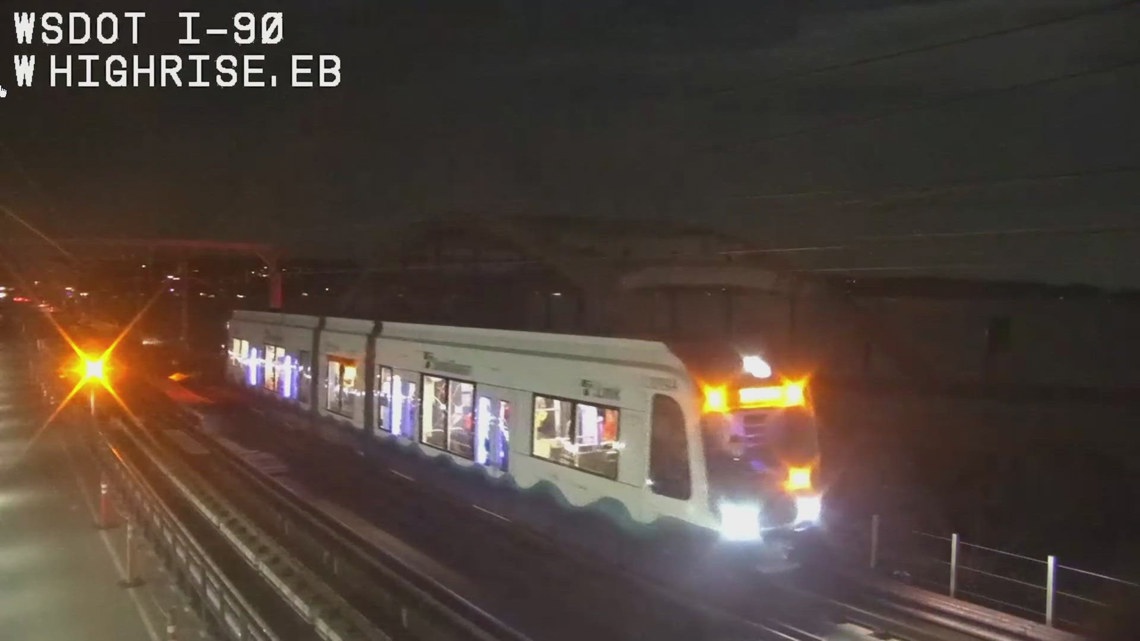
Sound Transit CEO Dow Constantine confirmed the Link extension across Lake Washington will open by May 31 (or sooner), with track testing and operator training underway to have service ready ahead of FIFA World Cup matches in Seattle in mid‑June 2026. The date is a setback relative to earlier projections (previously late 2025 and revised forecasts as early as April 2025), which the agency attributes to construction delays rather than a major budget shortfall; nearby projects include the Federal Way Downtown extension opening Dec. 6 and the Lynnwood Link having opened in August 2024.
Market structure: The confirmed May 31 (or earlier) opening shifts incremental demand from construction into commissioning and operations immediately (next 0–3 months) and into ridership/commerce by mid-2025–2026. Direct winners: regional heavy materials, civil contractors and transit operators; losers: localized parking operators, short-haul commuter shuttle providers, and firms dependent on delayed project milestones. Pricing power moves to materials (steel, aggregate, concrete) and skilled-operator services while marginal capex contractors face margin pressure if staffing bottlenecks appear.
Risk assessment: Tail risks include another delay past May 31 (low probability but high-impact for hospitality ahead of FIFA 2026), a >$200–500M budget gap prompting additional muni issuance, or major operational failures during testing. Immediate impact (days) is minimal; short-term (weeks–months) is elevated volatility in contractor backlog and municipal credit; long-term (12–36 months) is structural uplift in Seattle real estate and transit ridership (mid-single-digit annual growth possible in corridor ridership). Hidden dependency: operator training/safety certifications and muni financing cadence.
Trade implications: Direct plays favor construction materials (MLM, VMC) and large engineering firms (J, ACM) for 6–18 month appreciation; hospitality (HST, MAR) gets a micro boost into mid-2026. Use relative-value pair trades (long MLM/VMC vs short parking/municipal revenue-sensitive small-cap REITs) and muni-credit hedges (selective MUB put spreads) to express funding-risk. Time entries before Q1 2026 for construction roll-off; trim positions if Sound Transit announces >25bp wider local muni spreads or >$200M new financing.
Contrarian angles: Consensus underweights localized hospitality and real-estate upside from reliable service before FIFA 2026 — opening ~2 weeks before the tournament materially reduces congestion risk and increases hotel ADRs in June 2026. The market may overreact to past schedule slippages; if testing remains clean, mismatch between priced-in delays and realized on-time entry creates a 6–12 month alpha window. Unintended consequence: stronger transit reduces parking cashflows and auto-use in CBD, pressuring parking operators and certain small-cap consumer-facing firms.
AI-powered research, real-time alerts, and portfolio analytics for institutional investors.
Request DemoOverall Sentiment
neutral
Sentiment Score
0.05
