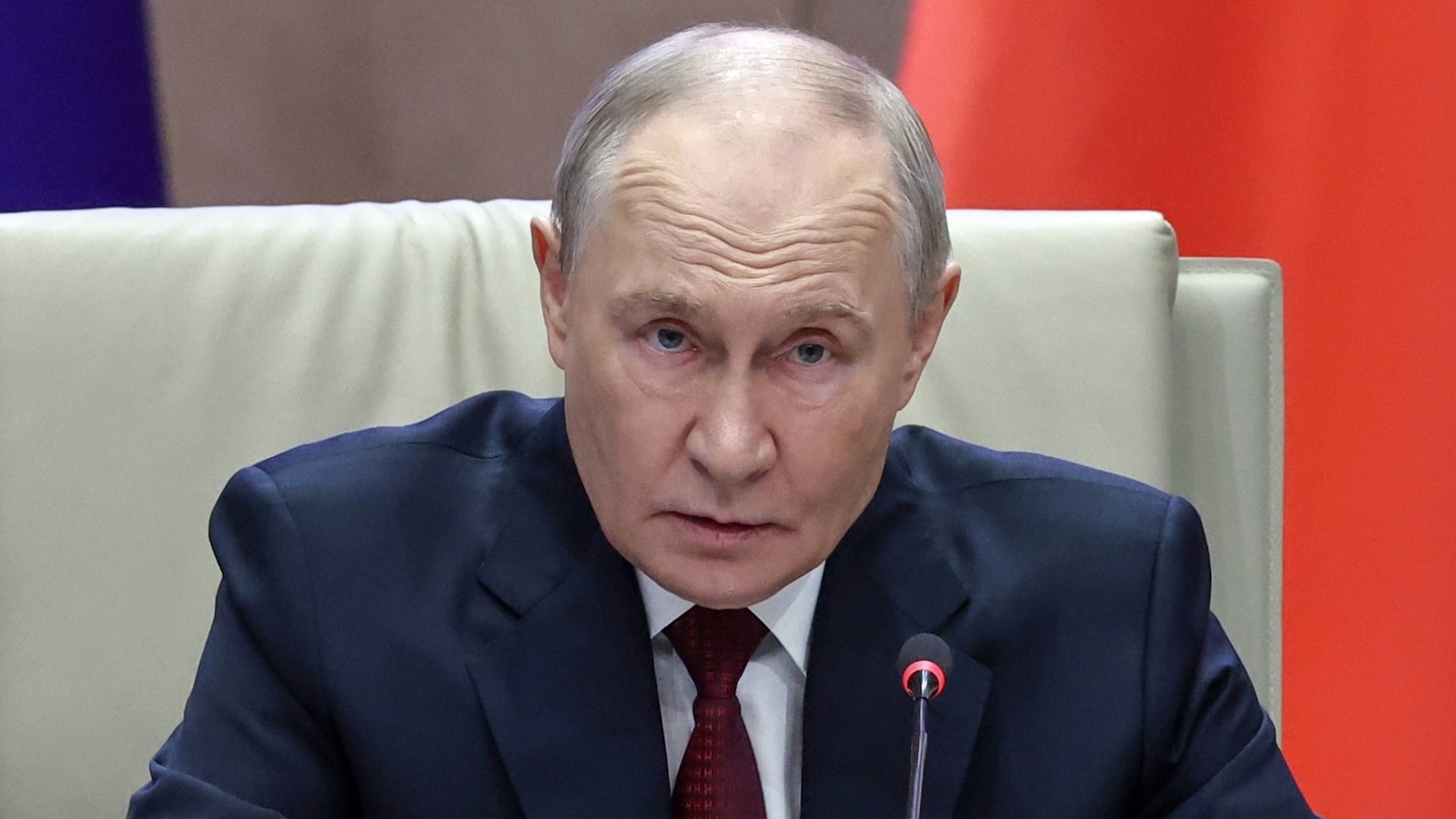
President Vladimir Putin said a U.S. delegation is expected in Moscow next week to discuss a U.S. peace proposal but reiterated hardline demands — including withdrawal of Ukrainian troops from territory Moscow claims and recognition of Russia's occupation of Crimea, Donbas and parts of eastern and southern Ukraine — and ruled out signing a ceasefire before such withdrawals. Putin's refusal to negotiate with Ukraine's current leadership and his comment that Russia is “ready in principle” to “fight to the last Ukrainian,” together with a reported leaked call involving a U.S. envoy, heighten geopolitical risk and could prompt risk-off reactions across regional assets, defense stocks and commodity-sensitive markets.
Market structure: Geopolitical risk here mechanically favors defense primes (Lockheed LMT, Northrop NOC, RTX RTX), energy majors (XOM, CVX) and hard commodities (gold GLD, wheat WEAT) via risk premium and supply disruption. Losers include travel/leisure (AAL, DAL), Eastern European banks and any Russia/Ukraine-exposed commodity processors; expect a 5–20% near-term risk premium wedge in oil and grains if ports or supply corridors are contested. Cross-asset: safe-haven flows should push U.S. Treasuries yields down near-term (TLT/IEF bid), USD stronger (UUP), equity volatility (VIX) +20–50% from current levels on fresh escalation news.
Risk assessment: Tail risks include a NATO contagion event or full export blockades — low probability (<10% over 3 months) but would spike Brent >$120 and gold >$2,300 and crush European equities >25%. Timeline: immediate (48–72h) = volatility trades; short-term (weeks–3 months) = re-pricing of defense and energy revenue outlooks by 10–30%; long-term (quarters) = structural rerating if sanctions persist. Hidden dependencies: fertilizer and grain flows, winter energy contracts, and third-party shipping insurance dynamics; these can amplify commodity shocks.
Trade implications: Tactical: buy options and defined-risk call spreads on NOC/RTX (3-month) and 1–3% physical ETF exposure to XLE/GLD to capture risk premia; hedge with 1–2% long-Treasury (TLT) exposure. Pair trades: long LMT (or NOC) vs short AAL (airlines) to capture defense/travel divergence; take profits or reduce defense exposure by 30% if diplomatic progress occurs within 14 days. Entry/exit: implement volatility trades within 72h; scale core stock positions on pullbacks >5% and trim on a ceasefire signal or >20% rally.
Contrarian angles: Consensus prices a persistent high-intensity war, but Putin’s openness to talks raises a >25% probability of episodic de-escalation in 1–3 months — a scenario that would unwind part of the defense spike. Historical parallel: 2014 showed commodity spikes faded within 6–12 months absent sustained sanctions; if that repeats, defense multiples could compress 10–25%. Risk: over-allocating to defense without dynamic hedges leaves portfolios exposed to rapid derating on any credible ceasefire.
AI-powered research, real-time alerts, and portfolio analytics for institutional investors.
Request DemoOverall Sentiment
moderately negative
Sentiment Score
-0.60
