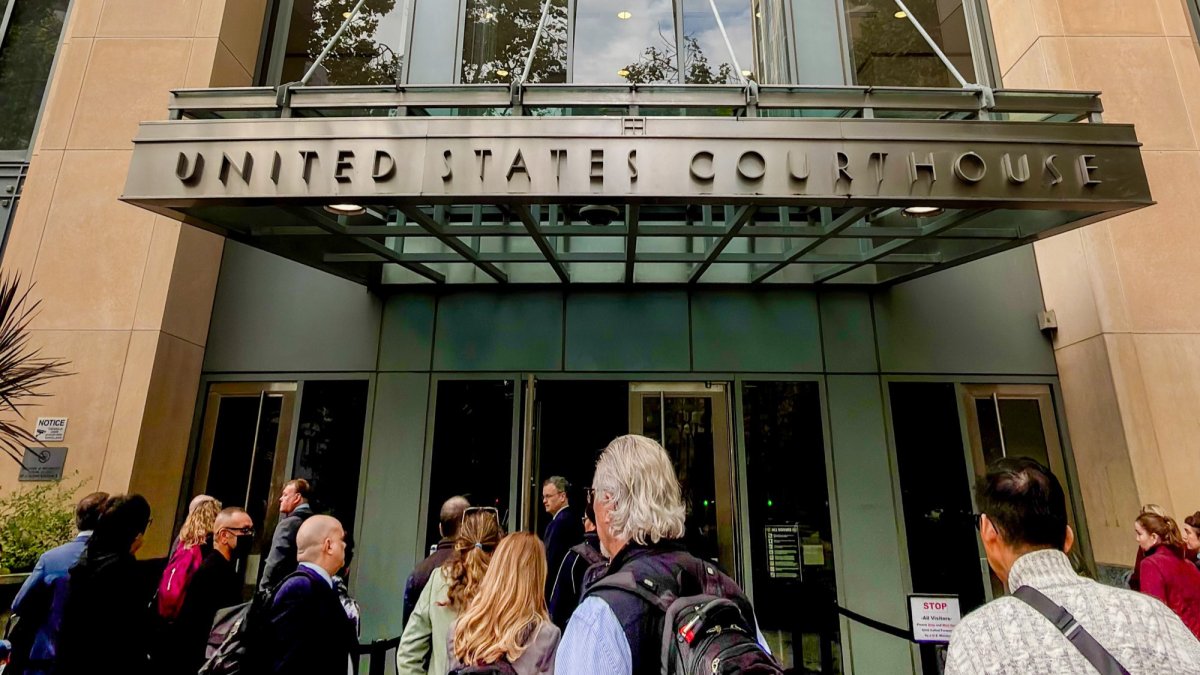
Witnesses in Elon Musk’s lawsuit alleged that OpenAI drifted from its nonprofit mission, with testimony describing weakened board oversight, the dissolution of safety-focused teams, and concerns over Altman’s leadership. A nonprofit governance expert said key transactions, including Microsoft’s $10 billion investment and the 2025 recapitalization, may have transferred significant value away from the nonprofit without adequate evaluation. The case adds legal and governance risk for OpenAI, but the immediate market impact is likely limited.
This is less a binary legal event than a governance overhang for the entire AI capex stack. The market implication is that OpenAI’s commercialization path may become more expensive in three ways: tighter board scrutiny slows product cadence, stronger safety/process requirements add friction to model launches, and any remedial restructuring could reduce the economic capture available to strategic partners. Microsoft is the most exposed listed beneficiary because it owns the distribution and compute angle, but it also inherits the most headline risk if the court frames the current structure as insufficiently mission-aligned.
The second-order effect is on bargaining power, not just valuation. If OpenAI is forced to behave more like a constrained nonprofit, frontier model economics shift toward incumbents with their own data, chips, and enterprise channels; if it is judged to have underinvested in governance, regulators and partners may demand more oversight across the sector. That is quietly bullish for large-scale platform owners and bearish for smaller AI startups reliant on a similar “move fast” governance model, because financing terms and strategic investments will likely price in higher control rights and safety covenants over the next 6-18 months.
Near term, the risk is not a court loss but a narrative reset: any new testimony suggesting improper process around model releases or capital allocation can compress sentiment around Microsoft’s OpenAI optionality even if financial exposure is unchanged. The contrarian point is that a damaged OpenAI governance story could ultimately increase the scarcity value of Microsoft’s broader AI stack, since enterprise buyers may prefer a more controlled partner versus a perceived governance mess. In other words, the first-order read is mildly negative for MSFT, but the medium-term winner may still be the company with the deepest balance sheet and the fewest existential governance issues.
AI-powered research, real-time alerts, and portfolio analytics for institutional investors.
Request DemoOverall Sentiment
mildly negative
Sentiment Score
-0.25
Ticker Sentiment
