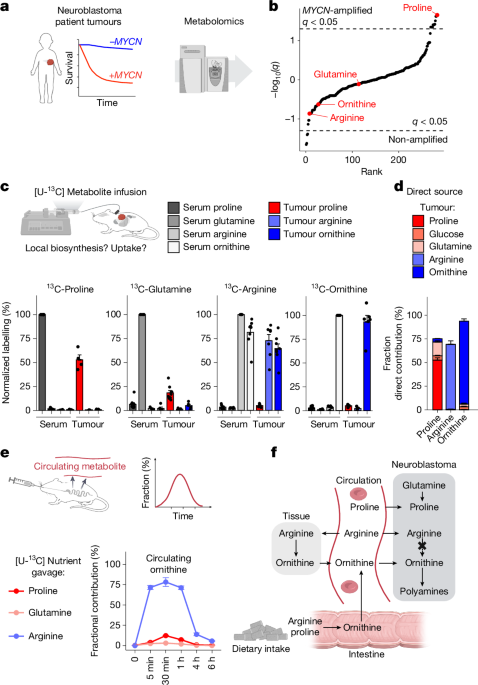
A recent study reveals that combining the polyamine synthesis inhibitor difluoromethylornithine (DFMO) with a dietary restriction of arginine and proline significantly enhances anti-tumor efficacy in neuroblastoma. This dual intervention, demonstrated in mouse models, achieves marked survival benefits and durable tumor-free responses by profoundly depleting polyamines, which leads to ribosome stalling at specific codons enriched in cell cycle genes, thereby suppressing proliferation and inducing neuronal differentiation. This novel mechanism, leveraging metabolic stress to reprogram the proteome, presents a promising therapeutic strategy for high-risk neuroblastoma and potentially other MYC-driven cancers, opening new avenues for targeted drug and dietary interventions.
This research presents a significant therapeutic advancement for MYCN-amplified neuroblastoma by demonstrating a powerful synergy between the FDA-approved ornithine decarboxylase (ODC) inhibitor, difluoromethylornithine (DFMO), and a diet free of proline and arginine. The study elucidates that while DFMO monotherapy extends survival, combining it with this specific dietary restriction leads to a profound anti-tumor effect, including durable complete responses in approximately 20-25% of treated mice in both transgenic and human xenograft models. The mechanism is novel and multi-layered: the diet depletes the key polyamine precursor ornithine, which drastically enhances DFMO's ability to lower intracellular polyamine levels, achieving a greater than tenfold reduction in spermidine. This severe polyamine depletion induces an unexpected codon-specific translational defect, causing ribosome stalling at codons ending with adenosine. Crucially, cell cycle-promoting genes are selectively enriched for these codons, while neuronal differentiation genes are depleted of them. This metabolic pressure effectively reprograms the proteome to suppress proliferation and promote tumor differentiation, leading to the observed therapeutic benefits and downregulation of the core MYCN oncogenic circuit. This finding establishes a new paradigm for cancer therapy, where a metabolic intervention (diet) can be used to exploit codon usage biases to enhance the efficacy of a targeted drug.
AI-powered research, real-time alerts, and portfolio analytics for institutional investors.
Request DemoOverall Sentiment
extremely positive
Sentiment Score
0.85
Ticker Sentiment
