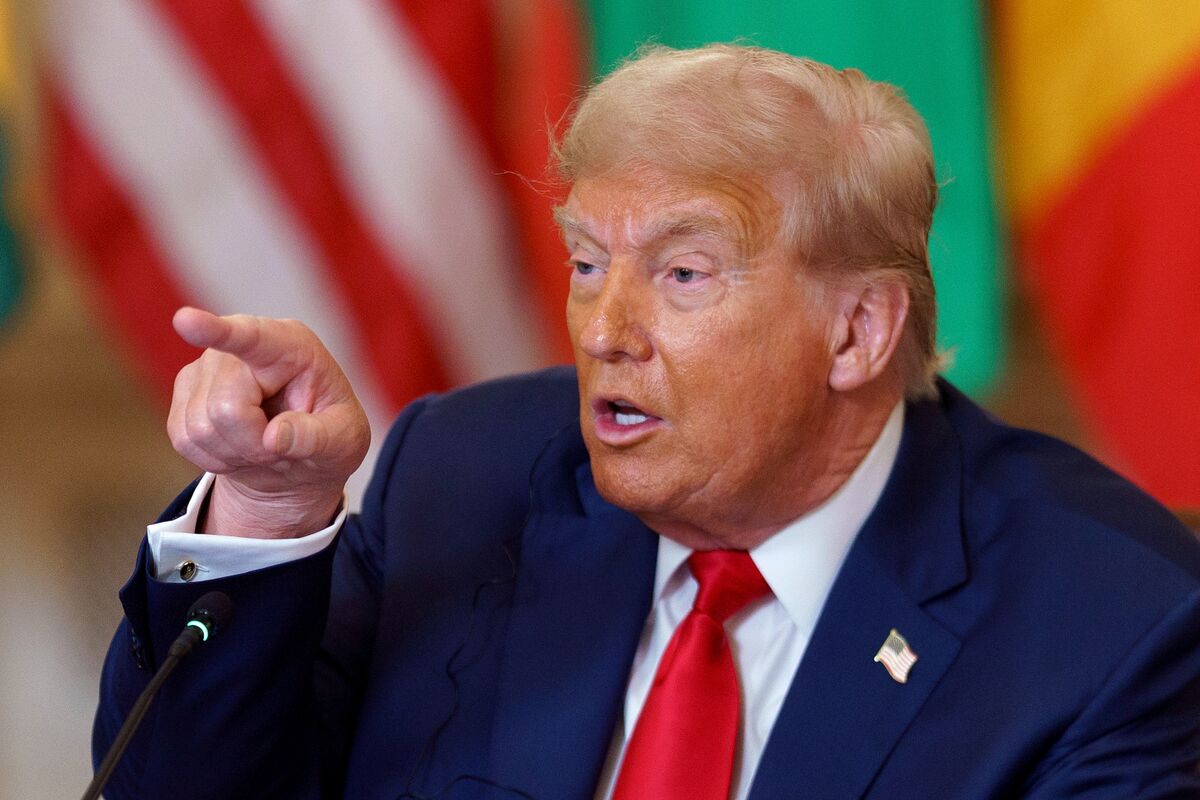
President Trump is reportedly considering a substantial increase in tariffs, potentially raising the universal baseline to 20% or imposing a 15-20% flat tariff on all trading partners, up from the current 10%. He cited record stock market gains as justification, seemingly emboldened by the market's initial muted reaction to recent levies on Canada and Brazil. However, despite the market's current resilience, concerns are growing among investors that these escalating trade measures could ultimately lead to a significant economic reckoning.
President Trump has signaled a significant potential escalation in trade policy, threatening to raise the universal baseline tariff to 15-20%, a substantial increase from the current 10% rate and above analyst expectations. The administration appears emboldened by record stock market gains, citing them as evidence the economy can withstand more aggressive protectionist measures. This confidence creates a notable divergence from the underlying market sentiment, which, despite a muted initial reaction to the news, is characterized by a cautious tone and growing concern about a future economic 'reckoning.' The threat to nearly double the baseline tariff rate, following recent levies on Canada and Brazil, introduces a material new risk for global supply chains, corporate profitability, and inflation, even if it is not yet fully priced into asset values.
AI-powered research, real-time alerts, and portfolio analytics for institutional investors.
Request DemoOverall Sentiment
moderately negative
Sentiment Score
-0.50
