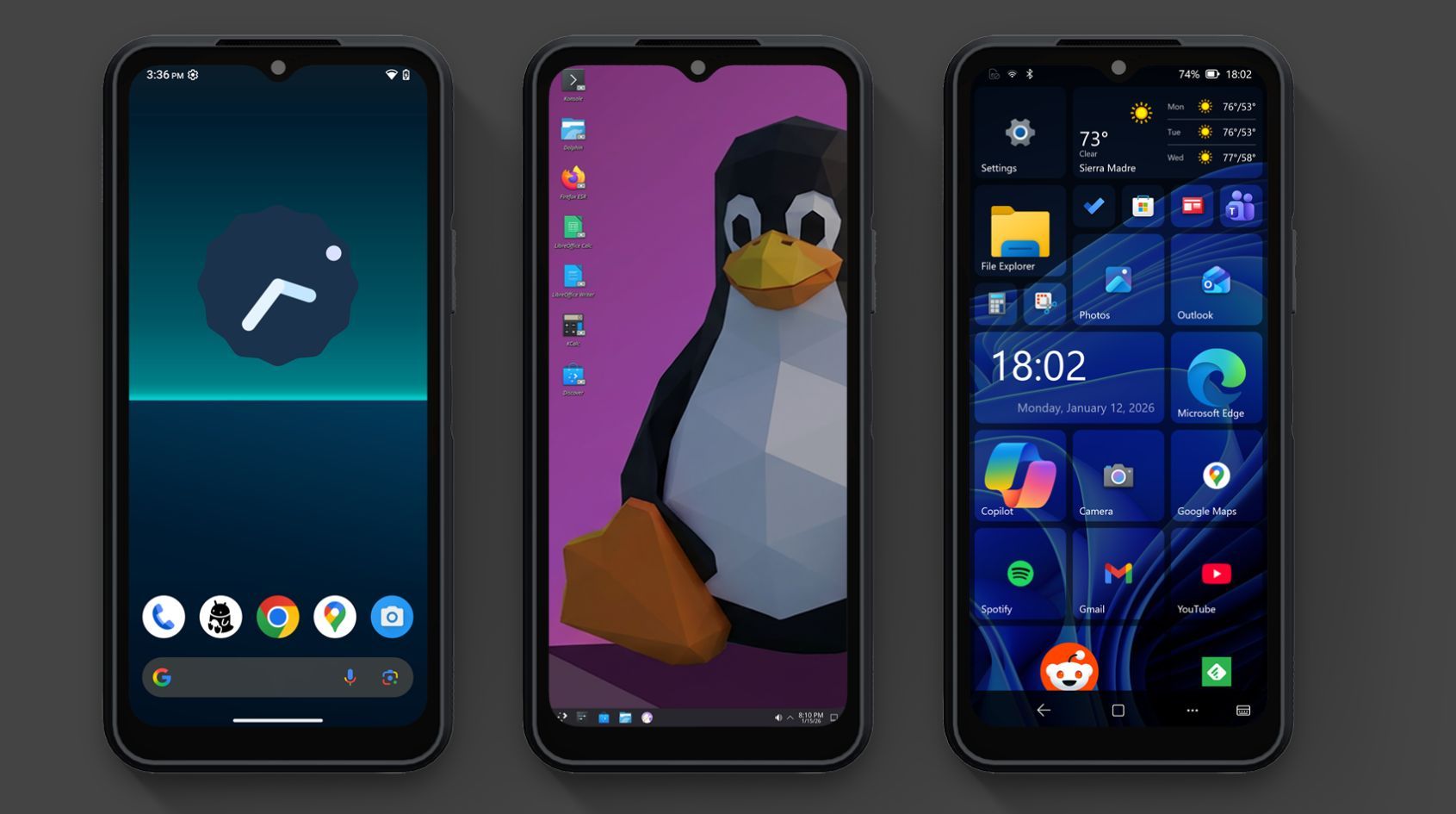
Nex Computer has unveiled the NexPhone, a $549 rugged smartphone scheduled to ship in Q3 2026 that runs Android by default and can dual‑boot Windows 11 and Debian Linux. Key specs include a Qualcomm QCM6490 (Dragonwing) 8‑core SoC, 12GB RAM, 256GB storage, 6.58‑inch display, 64MP camera, wireless charging and a 5000mAh battery; preorders require a refundable $199 deposit and include a USB‑C dock. The device targets users who want a single-device PC/phone hybrid and could prompt similar offerings from ODMs, but adoption risks include a non‑flagship IoT‑focused SoC, limited desktop phone ergonomics (requires external display/keyboard/mouse) and uncertain mainstream demand.
Market structure: This device primarily benefits Qualcomm (QCOM) as a component winner and Microsoft (MSFT) for Windows-on-Arm legitimacy, while incumbent smartphone giants (AAPL) are largely insulated. Because the NexPhone is niche ($549, Q3 2026 ship) with non-flagship QCM6490 silicon, any market-share shift is likely limited to specialty/enterprise segments; rapid commoditization by ODMs could compress prices within 12–24 months. Accessory ecosystems (docks, portable monitors) and rugged-device buyers are incremental demand pockets rather than broad replacement demand for mainstream Android/iOS phones.
Risk assessment: Tail risks include security/regulatory pushback (enterprise procurement bans) and OTA/update fragmentation that could force costly firmware support — each could materially reduce TAM; operational failure (poor Windows updates) could sink adoption. Time-phased: immediate (days/weeks) = preorder take rates and media traction; short-term (3–9 months) = partner/ODM responses and production scaling; long-term (12–36 months) = whether Windows-on-Arm gains enterprise validation. Hidden deps: user experience hinges on peripherals and reliable Windows Update behavior; supply-chain OEM exclusivity could flip margins quickly.
Trade implications: Tactical long exposure to QCOM captures growing IoT/Arm attach and multi-OS optionality; modest long MSFT exposure plays platform upside if enterprise trials expand. Use option structures to size conviction (see decisions). Avoid meaningful long on GOOGL from this news alone — Android remains default but no incremental ad/revenue catalyst. Cross-asset: negligible FX or commodity moves; positive semiconductor sentiment could modestly tighten credit spreads for chip suppliers over 6–12 months.
Contrarian angles: Consensus treats this as a niche novelty — the market may underprice upside if large ODMs replicate the concept at scale, which would benefit QCOM but harm small hardware incumbents; conversely, history (Motorola Atrix, Asus Padfone) suggests high failure odds. Mispricing exists in options: short-dated volatility around niche launches is often overstated; pick 3–9 month spreads rather than outright calls. Key unintended consequence: enterprise security rejection could rapidly reverse any early enthusiasm and create binary outcomes over 60–180 days.
AI-powered research, real-time alerts, and portfolio analytics for institutional investors.
Request DemoOverall Sentiment
mildly positive
Sentiment Score
0.25
Ticker Sentiment
