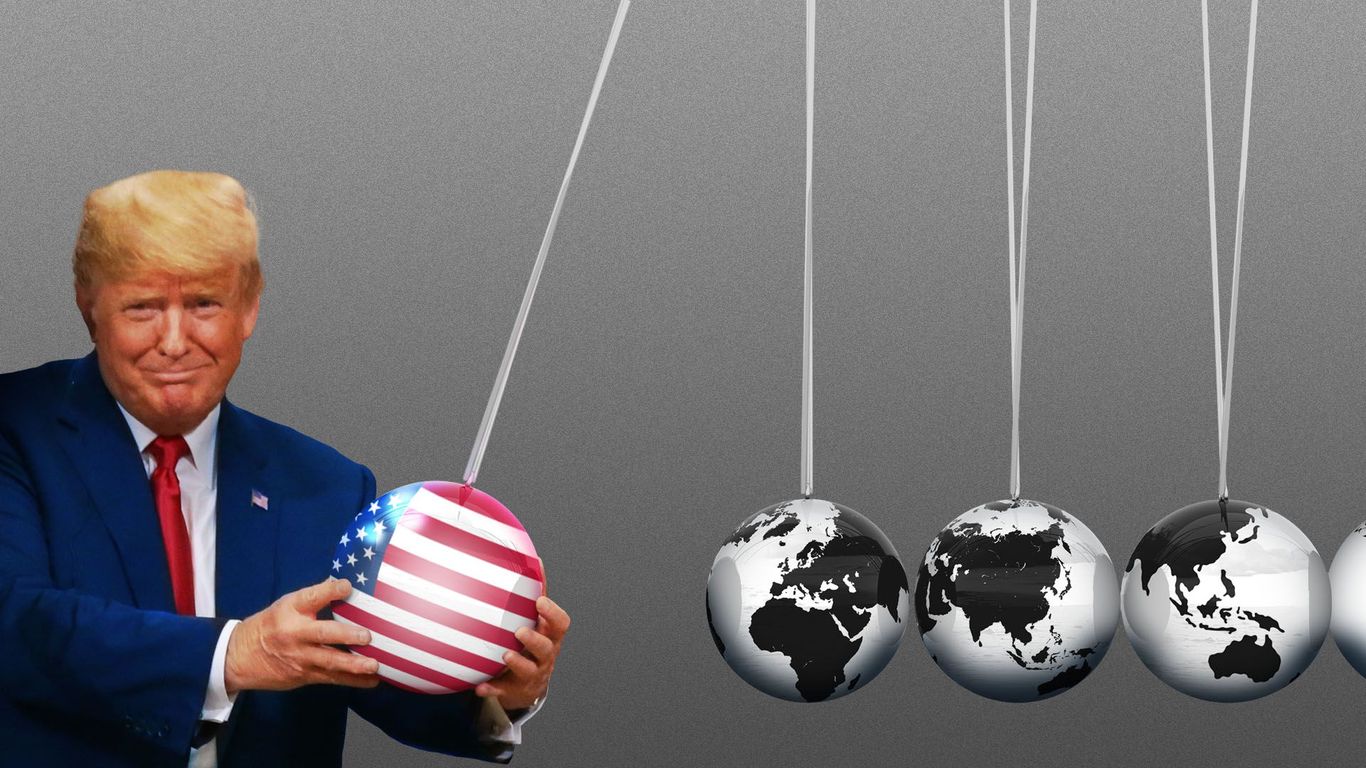
President Trump is threatening new tariff hikes, significantly escalating trade tensions by proposing 35% tariffs on Canadian goods from August 1, citing drug flow and other trade barriers, and 50% on Brazilian imports as punishment for their treatment of former President Bolsonaro. These actions signal a new 'Trump-era reality' where tariffs are deployed for non-trade related issues, broadening the scope of trade conflicts. Bank of America economists characterize this as an 'ongoing game' that questions how much re-escalation risky assets can tolerate before correcting lower.
The U.S. administration is fundamentally altering the landscape of trade policy by leveraging tariffs for non-economic, political objectives, creating significant market uncertainty. President Trump has threatened a 35% tariff on Canadian goods by August 1, citing Canada's alleged failure to curb drug flows, and a 50% tariff on Brazilian imports as retribution for the political trial of former President Jair Bolsonaro. This pivot away from traditional trade deficit justifications introduces a new, unpredictable variable for global markets. Bank of America analysts aptly describe this as a perpetual 'game,' questioning the tolerance of risky assets for continued escalation. The policy's reach extends to key industrial sectors, with copper explicitly named as a target, reflected in the negative sentiment for related assets like the United States Copper Index Fund (CPER). This new paradigm suggests that geopolitical events and presidential statements are now direct and immediate precursors to significant trade actions, heightening volatility and risk across equities, commodities, and emerging markets.
AI-powered research, real-time alerts, and portfolio analytics for institutional investors.
Overall Sentiment
strongly negative
Sentiment Score
-0.75
Ticker Sentiment
