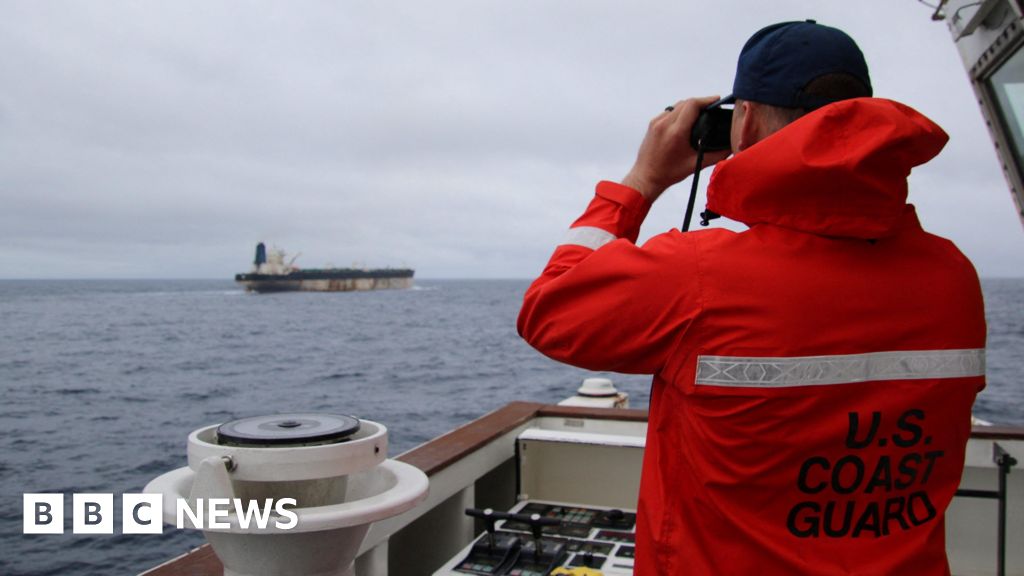
US authorities seized the Russian‑flagged tanker Marinera (formerly Bella 1) on 7 January south of Iceland and escorted it to Scotland’s Moray coast; the captain, Avtandil Kalandadze, and a first officer were taken into US custody and are to be brought to the United States to face prosecution for alleged sanctions breaches related to oil shipments for Venezuela, Russia and Iran. The UK provided operational support and is coordinating with the US while Scottish officials protested lack of prior notice and domestic legal limits on restraining actions; 26 crew members are being repatriated, and the incident heightens geopolitical and enforcement risk around oil shipping and sanctions compliance but is unlikely to produce an immediate large market move.
Market structure: stronger sanctions enforcement is a net positive for owners of spot tanker capacity and brokers/insurers who can charge higher premiums—a disruption that can lift VLCC/ULCC spot rates by 20–50% for weeks if even a few cargoes are interdicted. Losers include shadow oil traders, small ship operators servicing sanctioned trades, and refiners dependent on heavy discounted crudes from Venezuela/Russia; integrated majors with compliance functions (large-cap oils) gain relative pricing power. Cross-asset: expect short-term Brent/Brent-forward curve steepening (>$3–$7/bbl shock possible if flows disrupted), RUB weakness and modest widening of EM sovereign CDS; safe-haven bid into US Treasuries on geopolitical escalation.
Risk assessment: tail scenarios include reciprocal seizures or port denials that remove 0.2–0.6 mb/d seaborne supply or cause marine insurance rates to spike 30–100%, producing >=$10/bbl upside in oil. Immediate horizon (days): volatility spikes in oil and tanker equities; short-term (weeks–months): legal outcomes and crew repatriation shape precedent; long-term (quarters–years): higher compliance/insurance costs and route rerouting. Hidden dependencies: secondary sanctions on intermediaries, London insurance market reactions, and ports refusing callings could amplify effects unexpectedly. Key catalysts: additional interdictions, major court rulings in 30–90 days, or Russian reciprocal measures.
Trade implications: actionable plays favor concentrated, time-boxed exposure to tanker owners (FRO, EURN, STNG) and energy/insurance intermediaries (MMC/AON) while hedging oil-crack risk. Options: target 1–3 month call spreads on Brent/Brent-ETF to capture event-driven upside with defined risk; use CDS or sovereign ETFs only as tactical hedges against escalation. Timing: initiate within 1–5 trading days, size small (1–3% positions), re-assess at 30 and 90 days and trim on Brent +$5 or Baltic tanker index +30%.
Contrarian angle: markets may overprice an enduring supply shock—histor parallels (Grace 1, 2019) show legal fights and diplomacy often blunt long-term supply loss, so avoid permanent directional leverage. Underappreciated risk: stronger enforcement could drive more crude to opaque spot/ship-to-ship markets, raising counterparty and credit risk for commodity traders—favor liquid, short-dated option structures not naked leveraged positions.
AI-powered research, real-time alerts, and portfolio analytics for institutional investors.
Request DemoOverall Sentiment
moderately negative
Sentiment Score
-0.30
