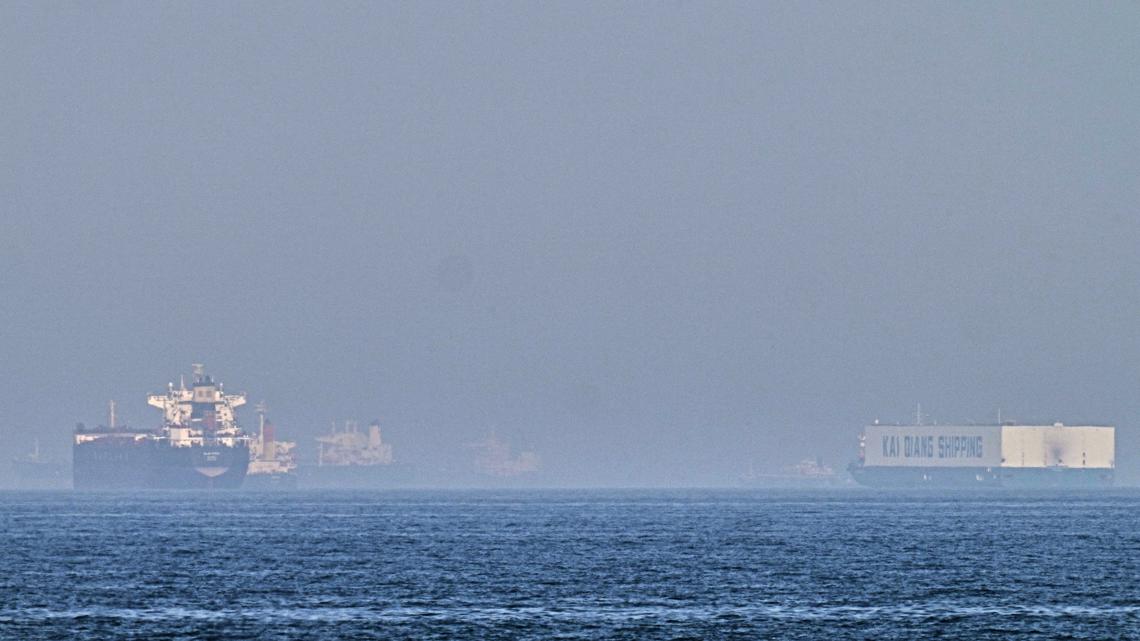
The Iran-U.S. conflict remains volatile, with the UAE intercepting missile and drone strikes and the U.S. saying it thwarted attacks on three Navy ships in the Strait of Hormuz and retaliated against Iranian military facilities. Iran is reportedly tightening control over Hormuz via a new agency to vet and tax transiting vessels, heightening risks to shipping and energy flows. The disruptions have already sent fuel prices higher, bottlenecked hundreds of commercial vessels, and increased the chance of broader market disruption.
This is less about a clean de-escalation than a market learning to price a persistent “managed conflict” around the Strait of Hormuz. The key second-order effect is not a one-day crude spike but the re-rating of every asset with embedded assumptions about uninterrupted Gulf flows: tanker availability, freight insurance, refinery utilization, petrochemical feedstock costs, and even LNG delivery schedules. If Tehran is formalizing a permission/toll regime, the tax is effectively a shadow tariff on global energy and a direct transfer from importers to the party controlling the chokepoint.
The immediate winners are not just upstream producers; they are anyone with non-Gulf supply optionality and storage optionality. North American producers, Atlantic Basin refiners with secure feedstock, and shipping names with low Middle East exposure gain relative pricing power, while Asian refiners and import-dependent utilities face margin compression and working-capital strain. A more subtle loser is global manufacturing: if diesel and bunker costs stay elevated for even 4-8 weeks, freight surcharges tend to bleed into container and air cargo pricing with a lag, tightening margins for retailers and industrials well before headline CPI reacts.
The biggest tail risk is not an outright war cycle; it is a series of “successful interceptions” and near-miss incidents that keep insurance premia high while leaving official supply still functioning. That regime is usually worse for risk assets than a one-off shock because it prolongs uncertainty and suppresses investment, but it also creates mean-reversion opportunities if diplomatic channels produce even a partial corridor arrangement. The reversal trigger is credible verification that passage fees and ad hoc inspections are being withdrawn; absent that, the market should assume a higher structural risk premium for 1-3 months, not days.
Consensus is likely underestimating how quickly this can propagate beyond energy into trade finance and sanctions compliance. If major insurers or banks refuse to clear vessels that have paid the new tolls, the bottleneck becomes administrative rather than military, which is harder to unwind and more disruptive to flows. That argues for staying long volatility in the sectors most exposed to imported energy and freight costs, while selectively owning assets that monetize scarcity and routing disruption.
AI-powered research, real-time alerts, and portfolio analytics for institutional investors.
Request DemoOverall Sentiment
strongly negative
Sentiment Score
-0.68
