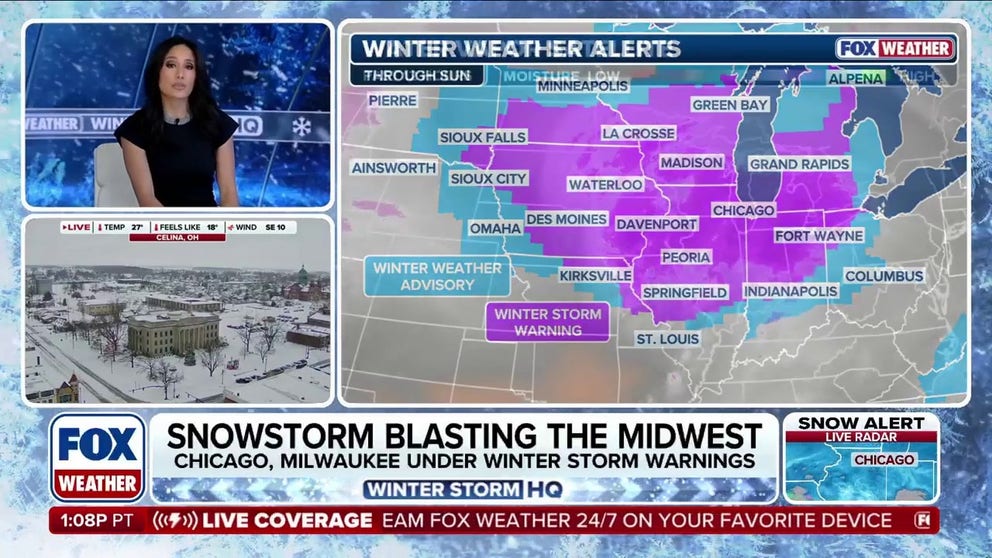
A major winter storm is impacting the Upper Midwest with Chicago and Milwaukee forecasted to receive 8–12 inches of snow (some areas exceeding a foot) and much of Iowa potentially seeing a foot by Sunday. The storm has produced more than 900 flight cancellations into/out of Chicago, average O'Hare delays of about five hours, FAA ground stops at O'Hare and Midway, snow-covered interstates and multiple crashes, creating significant short-term disruption to airline operations, regional logistics and holiday travel ahead of expected improvement by Monday.
Market structure: Winners are short-duration, storm-exposure plays — road-salt & winter services (e.g., CMP), generators (GNRC), home-improvement retail (HD, LOW) and local snow-removal contractors — who see immediate order flow and price-insensitive municipal spending over 1–8 weeks. Losers are transport arbitrage: major hub airlines (e.g., UAL, AAL, LUV) and airport-dependent service providers where 900+ Chicago cancellations and ~5-hour avg delays imply measurable lost revenue and elevated operational costs over the next 3–14 days. Demand/supply: municipal salt inventories and generator stocks can be drawn down 10–30% regionally in 1–2 weeks, tightening replacement supply and lifting spot prices; short-term natural gas/heating demand can push regional winterized power prices +5–10% if outages amplify. Cross-asset: expect elevated short-dated IV on airline/travel names (buy-side pressure in puts), modest upward pressure on natgas futures near-term, and micro-effects in municipal paper for cities incurring large snow-removal bills.
Risk assessment: Tail risks include multi-day grid outages or a follow-up storm creating >$100M in regional property/autoclaim exposure that would meaningfully dent P&C insurer quarterly earnings; low probability but high impact over 1–4 weeks. Immediate (days): travel/logistics disruption and airline revenue misses; short-term (weeks–months): P&C claims, municipal budget reallocation and retail inventory depletion; long-term (quarters): negligible structural demand change unless winter pattern repeats. Hidden dependencies: holiday-season e-commerce cutoffs amplify revenue leakage for retailers/logistics if backlog >48 hours; road-repair capex spikes could pressure local muni bonds and reallocate Q4 cash. Catalysts to watch: FAA cancellation counts, utility outage maps, municipal salt purchase orders, weekly gas storage and 7–14 day weather verification.
Trade implications: Direct short 1–2% position in airline ETF JETS (or UAL) for 2–6 weeks via 4–6 week put spreads (buy 10% ITM, sell 40% OTM) to monetize elevated IV and near-term operational pain; target 15–30% downside capture, stop at -12% premium loss. Establish 1–3% long positions in CMP and GNRC equity (or 3-month calls if preferred) expecting 10–25% repricing over 1–3 months as inventories refill and municipal orders arrive; stop-loss at -10%. Pair trade: long HD (1%) / short JETS (1%) to play defensive retail demand vs travel disruption through December holiday; rebalance after 2 weeks if cancellations normalize.
Contrarian angles: The market will likely oversell airlines for a 1–3 week transitory shock — historical analogs (Nov storms 2014, 2019) show 60–80% of weakness reverts inside 2–6 weeks, so consider buying 3–6 month OTM calls on well-capitalized airlines post 15–20% drawdown. Consensus misses the downstream logistics squeeze: parcel carriers (UPS, FDX) may see last-mile margin pressure into early December, creating relative-value opportunities vs contractually protected network peers. Unintended consequence: sustained inventory drawdowns could force retailers to pay spot premiums for replacement goods, widening gross margins for suppliers (CMP, GNRC) more than prices suggest.
AI-powered research, real-time alerts, and portfolio analytics for institutional investors.
Request DemoOverall Sentiment
mildly negative
Sentiment Score
-0.30
