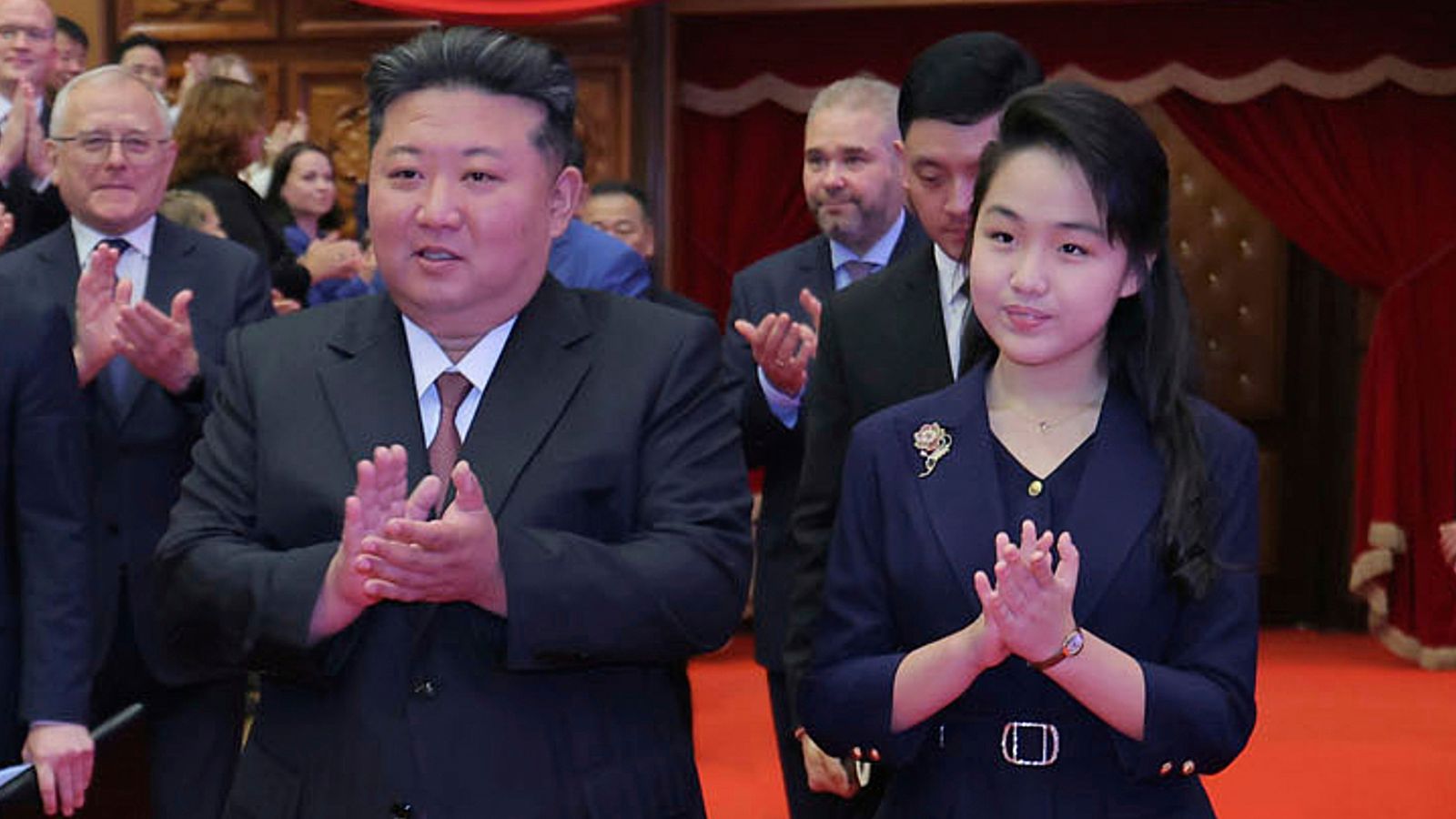
South Korea's National Intelligence Service indicates Kim Ju Ae, believed to be about 13, is being positioned internally as Kim Jong Un's successor after a series of high-profile appearances at missile tests, military parades and international events since 2022. The NIS will watch how she is presented at the upcoming Workers' Party Congress and whether she receives an official title; analysts say succession would extend the Kim dynasty and reshape elite networks, but North Korean state media has not confirmed plans and near-term policy or market impacts are limited and uncertain.
Market structure: A formal succession signal in Pyongyang raises regional security premia without immediate macro shock. Direct winners are large defense/ISR primes (RTX, LMT, GD, NOC) and niche suppliers of ballistic/missile-defense components; expect sector outperformance of +5–15% over 3–12 months if tensions nudge higher. Losers in an acute episode are Korean domestic cyclicals (EWY exposure), tourism/airlines, and KRW — model a 3–7% KRW depreciation in a 1–4 week risk-off window; 10y UST yields could fall 10–30bps within days as safe-haven flows spike.
Risk assessment: Tail risks include limited military escalation, major sanctions, or cyber disruption with <10% but high-consequence outcomes (regional supply-chain shocks). Time horizons: immediate (days) = volatility spike and FX/Korean equity weakness; short-term (weeks–months) = re-rating of defense, higher SOVEREIGN risk premia for SK; long-term (quarters–years) = likely continuity of status quo unless succession triggers internal instability. Hidden dependencies: China’s public posture and SK/US policy response are binary catalysts; Workers’ Party Congress (next 0–3 months) is the primary near-term trigger.
Trade implications: Tactical portfolio tilt: favor 2–3% long allocations to large defense primes (RTX, LMT, GD) sized for 3–12 months, hedge with 1–2% TLT/GLD for immediate 0–30 day protection. FX/EM: reduce EWY exposure by 50% or establish 1–2% short via options/Inverse (e.g., SKF) to capture KRW risk; use 3-month call spreads on RTX/LMT or 6–12 week VIX call exposure to limit premium spend. Entry: scale in over the next 2 weeks; exit/reduce on +15–25% rallies or if official conciliatory signals appear.
Contrarian angles: The market may overestimate long-term instability—historical DPRK transitions produced concentrated short-term moves then reversion; a rapid defense rerating could be overdone if the Congress provides ritualized continuity. If China signals neutrality or increased engagement, KRW and EWY could snap back; therefore ladder defense longs and keep convex hedges (options) rather than large outright positions. Watch for concrete markers: official title at Party Congress (binary), SK/US joint military posture changes, and >8% weekly move in EWY as trade triggers.
AI-powered research, real-time alerts, and portfolio analytics for institutional investors.
Request DemoOverall Sentiment
neutral
Sentiment Score
0.00
