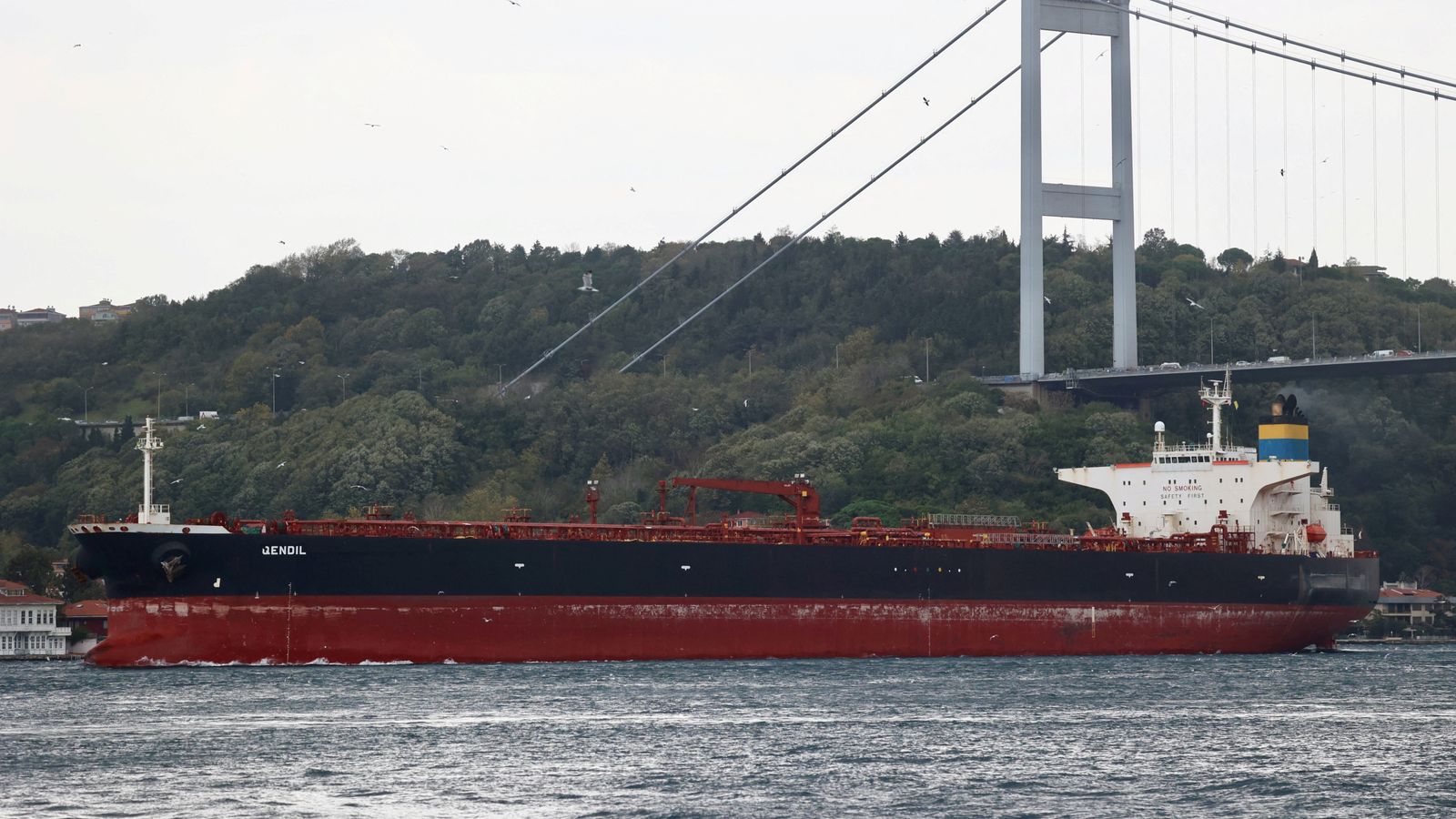
Ukraine's SBU-aligned source says Ukrainian drones critically damaged the Russian tanker Qendil in the Mediterranean roughly 2,000 km from Ukraine, alleging the vessel — part of Russia's 'shadow fleet' — was being used to evade sanctions on crude exports; Kyiv claims the tanker was empty. Moscow's President Vladimir Putin vowed retaliation while saying supplies would not be disrupted; the incident heightens geopolitical risk around energy shipments and sanctions enforcement. Separately, the EU approved a €90bn interest-free loan to Ukraine as Kyiv seeks vastly larger financing (IMF estimate $137bn), underscoring elevated war funding needs and potential policy moves on frozen Russian assets.
Market structure: This strike signals Ukraine’s ability to hit shipping assets far from the front line, increasing risk premia for tanker owners, P&I insurers, and commodity traders who use older “shadow fleet” tankers. Expect a 3–8% near-term jump in freight/insurance spreads for sanctioned-Russian-linked tonnage and a 1–3% bump in Brent implied moves if additional strikes or insurance refusals arise within 30–90 days. Energy majors with diversified logistics (XOM, CVX) lose less pricing power than small trading vessels or shadow-fleet brokers.
Risk assessment: Tail risks include escalation into interdiction of energy cargoes (low probability, high impact) that could push Brent +15–30% and generate a flight-to-quality into US Treasuries; alternatively, diplomatic de-escalation and seizure of shadow assets could normalize markets. Immediate window (days): insurance spike/volatility; short-term (weeks–months): freight rerouting and higher operating costs; long-term (quarters–years): accelerated EU defense spending and formalization of sanction-enforcement frameworks. Hidden dependencies: insurance market capacity, POSH/Greek owners’ willingness to refuse sanctioned charters, and shippers rerouting costs.
Trade implications: Tactical: favor 1–3% allocations to defense exposure (ITA or LMT/RTX) on 6–12 month horizon funded from sale of small-cap shipping exposure; hedge with 1% VIX call position for 1–3 months to protect against cluster events. Buy short-dated call-spreads on oil (USO or Brent futures) sized 1–2% to capture asymmetric upside if attacks continue; pair with selling 1–2% of shadow-exposed shipping equities or ETFs. FX/credit: reduce RUB/EM commodity credit to <0.5% and lengthen USD duration if volatility persists.
Contrarian angles: Consensus focuses on oil price spikes; market is underpricing higher logistics/insurance costs that will persist even if crude stays benign — this favors insurers and defense over pure producers. Historical parallels (Libya 2011, Iran tanker incidents) show short-lived Brent spikes but multi-year premium in maritime insurance and enforcement costs; therefore, buying single-event oil longs is riskier than owning re-rating candidates in defense/insurers. Watch for rapid legal moves to seize shadow-fleet assets — that outcome would compress risk premia and create a reversal trade within 3–9 months.
AI-powered research, real-time alerts, and portfolio analytics for institutional investors.
Request DemoOverall Sentiment
moderately negative
Sentiment Score
-0.35
