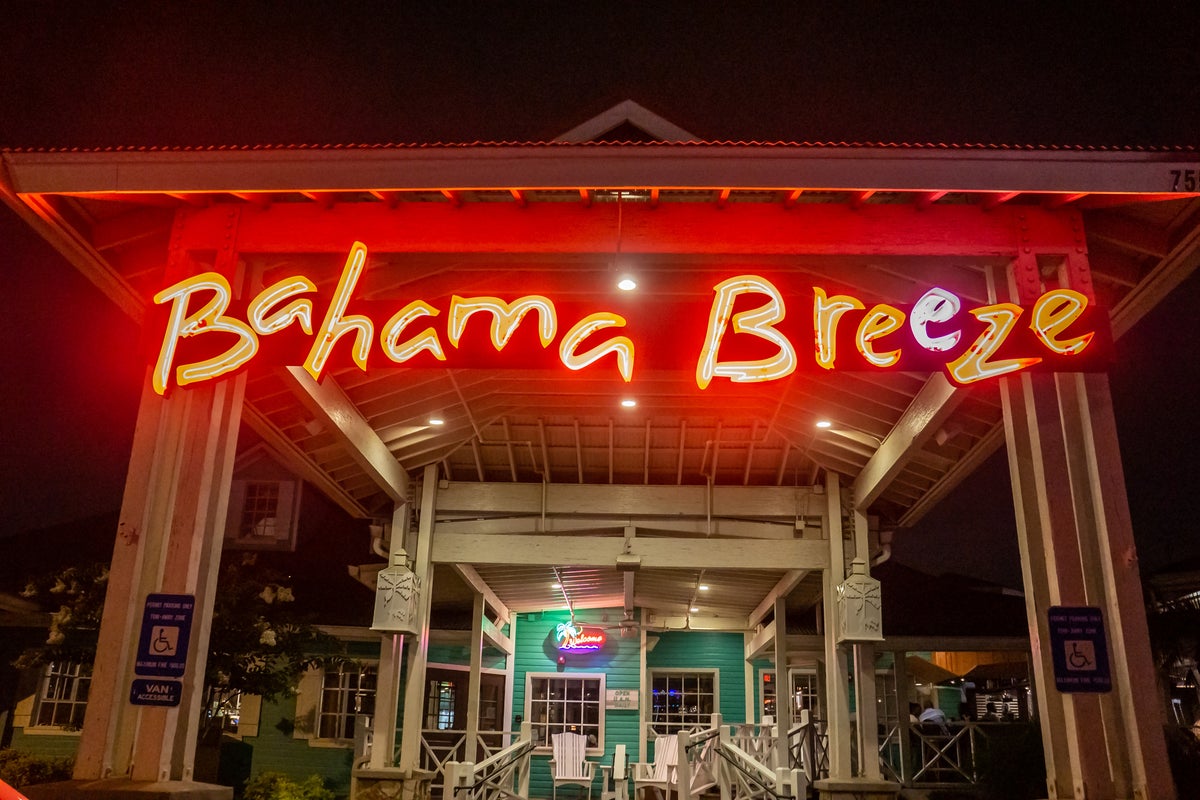
Darden Restaurants is closing 14 Bahama Breeze locations and converting another 14, with many remaining stores shuttered as of April 5, effectively ending the chain. Conversion sites include 10 in Florida and one each in North Carolina, South Carolina, Georgia and Virginia; closures span Virginia, Delaware, West Virginia, Michigan, Pennsylvania, New Jersey and five Florida locations. Darden said the conversions will benefit other portfolio brands, expects no material impact on financial results, and aims to place affected employees in other roles amid broader casual-dining headwinds from inflation and fast-casual competition.
Darden’s removal of a low-return concept is a portfolio rationalization move that should free cash and real estate for higher-return units; expect a mid-single-digit uplift to consolidated unit-level margins over 12–24 months if conversions are executed into Olive Garden/LongHorn footprints with materially higher top-line density. Conversions avoid full ground-up builds, compressing payback to the 12–36 month band versus traditional development, so incremental ROIC on redeployed capital can exceed corporate WACC quickly if same-store momentum persists.
Second-order winners include scale-oriented suppliers and shared-service platforms inside Darden (centralized distribution, IT, marketing) which get fixed-cost leverage as smaller brands exit; conversely, regional casual operators and franchisees with weaker balance sheets face a shorter runway as landlords reprice formerly middle-market rents toward either higher-volume national tenants or shadow vacancies. Landlord/REIT dynamics matter: high-quality locations converted to stronger concepts reduce near-term vacancy risk for net-lease owners but increase re-leasing competition in tertiary markets.
Key risks are execution and macro: conversions require kitchen reconfig, labor retraining, and brand re-introduction — any hiccup can push impairment timing beyond 12 months. Consumer affordability remains the wildcard; a mild recession within 6–12 months would compress ticket frequency and reverse the thesis that reallocating sites to higher-margin concepts improves corporate profitably.
Watchables/catalysts: upcoming quarterly guidance and unit-level margin disclosures, specific disclosure of which concepts receive converted sites, and landlord lease modifications or impairments. A string of weaker-than-expected conversion comps over two quarters is the primary downside catalyst; confirmation of sustained same-store strength at Olive Garden/LongHorn for two more quarters is the operational upside catalyst.
AI-powered research, real-time alerts, and portfolio analytics for institutional investors.
Request DemoOverall Sentiment
mildly negative
Sentiment Score
-0.25
Ticker Sentiment
